
Wouldn’t it be nice? The politics of consensus
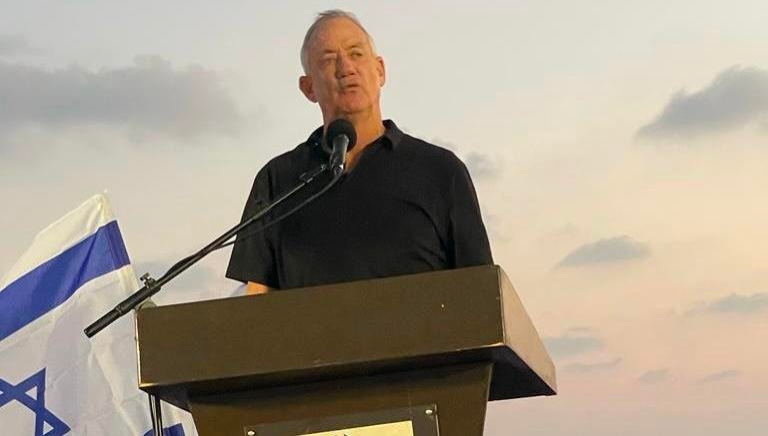
Benny Gantz’s speech on Saturday evening — proposing a government of national agreement to expedite a hostage deal and pass a military draft law that would end exemptions for Haredim — was met with the predictable tsunami of political cynicism.
In calling on Israel’s opposition parties to temporarily join a Netanyahu-led government, Gantz laid out four clear conditions:
- Making the release of hostages a paramount national objective;
- Turning broad public support for a universal draft for all Jewish citizens, including Haredim, into binding legislation;
- Agreeing on spring of 2026 as the date for new elections;
- Removing the extreme right from the coalition, so that the government’s policies might truly reflect the hopes and interests of the majority of Israelis.
Gantz surely had no illusions about the likelihood of this happening. After all, if other party leaders refused to join a unity government during the COVID crisis — when scores of citizens were dying daily from an unknown disease and a third of the country was unemployed — why would they do so now? And if they turned away when Israel reeled from the trauma of October 7, with hundreds held hostage, a war of attrition raging on the Lebanese border, and the constant menace of Iran, what would make this moment more compelling?
Still, at the risk of sounding like the Beach Boys: wouldn’t it be nice if we lived in a country where political leaders put aside the narrow calculus of electoral opportunism and ask what Israel truly needs? Wouldn’t it be nice if during this harrowing moment of historic crisis — with 140,000 Israelis leaving the country in despair at the government’s failures —if our leaders actually did what was right for the nation, rather than what was expedient for their party?
Wouldn’t it be nice if politicians chose to soften polarization instead of fueling it? If they valued bringing people together more than sowing toxic division? Wouldn’t it be nice to live in an Israel where politicians, and even entire constituencies, loved their country more than they hated Benjamin Netanyahu — despite his undeniable flaws and dismal recent record?
Too often in our political culture, “consensus” is dismissed as weakness, while battering opponents is celebrated as strength. But wouldn’t it be nice if leaders aspired to bridge divides rather than deepen them?
Some see Gantz’s proposal as a proverbial “Hail Mary” football pass — a desperate gambit to snatch victory from the jaws of defeat, given recent polls showing the decline in support for the Blue and White party. Critics deride the initiative as a clumsy bid to reclaim political relevance. But this not only reflects a mean-spirited, distorted perspective. It also conveniently forgets what kind of unusual politician Benny Gantz has proven to be.
It is worth remembering that Gantz already joined a Netanyahu government twice before – and not out of weakness. On the contrary. The first time, in 2000, he led the Knesset’s largest party. In 2023, when his party polled nearly 40 seats, making him the most popular politician in the country, he again stepped up. And he did so knowing the decision would damage his long-term political prospects. Nonetheless, he understood that given the existential dangers, most Israelis were desperate to close ranks and face the crisis together. The vast majority supported his call for political unity then.
Unfortunately, Israelis often suffer from political amnesia. We value unity in moments of acute danger. But once the crisis abates, we excoriate those who dare to preach national conciliation. Even the more charitable critics dismiss Gantz as naïve or ingenuous. But isn’t that precisely what our present political discourse needs — at a time when so many Israelis and supporters of Israel abroad are starting to lose faith in the Third Jewish Commonwealth altogether? Wouldn’t it be nice if the country embraced a vision driven by idealism, imagination, tolerance and decency?
Rejecting Gantz’s current proposal leaves us trapped in a tragic deadlock: roughly half the country entrenched in support of the current government; the other half bitterly opposed. This is maddening because the truth is that about 80% of Israelis actually want the same things: security, fairness, and an end to endless division. We want the hostages to be released. We want the war to end. And we want all Israelis to share equally in defending the country’s future.
This week’s Torah portion, Re’eh, begins with the Israelites being offered a choice between “a blessing and a curse”. For anyone with a thimbleful of historic perspective, the parallel to the juncture at which we have arrived today is unmistakable.
We can continue on our present course, with each side growing angrier, more certain than ever that they alone are right. That path leaves an exhausted army to fight an interminable war without the reinforcements universal service would provide. It allows the government to pay lip service to liberating hostages while mocking our solemn national commitment to bring them home. Each passing day makes their survival more doubtful.
Or, we could choose a different path — one with a concrete plan for elections to restore the public’s faith in its government and a chance to redirect the country toward sanity, unity and sustainability.
When distilled down to its essence, Gantz’s proposal is a call to our political leaders to choose life. Wouldn’t it be nice if just this once, they did?