Writer, Peace/Health activist, Public Speaker, Historian, Mom/Stepmom
Write4Peace
Perhaps only a crazy person would write a book about peace during wartime. Or even read one. Or, for that matter, review one.
And the book at hand doesn’t just explore peace in the abstract. It spotlights the pursuit of peace between Israelis and Palestinians after the Hamas massacre on October 7, 2023, and the ensuing what-feels-like-forever war.
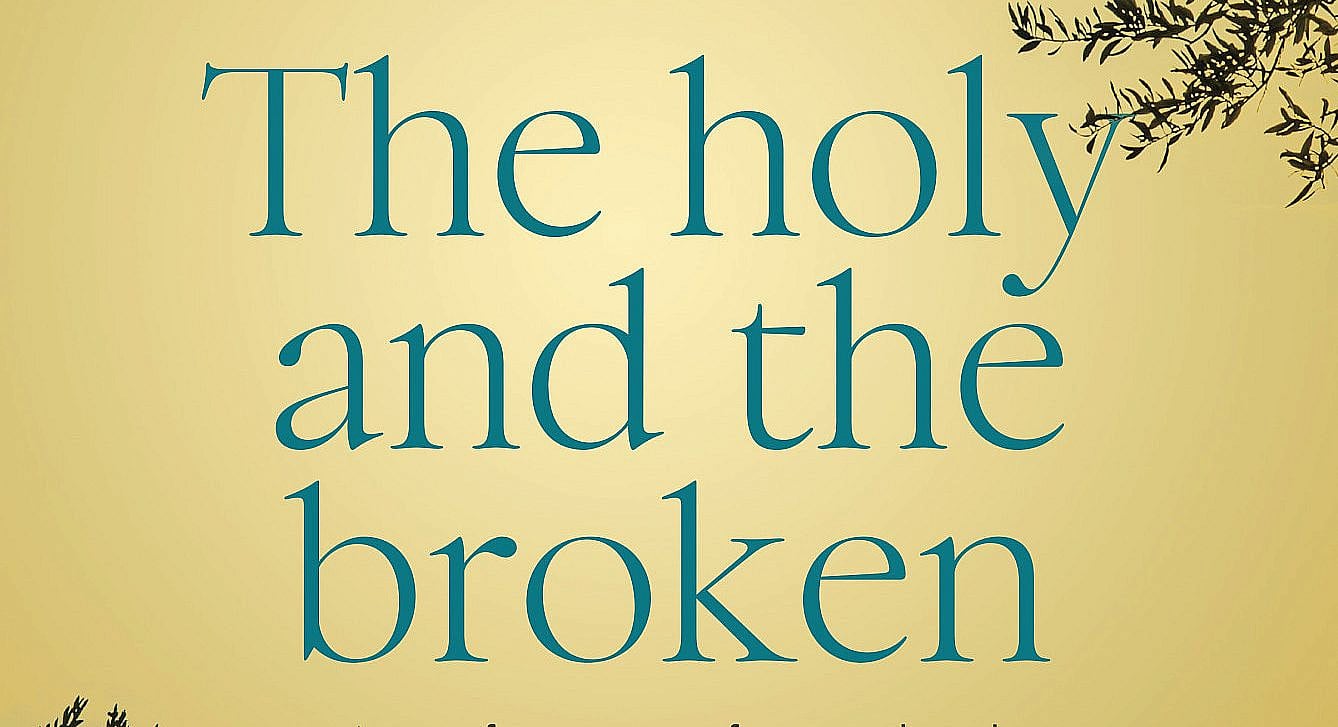
In fact, Israeli-Australian educator, journalist and peace activist Ittay Flescher started writing, The holy and the broken: A cry for Israeli-Palestinian peace for a land that must be shared—part memoir, part history book, part call-to-activism—in the dark days of death and despair after the attack while communities in the Gaza Envelope area continued to fight Hamas and search for their missing loved ones among the hostages and dead in the brush of burning eucalyptus groves as the number of casualties rose exponentially. In the blur of the bleak, Flescher recorded memoiristic impressions and snapshots of life in Jerusalem and in Israel at large, interspersed with his attempts to explain the war to his 14-year-old and 11-year-old. While working on his book, Flescher served as the educational director of Kids4Peace (K4P) Jerusalem, an interfaith youth movement that facilitates dialogue and trustbuilding between Israeli and Palestinian teens. He took the job in 2018, six months after he moved from Melbourne to Jerusalem, and it’s a position that he still holds today.
On October 9th, Flescher learned that some Palestinians in the peacebuilding community didn’t condemn the massacre. If Kids4Peace’s theory of change was to “humanize the other to build bridges of tolerance and understanding”, how did that precept weather the test of reality?
For Israelis and Palestinians alike, writes Flescher, October 7th and the ensuing war evoked “memories of national suffering”. Families hiding from armed terrorists storming into their homes, murdering children, elderly and babies, sexual violence, and torture resonated profoundly and ghoulishly of the Shoah. Weeks later, more than a million Gazans were told to evacuate their homes. Images of wandering Palestinians displaced and later on, tens of thousands of Palestinians killed during airstrikes targeting Hamas leaders and infrastructure echoed with the emotional reverberations of the Nakba. Against this backdrop, and all that has happened in the 700-plus days since, and tens of thousands more killed and at least 80% of Gaza destroyed, alongside rampant starvation and devastation, is the pursuit of peace still possible?
There are those who deem the Israeli-Palestinian conflict intractable, as if the word was designed to describe this particular conflict, who reckon the prospects for peace null and void, an outlandish goal, quashed with the Hamas massacre. On October 7th, Hamas terrorists murdered veteran peacemakers like Canadian-Israeli Vivian Silver, who created Jewish-Arab social-change organizations and championed rights for Gazan workers, and many others who lived in liberal communities supporting coexistence and peace. Ask the naysayers, haven’t we learned anything?
Yet others suggest that the gravity of it all confirms that the only way forward is peace, and Flesher is squarely in this camp. He presents a case for breaking out of violence, for hope. His voice is Aussie-accented, and I would venture to say, so is his perspective. Born in Ramat Gan, he moved to Australia when he was two years old and was reared in a country far from military conflict yet with its own indigenous population and complicated history. Deeply connected to his Jewish identity, Flescher became a teacher in Jewish day schools and a facilitator of interfaith dialogue. Embracing the history of Australian indigenous people, he initiated a Jewish day school curriculum that included visiting and learning in remote areas of indigenous communities. As such, he brings different insight to his perspective. “Victory is the creation of a better reality.” Flesher quotes Ami Ayalon, former chief of Israel’s internal security service, Shin Bet, who tellingly quoted the Prussian military theorist Carl von Clausewitz. As we’re all keen on a better reality, even those who deem Flescher’s dream and message profoundly naïve or downright delusional can nonetheless learn and gain by reading this deeply personal book.
The book’s title invokes lyrics from Leonard Cohen’s Hallelujah—The holy and the broken: A cry for Israeli-Palestinian peace from a land that must be shared is part memoir, part history, part educational primer or even advocacy. “If Jerusalem were a soundtrack instead of a city,” Flesher muses, “I’m almost sure that Leonard Cohen’s Hallelujah would be her anthem.”
Flescher’s stated aim is to “comfort the trouble and trouble the comforted”. Unpack that turn of phrase and you get a memoir/primer written in a teacher’s voice, with a glossary, maps, three eye-opening timelines (important events, Israel-Gaza wars, and Agreements, negotiations, and peace proposals), photos, primary sources, ideas, and stories. Part One covers the author’s personal experience and the history of Israel and Palestine. Part Two explores moral reckoning and challenges in peacebuilding. Part Three explores the roles of other figures who could help “disrupt the cycle of violence”: journalists, women peacebuilders, people of faith, schools, and grassroots movements. Flescher explains how each of these could be in service of changing the narrative and laying a foundation for peacemaking.
Particularly compelling is the correspondence written in French between Jerusalem’s Palestinian mayor, Yusuf al-Khalidi, and Theodor Herzl in 1899, framed as the first dialogue between a Palestinian leader and a Zionist leader. Khalidi shared with Herzl deep appreciation. “Who can dispute the rights of Jews to Palestine? My God, historically, it is your country! … But the reality is that Palestine is now an integral part of the Ottoman Empire, and what is more serious, it is inhabited by people other than only Israelites…. Therefore, in the name of God, let Palestine be left alone.”
Herzl responds a week later, trying to persuade the Jerusalem mayor that both Palestinians and the Ottoman Sultan would be open to Jewish migration for economic benefit. ‘I have submitted to His Majesty the Sultan some general propositions, and I am pleased to believe that the extreme clearness of his mind will make him accept in principle the idea of which one can afterwards discuss the details of execution. If he will not accept it, we will search and, believe me, we will find elsewhere what we need.’ Notable is his openness to go elsewhere if needed.
Openness to other, Flesher asserts, is paramount. People need to get over “the perception that hearing the story of the other and expressing empathy with their pain for other is not betrayal.” Dehumanization and lack of empathy stymie peace, as does the dearth of women at the negotiating table. Another obstacle is the lack of peace journalism, namely journalism that promotes solutions, in terms of topics covered, language used, images and story alternatives. Flescher also encourages fighting the fundamentalism of religious leaders with moderate faith perspectives.
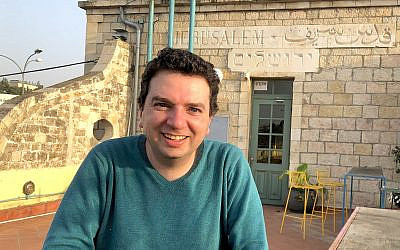
One of the last chapters concludes with moving letters penned to an imaginary Jewish Israeli teenager and an imaginary Palestinian teenager. Flescher labored on some 40 drafts to get these missives right.
And herein lies one of the secrets of this book. An earnest and deeply curious author, Flesher genuinely seeks balance. He truly wants to reach the teens, Israelis and Palestinians.
No matter how close or far you see peace, it is important that this book was written and published now. Flescher is holding on to hope and a vision of peace. If we avoid the conversation, it is hard to imagine how we will get there at all.
Related Topics
Related Posts