


Yale Health Discussion with Dr. Benjamin Tolchin
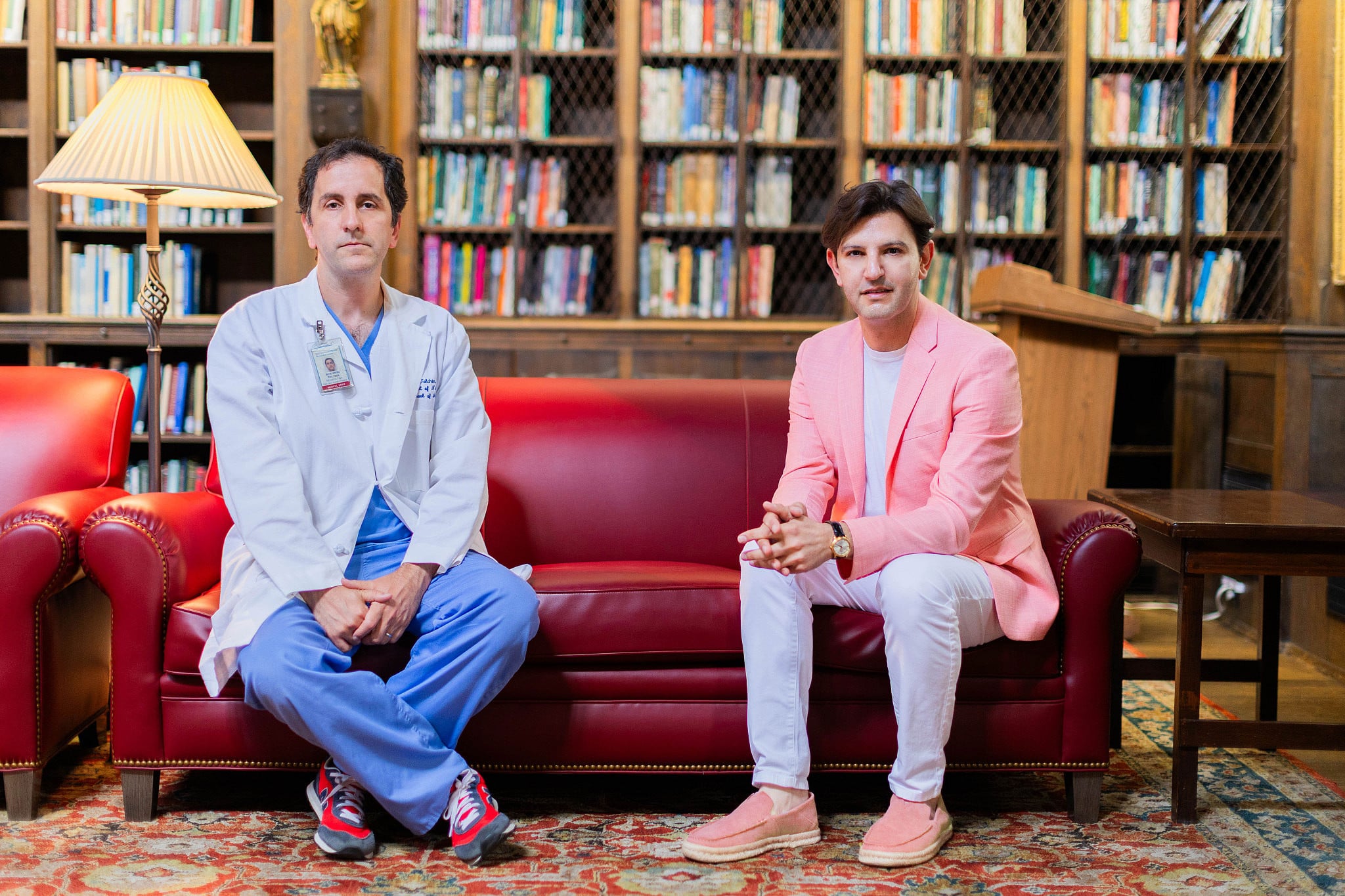
NEW HAVEN, CT, UNITED STATES – As I return to Yale University for another year of summer teaching, I have continued to explore the intersection of medicine, ethics, and the human consequences of conflict. Having written about communities affected by displacement, historical trauma, and war I was particularly interested in speaking with Dr. Benjamin Tolchin of Yale School of Medicine.
Dr. Tolchin’s research focuses on functional and non-epileptic seizures, epilepsy care, and clinical medical ethics, areas where neurology and ethics often intersect in important ways. From a Middle Eastern perspective, his work is especially relevant. Populations exposed to war, terrorism, displacement, and chronic stress frequently experience higher rates of trauma-related neurological and psychiatric conditions. Yet functional neurological disorders remain widely misunderstood by patients, families, and even physicians. Patients may present with seizure-like episodes but have no epilepsy, often leading to years of misdiagnosis and inappropriate treatment. At the same time, mental health conditions continue to carry considerable stigma in many Arab and Jewish communities, making diagnosis and treatment even more challenging.
Our discussion explored the neurological consequences of chronic trauma, the ethics of medical decision-making during humanitarian crises, and the importance of building healthcare systems capable of responding not only to disease, but also to the psychological and moral burdens that conflict leaves behind.
Your work has focused extensively on functional seizures and other neurological conditions that can be influenced by psychological stress and trauma. What should healthcare professionals and the public understand about the relationship between trauma, chronic stress, and seizure-like disorders?
There is very clear evidence from both animal models and human epidemiological studies that chronic trauma and stress affect the hypothalamic-pituitary-adrenal axis, leading to prolonged elevations in cortisol and dysregulation of the body’s stress response. That has significant consequences for cardiovascular health, the immune system, and mental health, including higher rates of depression, anxiety, and PTSD. There is also a strong association between chronic trauma and functional neurological disorders, including functional seizures. In my clinical experience, patients with functional seizures often have experienced not just a single traumatic event but multiple adverse experiences over many years, frequently beginning in childhood and continuing through adolescence and adulthood. When evaluating patients with new-onset seizures and a significant trauma history, clinicians should include functional seizures in the differential diagnosis. We know these conditions are common in trauma-exposed populations and that effective treatments are available.
Populations exposed to displacement, terrorism, war and prolonged uncertainty often experience significant psychological and physical health burdens. Based on your clinical experience, what neurological or neuropsychiatric consequences of trauma do you believe are most overlooked?
I think anxiety, depression, PTSD, and functional neurological disorders are often underrecognized in populations exposed to chronic trauma and conflict. Screening for these conditions is extremely important. From a neurological perspective, I believe clinicians evaluating new-onset seizures or cognitive symptoms in trauma-exposed individuals should carefully consider functional neurological disorders as part of the differential diagnosis. That does not replace a full medical evaluation, but it is an important possibility to keep in mind. Among U.S. military veterans presenting for seizure evaluation, functional seizures are actually more common than epileptic seizures as a final diagnosis. I think that observation has broader relevance for clinicians working with trauma-exposed populations worldwide.
In many societies, including those in the Middle East, mental health conditions can carry substantial stigma. How can clinicians effectively communicate diagnoses such as functional seizures in a way that validates patients’ experiences and encourages engagement with treatment?
I believe it is essential to communicate openly, honestly, and without stigma. In the past, clinicians sometimes delayed discussing the possibility of a functional neurological disorder until they felt completely certain of the diagnosis and then presented it almost as a revelation. I think that approach is counterproductive and can undermine trust. When I discuss functional seizures with patients, I emphasize that the symptoms are real and that this is not a matter of someone faking or imagining their condition. The goal is to understand the underlying cause of the symptoms so that we can provide the most appropriate treatment. I also believe strongly in shared decision-making throughout both the diagnostic and treatment process. We now have good evidence that psychotherapeutic interventions can reduce seizure frequency, improve quality of life, and reduce anxiety in patients with functional seizures, so helping patients understand the evidence and engage in treatment is extremely important.
As a clinical ethicist, how do you think healthcare systems should approach the treatment of civilians during armed conflicts, particularly when medical resources are limited and the demand for care exceeds capacity?
This is an area where I have less firsthand clinical experience, but I would say that in conflict settings it is important to think about scalable interventions that can reach large populations. Under normal circumstances, trauma-focused cognitive behavioral therapy, EMDR, and narrative exposure therapy are among the preferred treatments for PTSD and trauma-related conditions. However, these approaches require trained specialists and multiple one-on-one treatment sessions, which may not be feasible during armed conflict or humanitarian emergencies. In those settings, lower-resource interventions such as Problem Management Plus, or PM+, may provide a practical alternative. These programs combine psychoeducation, stress management, and behavioral activation and can be delivered by trained community health workers rather than specialist psychotherapists. While the benefits may not be as durable as traditional psychotherapy, they may be much more feasible in large-scale humanitarian crises.
During emergencies, whether caused by war, terrorism, or public health crises, difficult decisions may need to be made regarding ICU beds, ventilators and other scarce resources. What ethical principles should guide these allocation decisions, and how can healthcare systems maintain public trust?
My view is that during severe public health emergencies or armed conflicts, when resources are insufficient for everyone who needs them, triage decisions should focus on maximizing lives saved and life-years saved. Historically, the United States has been reluctant to move away from a first-come, first-served approach, but I think there are situations in which a more utilitarian or consequentialist framework produces better overall outcomes for the population. At the same time, transparency and consistency are absolutely essential for maintaining public trust. People need to understand how decisions are being made and why. If allocation systems appear arbitrary or politically motivated, public confidence in healthcare institutions can erode very quickly. I also believe that broader racial and socioeconomic disparities should be addressed through long-term social policy rather than through crisis triage systems, which have a much narrower purpose and a much shorter time horizon.
Looking ahead, what lessons from your work in neurology and clinical ethics do you believe are most relevant for policymakers and healthcare leaders seeking to build resilient health systems capable of responding to both trauma-related health conditions and large-scale humanitarian emergencies?
One lesson is that trauma has profound and lasting effects not only on mental health but also on neurological health, cardiovascular health, and immune function. Healthcare systems need to be prepared to identify and treat those consequences early. A second lesson is that during public health emergencies or conflicts, healthcare systems should remain focused on maximizing lives saved while maintaining transparency and public trust throughout the decision-making process. Finally, I think it is important not to lose sight of the broader social determinants of health. Issues such as racial and socioeconomic disparities require sustained attention and long-term policy solutions outside the context of emergency response. During a crisis, healthcare systems function best when they remain focused on delivering the greatest benefit to the greatest number of people.