
Author of literary fiction and academic nonfiction
Yearning: A Short Story
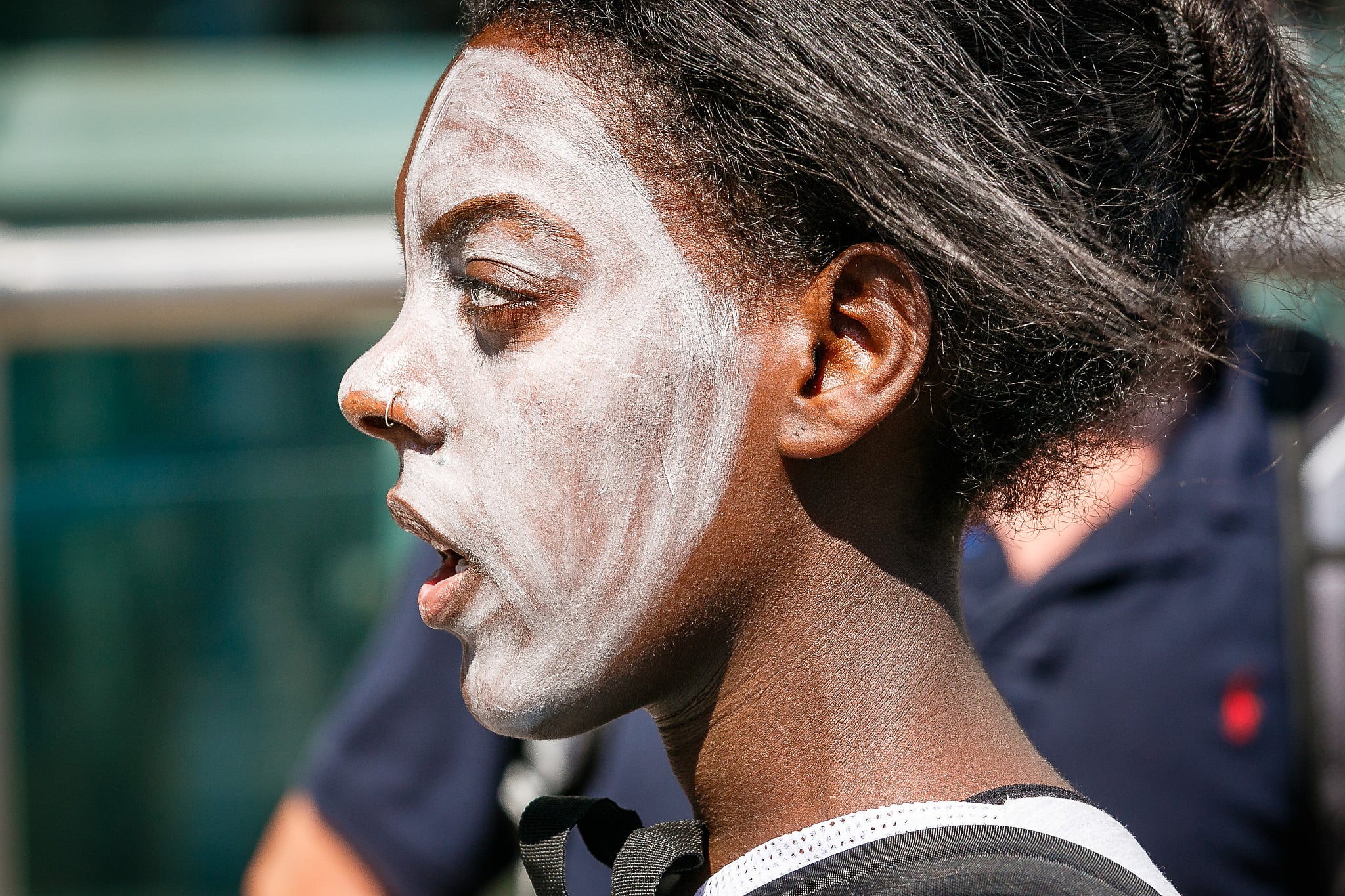
Demonstration of Ethiopian residents in Tel-Aviv. Harvey Sapir via the PikiWiki.
Every Friday morning, an inner struggle materializes, as if it were taking place for the first time: Should Pnina leave Tel Aviv for two days, or call and offer excuses, which are always met with deep sighs? Travel to Kiryat Malakhi or engage in studying in her small room in south Tel Aviv? Avoid the oppressive image of her mother crying and muttering in Amharic, or surrender to the thought of her warm embrace?
Pnina is sitting in the balcony, watching the street. The grocery store owner is pulling fruit stalls onto the pavement, two foreign workers speak in an unknown language, a woman is pushing a stroller with a whining child following her. A street corner between buildings that seem neglected, but is full of pain and vitality. The phone is right next to her; she is watching it but doesn’t reach her hand out to grab it. She can hear her mother’s soft, slightly wailing voice, watching her as she is studying, caressing her head and saying, when will you get married?
To remove the growing grudge spreading within hidden curving tunnels, she reproaches herself, thinking of offensive words she hears in Tel Aviv. People call her ‘black’, sometimes even ‘nigger’, standing in a store, customers always assume she is the shop girl. Even in college she was offered academic assistance, though her grades are excellent. And the flattering words of the blond young man who is courting her, that her dark skin is beautiful, leave her annoyed, though he meant no harm. But all these self-admonitions dissipate as she thinks of her mother waiting for her in Kiryat Malakhi, smiling at her gladly though her eyes always betray a bitter sadness.
When Pnina was complimented for being a good student in elementary school, her mother smiled, as if she were mischievous. When she was accepted to honors class in middle school, her mother looked at her suspiciously. As she became an excellent student in high school, they were slightly drawn apart. As she said she planned to leave Kiryat Malakhi for college, the arm embracing her dropped and her mother took a step back. Leave?! Her dark eyes were wide open, revealing a clear pain; the long way in the desert that left her mute, her son who died in a refugee camp despite her desperate pleas to save him, arriving in a foreign land with her young husband. From a small village next to a mountain, she moved to graceless buildings, and what followed was inevitable. A couple of pregnancies ended in abortions, her husband, who turned sullen and impolite, moved with his parents, and she was left alone with two children. And now the daughter wants to leave?
A college in Tel Aviv had offered scholarships for underprivileged students with excellent grades. When Pnina saw the advertisement, she had trembled. A small hidden wicket opened, leading to a different way of life, far away from Kiryat Malakhi. The excitement was well reflected in her gentle facial features: her straight eyebrows stretched, her thin lips tightened. Women spoke Amharic in the next room. As footsteps drew near, she snapped off the computer and stood frozen in the center of the room.
When she moved to Tel Aviv, she insisted her mother come to see the room she has rented. Maybe this would stretch an imaginary thread from Kiryat Malakhi to Tel Aviv, and she wouldn’t feel her daughter was moving to a strange place. Pleasant sun filled the sky as they walked together in the alleys of south Tel Aviv, a slim woman dressed in colorful clothes, a white scarf wrapped around her head, holding the arm of a young women wearing blue jeans and a tank top. But before the mother got on the bus back home she grabbed Pnina and wouldn’t let go, until the driver yelled that if she didn’t get on the bus right now he would leave without her.
Professors with a grave countenance, unfamiliar academic language, well-lighted classes, text books, young people eager to immerse in conversation—in the first couple of weeks in Tel Aviv, Pnina was overwhelmed. Walking in wide corridors, she felt she had been reborn. The shabby buildings disappeared, replaced by wide halls, air conditioned and comfortable. No longer was she a young woman men coveted, now she had become an inquisitive student. A years-long craving for a different life was finally found fully justified, materializing in every class, assignment, exam. Late at night, after she returned to the small room in south Tel Aviv, she sank into deep, dreamless sleep.
But longing is a deceitful devil; when you think it’s gone it reappears, mocking and sticking a tongue out. One bus took her to Kiryat Malakhi, the other carried her through the town’s streets. The path leading to the entrance of the building revealed vulgar graffiti in plain sight, empty cigarette packs and bottles of beer discarded next to the fence, a filthy stairwell, the door peeling and the handle broken—but then her mother’s eyes splattered myriad flakes of love and sorrow. Embraced in the arms of a slim woman enveloped in colorful fabrics, Pnina was crying as if a disaster had struck.
At dinner, she omitted various sentences, which disintegrated into words and syllables. Her mother watched her intently as she described what she was studying. And though she portrayed her daily routine in very simple words, the mother’s eyes, filled with the pain of the desert and the shabby buildings, turned to her as she asked, are there any Ethiopian men there? Did you meet someone?
Once again, resentment materialized, a long wick that tangles and became a ball of string that couldn’t be unraveled; her mother disapproving of her wish to have a different life watched her disappointed, Tel Aviv, that seemed to belong to someone else, smiling and wealthy, the college that, in spite of her achievements, saw her as an Ethiopian young woman. Pnina’s face flushed and her body weakened. Yearning had always been a support, a source of encouragement; now it became a heavy burden, exhausting and alarming.
Related Topics
Related Posts