
Examining Extremism, Identity, and Influence
Yemen Beyond War: Dr. Al-Jaber’s Push for a Real Economic Vision
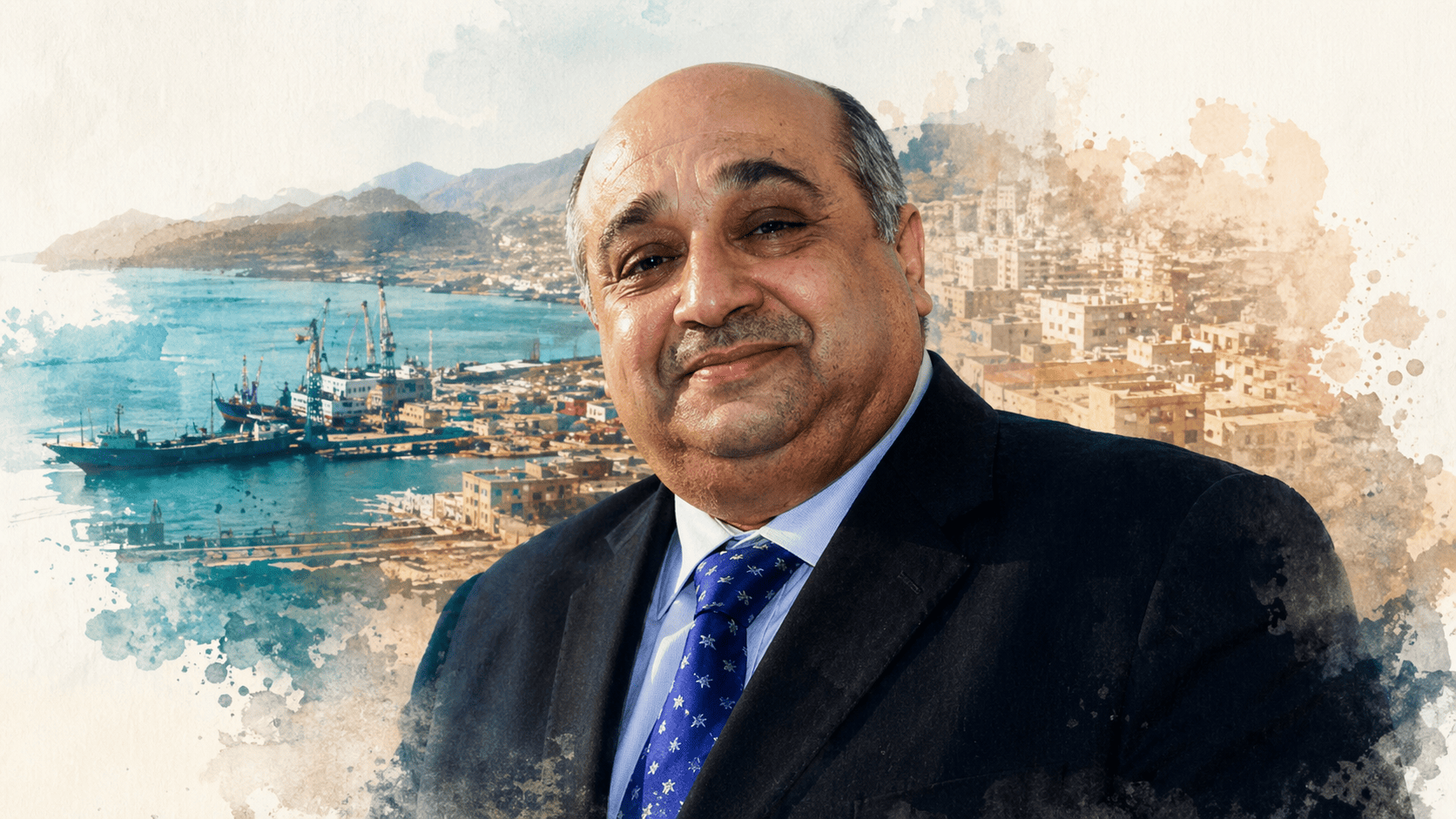
Photo illustration: Courtesy of Author
Yemen does not suffer from a lack of ideas. It suffers from the absence of conditions that allow those ideas to survive.
In a region exhausted by years of conflict and uncertainty, Sheikh Dr. Mohammed bin Isa Al-Jaber’s recent address, carried by Tihama News, feels less like a speech and more like a reckoning. It is the kind of intervention that forces a pause—not because it offers easy answers, but because it asks a harder question: what if Yemen’s greatest failure is not war itself, but the absence of a serious, sustained vision for what comes after?
Al-Jaber does something unusual for a political figure. He does not begin with policy. He begins with memory. By invoking Yemen’s historical figures and its long civilizational arc, he reminds listeners that this is not a country without roots or capacity. It is a country that has, somehow, been unable to translate its past into a viable future. That gap—between potential and reality—is where his argument lives.
The Cost of Lost Decades
There is a quiet frustration that runs through the speech, and it is hard to ignore. Al-Jaber speaks of more than 40 years of attempted development—projects imagined, negotiated, even initiated, only to be derailed by what he bluntly calls “corruption lobbies and narrow interests.” It is a familiar story in Yemen, but hearing it framed as a long-term structural failure, rather than a series of isolated setbacks, gives it new weight.
This is not just about missed opportunities. It is about the accumulation of loss. Each abandoned project is not merely an economic setback; it is a signal to citizens that progress is always deferred, always conditional, always vulnerable to forces they cannot see or control.
In that sense, Yemen’s crisis is not only political or humanitarian. It is psychological. A country cannot move forward if its people no longer believe that forward movement is possible.
Learning from Others—If Yemen Chooses To
What sets Al-Jaber’s speech apart is his insistence on looking outward, not for aid, but for lessons. His reflections on Singapore and South Korea are not new comparisons, but they are used here with unusual clarity. These are countries that started with less—fewer resources, deeper crises—and yet managed to build functioning, competitive economies within a generation.
Yemen’s political fragmentation and ongoing conflict make such transformations far more difficult. But that is precisely his point. Geography has already given Yemen an advantage, particularly along the Red Sea and the Bab al-Mandab strait. Aden, once a thriving global port, is not an abstract dream; it is a reminder of what existed before decline set in.
The idea of reviving Aden as a free economic zone, supported by distributed industries and a mobilized workforce, is ambitious. Perhaps overly so. But ambition, in Yemen’s current discourse, is in short supply. What Al-Jaber offers is not a detailed blueprint as much as a direction: build around people, not just resources; create systems that allow participation, not just extraction.
Federalism or Fragmentation?
The most politically charged part of the speech is his call for a federal structure—one that gives regions like Tihama meaningful autonomy while preserving national unity. It is a proposal that has surfaced before, most notably during Yemen’s National Dialogue process, and it remains deeply divisive.
Supporters argue that decentralization is the only way to address long-standing regional inequalities. Critics fear it could accelerate fragmentation in an already fractured state.
Al-Jaber leans firmly toward the former view. For him, federalism is not a concession; it is a correction. A way to bring governance closer to people, to allow regions to develop according to their own capacities, and to reduce the concentration of power that has historically enabled corruption.
Whether Yemen is politically ready for such a shift is another question. Federalism requires institutions, trust, and a shared commitment to the broader state—conditions that are, at best, fragile today.
The Saudi Factor: Reframing a Difficult Relationship
Perhaps the most interesting element of the speech is Al-Jaber’s defense of Saudi Arabia’s role in Yemen. He challenges the narrative of Saudi intervention as purely strategic or self-interested, instead portraying it as a consistent response to Yemeni appeals for support across different historical moments.
This is, inevitably, a contested claim. Yemenis themselves remain divided on how to interpret Saudi involvement, particularly since 2015. But what is notable is not just the defense itself, but the attempt to reframe the relationship as one rooted in shared history and mutual obligation.
Any serious discussion about Yemen’s future will have to grapple with the role of regional powers, whether acknowledged or not.
A Vision That Demands More Than Words
In the end, Al-Jaber’s speech does not offer comfort. It offers challenge. It asks Yemenis to take ownership of their future, to move beyond narratives of victimhood, and to confront the internal barriers that have stalled progress for decades.
But it also raises an uncomfortable truth. Vision alone is not enough. Yemen has had visions before—some of them remarkably similar to what is being proposed today. What it has lacked is the ability to protect those visions from being dismantled by politics, by corruption, or by conflict.
If this moment is to be different, it will require more than speeches. It will require institutions that can endure, leadership that can prioritize long-term gains over short-term power, and a public that is willing to demand both.
Yemen does not suffer from a lack of ideas. It suffers from the absence of conditions that allow those ideas to survive.
Al-Jaber has, at the very least, put one thing back on the table: the possibility that Yemen’s future can still be built, rather than merely endured
Related Topics
Related Posts