
Yom Kippur: Living a Guilt-Filled Life
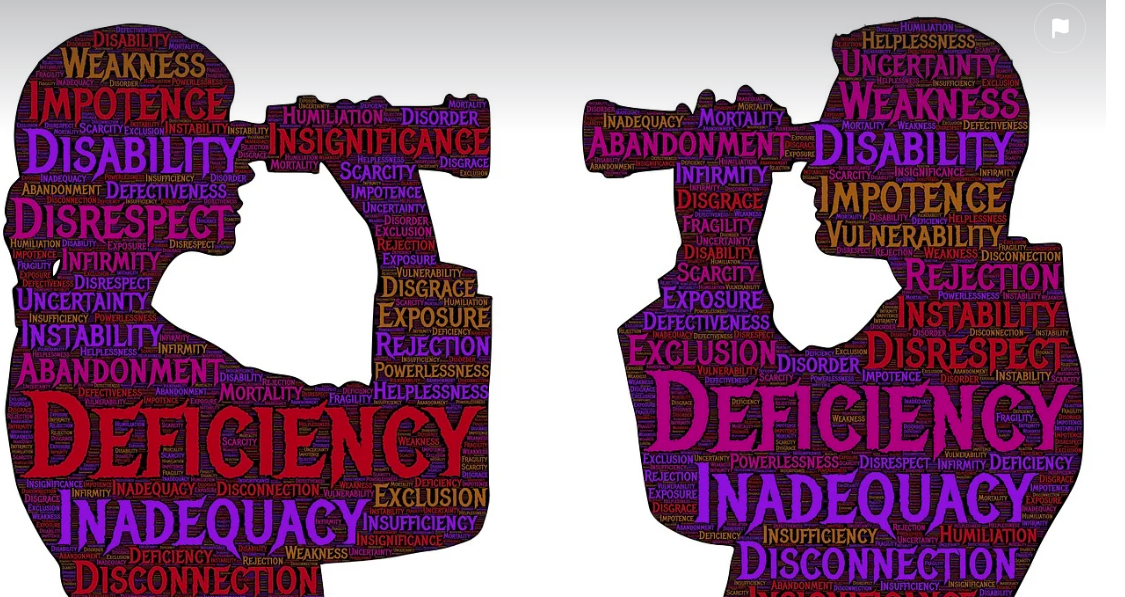
Our Lord and the Lord of our fathers, may our prayers come before You and do not ignore our supplication. We are not so brazen and stiff-necked to declare before You, God our Lord and the Lord of our fathers, that we are righteous and have not transgressed; rather (aval), we and our fathers have transgressed.
-The introduction to the Vidui (confessional), Yom Kippur Liturgy
If a person transgresses any of the mitzvot of the Torah, whether a positive command or a negative command – whether willingly or inadvertently – when he repents, and returns from his sin, he must confess before God, blessed be He… How does one confess? He states: “I implore You, God, I sinned, I transgressed, I committed iniquity before You by doing the following. Behold, I regret and am embarrassed for my deeds. I promise never to repeat this act again.
-Maimonides, Laws of Repentance 1:1
We are a society that hates guilt, does not want to confess. Indeed, to confess in our age is often seen as a weakness. Yet, we cannot get enough of shaming- people, communities, political parties and nations. This is true of individuals and is true of nations.
In a year with endless cycles of events parading as news, I want to direct us to a recent episode that embodies the sickness of our times. I speak of the jumbotron at a recent Coldplay concert, where a couple engaged in an illicit romantic relationship were caught on screen holding one another. The couple, realizing their images were being projected on a screen for everyone to see, did what most people might do, instinctively fall to the floor in embarrassment and shame.
In the annals of human history, this story is simply not newsworthy. The indiscretions (sins) of the couple are indeed objectionable, but they are not any more sanctionable than the millions of indiscretions (sins) that many other people commit, including people we know, and perhaps even love.
What struck me as much more significant was how our society reacted to this crime. Consider the front page (!) of the New York Post, who saw fit to feature this on page one. “Dumbotron,” the headline declared. Indeed, at that Coldplay concert I am quite certain that there were other couples engaging in illicit affairs. Others probably were involved in financial fraud. Others were involved in domestic violence. I do not remember any ‘investigative reporting’ of the New York Post into the personal affairs of any other person there. In truth, the headline simply relished in the humiliation of two people, and in the process committed a crime compared in Jewish tradition to ‘shedding blood.” Indeed, the sharing of this information says a lot more about the people who choose to publish this scandalous clickbait than the actual people who committed the sin. This image then went viral and became a meme, the fodder of late-night TV.
This story, which came and went within days (except for the people themselves), raises deeper questions about the world in which we live. If we consider ourselves moral individuals, we must ask ourselves a central question: What was the reason as a society we saw it fit to publicize and circulate such a scandalous affair? While I am sure that some might answer to sanction and dissuade such behavior, I cannot believe many woke up the next morning to their sins and did deep introspection. Indeed, many took notice and probably took precautions to be more discrete in their affairs. This was no story of the prophet Jonah, where he declares, “In three days Nineveh will be destroyed,” and incredibly all repent!
The key to the malady infecting our society is to understand the deep chasm between shame and guilt. The culture of shame we have created enables us to point the blame on others, ignoring our own inner inconsistencies. Shame is always outwardly focused; people are humiliated and forced to publicly regret their actions, or even to deny and point the finger towards someone else. (Remember Adam and Eve?) Whether there is a real change is truly unknowable. However, the shamer is not blameless, as the object of shame becomes a convenient scapegoat, sparing themselves of the introspection required for change. “I am not so bad! Do you want bad? Look at him!” Only two weeks ago in our Torah reading, Moses described such individuals that refuse to take responsibility for their actions. After hearing all of the blessings for those who are faithful and graphic curses for those who are not, he imagines himself blameless, saying, “I shall be safe, though I follow my own willful heart.” (Deut. 29:8) These people are described as “poisonous weeds and wormwood” (29:8), and I assure you that they too played the shame game. It is ‘they’- not me- who are the problem. Individuals do this, leaders, and as we will see, nations.
Guilt, however, is a completely different matter. Ironically, in a culture so obsessed with shaming others, we resist the idea that we are guilty – we sin. Guilt, unlike shame, is focused inward. We live in a society where people are often told that guilt is bad, preventing us from becoming who we really are. To this idea, the Jewish tradition declares otherwise.
In truth, stirrings of guilt are ideally messages of the soul. Guilt is in fact indicative of the fact that we are ennobled beings, and we realize the gap between our idealized self and our real self. A person who has no higher aspirations of self beyond the moment does not experience guilt; similarly, animals do not experience guilt. Thus, seen properly, guilt is indicative of a person who is emotionally and spiritually healthy, a person who strives to be all that he or she can be. Our tradition believes in the greatness of humanity, and therefore the stirring of guilt can be a productive thing, catapulting us all to even higher levels of living. Shame can rarely do this, and all too often relieves us of the work we must, instead scapegoating others for our own misdeeds.
In the introduction to the confessional on Yom Kippur, cited above, we state ‘we are not brazen enough to say we are sinless. “Aval, we have sinned.” Most siddurim translate the word aval as ‘but we have sinned,’ but the actual translation is more akin to ‘alas, we have sinned.” The word is a clear illusion to another confession- Joseph’s brothers when Joseph accuses them of being spies.
They said to one another, “Alas, (aval) we are guilty (ashemim anachnu) on account of our brother, because we looked on at his anguish, yet paid no heed as he pleaded with us. That is why this distress has come upon us. (Gen. 42:21)
This verse describes the remorse of Jacob’s sons who finally realize the heinous nature of their crime in selling their brother. Interestingly, the first word of the alphabetical confession/ vidui, ‘ashamnu’ (we have transgressed) is the same root word used by the brothers here, ashemim anachnu. We are told for the first time that Joseph was in distress and pleading, but his cries were unheeded. For the brothers, this is the beginning of the repentance process. Earlier the brothers experienced shame. They had sold Joseph, and hid their crime from the father, but it is unclear to the reader whether they felt remorse and regret. This is the first time we learn of their regret. Thus, the confessional/ vidui on Yom Kippur is modeled after the regret of our forefathers; it is the first step in the process of reconciliation.
Yom Kippur is a day for atonement and reconciliation. For God to wait for us is an act of remarkable forbearance, a forbearance that all too often we fail to grant to others. In essence, God understands we will fail, not live up to our obligations in this world, but at the same time believes that each of us has the capacity for renewal. Guilt- not shame- is rooted in this same belief in our own capacities. Unlike shame, which is imposed upon us from the outside, guilt derives from within each of us, a message of sorts from our higher sense of being and purpose. While guilt can indeed be debilitating, leading to an overbearing self-judgment or even self-loathing, a healthy dose of guilt in our lives is healthy, alerting us to those aspects within ourselves we hope to improve upon.
This distinction between guilt and shame is not simply about individuals but also societies. Any healthy society constantly critiques itself, striving for improvement and growth. Sadly, all too often, our society has pitted one group against another. “Shame on the left! Shame on the right!” We relieve ourselves of the hard collective work we need to do by pointing our fingers at the others, like the couple on the jumbotron. It is they- not us- who should be the objects of scorn and opprobrium.
On the international level, the State of Israel- and the Jewish people by extension- have been consciously and unconsciously transformed by many as the scapegoat to shame for all of the imagined and real crimes of Western civilization. It is so convenient for violent dictatorships and failed states to point to Israel’s crimes as the worst in history, enabling them to obfuscate their own heinous crimes. Make no mistake. Israel has been projected on the international jumbotron for all to see. For too many, we have become the symbol of all that is wrong in the world.
We dare not internalize the messages of our enemies, the ‘accusing angels’ among us, who claim we or the State of Israel is ‘born in sin’ or ‘irredeemable’. We need to ignore the drivel of self-righteous actors, musicians, politicians or academicians who seem to fixate upon us as the exclusive people deserving of shame. The Jewish people are a great people who have given much to the world. We need not overly flagellate ourselves for doing what any people would have done in the face of the attacks on October 7.
This year for has been extraordinarily difficult for our people, as many of our brethren have needed to literally fight an enemy that completely lacks any moral compass, who sees every Jew as one Jew too many and the death of their own people as strategic asset in their radical ideology. That Jews and others have many opinions (including me) about such a war and how to combat this enemy in line with our historic values and security needs is evidence of a society that is morally sensitive under extraordinarily difficult circumstance. That internal dialogue, of how to be the society we hope to be, is something that most Israelis do every day. These debates, and not what we see in the press, are the debates we need to engage in. Just as the individual needs to confess, so too societies. Shaming others in fact paradoxically maintains the status quo, but makes one feel the illusion they are morally superior, while in fact they are morally lazy. Shamers refuse to confess themselves, all the while projecting their crimes upon others.
Maimonides teaches that confession is the sign of teshuvah, repentance, an idea rooted in the optimistic belief in the notion of human growth and perfectibility, that tomorrow can be better than today on individual and collective levels. This idea is the final notion expressed in the Neilah Prayer of Yom Kippur:
You reach out Your hand to transgressors, and Your right hand is extended to receive those who [truly] repent. You have taught us, Lord our God, to confess before You all our iniquities so that we may refrain from the injustice of our hands… You have set man apart from the beginning and recognized him as worthy to stand before You. For who could tell You what You should do, and even if he be righteous, what benefit does he give You? And You, Lord our God, gave us with love, this Day of Atonement to be the end [of sin] forgiveness, and pardon for all our iniquities, so that we may refrain from the injustice of our hands; and return to You, to fulfill the statutes of Your will with a perfect heart.
The question – as individuals and societies- is whether we can honestly face our obligations and ourselves or will we rather do what the world conveniently does on both individual, communal and even international levels- shame and externalize our own faults upon others.
Our prayer- and our tradition- believe that human nature and human destiny is never fixed, but pregnant with possibility. In learning the art of confession, we embrace a higher narrative of self which will help us through the troubling times we live, through living out our higher values.
Wishing all a meaningful fast.