
Scarlett Johansson should be on your list
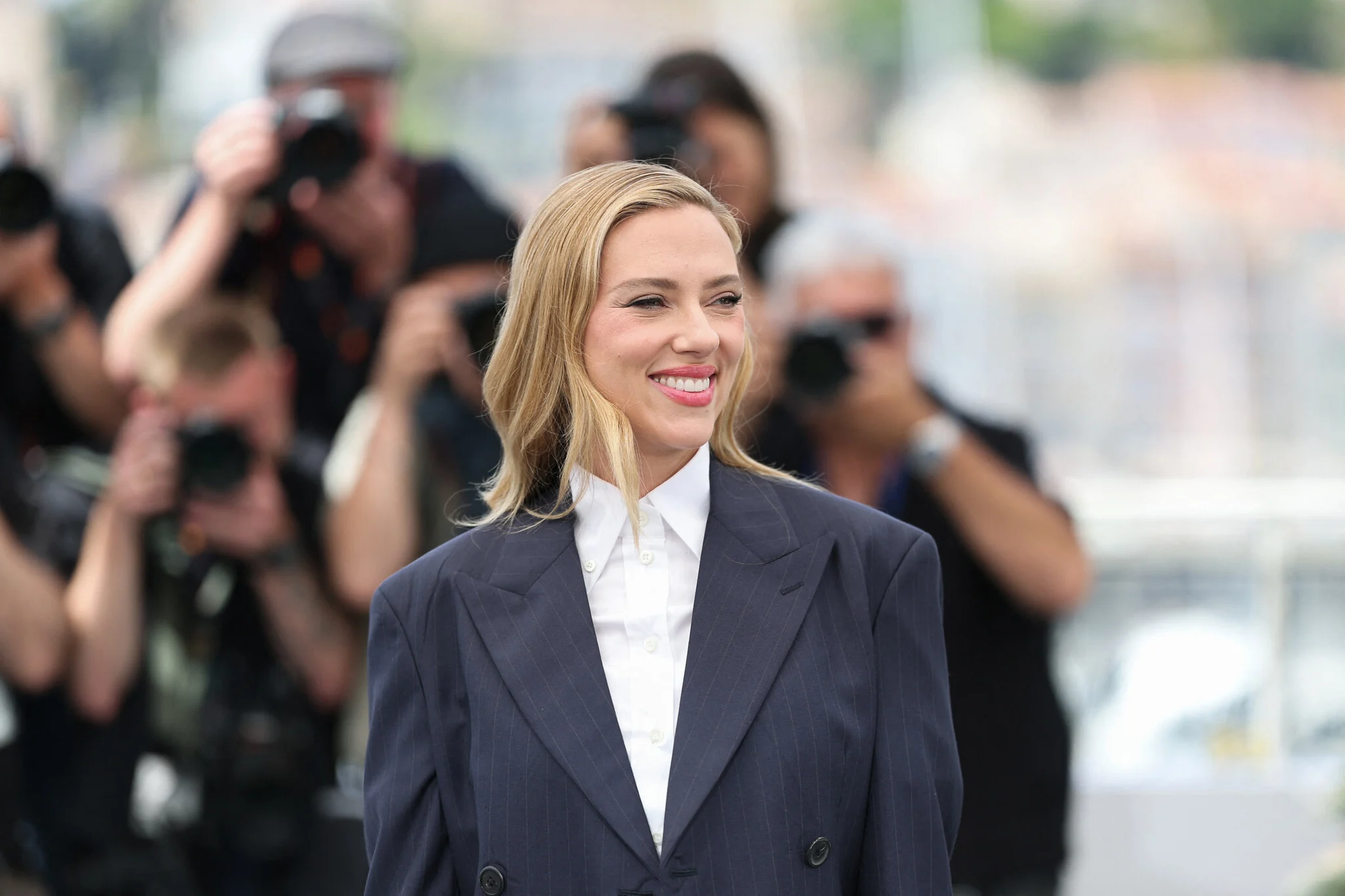
There was a fun diversion this week on the podcast Unholy (always excellent, hosted by Yonit Levy of Israel’s Channel 12 and The Guardian columnist Jonathan Freedland), as the hosts noted Jewish American Heritage Month and pondered whom they personally would anoint as their favorite Jewish Americans.
Their lists included, among others, Philip Roth, Mel Brooks, Billy Crystal, Woody Allen with the expected reservations, Mandy Patinkin, Larry David and, if Canadians are allowed, Leonard Cohen (Freedland); Betty Friedan, Hedy Lamar (Levy) and Taffy Brodesser-Akner.
First thing to say — no mention of the very many Jews who created that most Jewish and most American of art forms, the musical? If the likes of Jerome Kern, George and Ira Gershwin, Richard Rodgers, Oscar Hammerstein, Leonard Bernstein, Marvin Hamlisch, Jerry Herman (who even wrote a musical named Milk And Honey, including the song “Shalom”!), Jule Styne, Kurt Weill, Irving Berlin, Kander and Ebb, Stephen Sondheim and perhaps above all, Sheldon Harnick and Jerry Bock (authors of the defining Jewish Broadway show, and if you don’t know to which I’m referring, you may have to question your own Jewishness) — if all of these and more aren’t among the defining Jewish Americans, then I won’t even bother to go on to list the Hollywood composers who forged the sound of America itself.
Nor the Jewish cartoonists who created the superheroes that gave us “truth, justice and the American way” and all of that. Nor the film directors (ahem, Steven Spielberg) who taught Americans to look up and out, and then inwards.
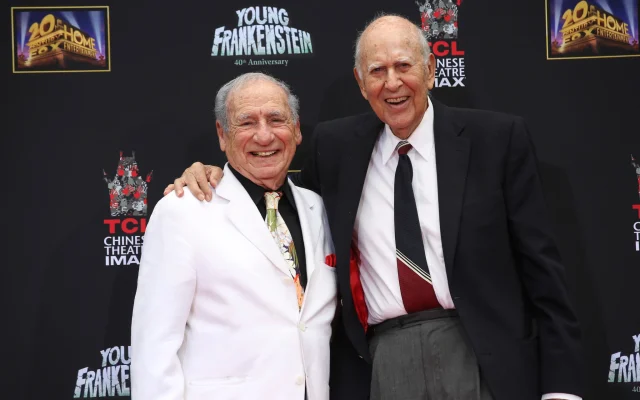
But there should be more to this conversation than that. Because if both Freedland’s and Levy’s lists leaned heavily towards the arts, that tells us something about the place of artists in our sense of identity. Woody Allen laid down one kind of Jewish stereotype that we enjoy playing on and with; Mel Brooks and Larry David have both defined other kinds of Jewish humor that make up so much of our collective psyche (actually, since both Allen and Brooks and for that matter Carl Reiner and Neil Simon were all part of the writing team of comedian Sid Caesar, one might well acknowledge that one-time Jewish superstar as a creative wellspring, but that’s for another article).
But identity is more than just inference. Many of the African-Americans of whom we immediately think, and alongside whom many Jews marched, were proudly affirmative of their identity, even in the face of frightening, widespread hostility and racism. And so at this most challenging of moments for world Jewry, I think we should prioritize recognizing those who not only have excelled, but who are, at this pivotal moment, unbending and publicly proud in their Jewishness.
This is not the same as political activism, which is something else. It’s simply standing up, and by that very act, giving reassurance and inspiration to Jews across America and the wider diaspora. And Yonit’s and Jonathan’s list feels rather short on that kind of thing (Taffy Brodesser-Akner being an exception, while Mandy Patinkin if anything seems a divisive figure).
And so I suggest to Yonit and Jonathan that we should all salute Scarlett Johansson, who refused to remove Holocaust references from her film Eleanor The Great, even though it meant losing a major funder. The Avengers star has also spoken about her fear of physical violence from anti-Semites, yet does not back away from her Jewish identity or values.
Friends actor and director David Schwimmer deserves another place in our pantheon for speaking out against anti-Semitism. “You don’t have to say anything political, no one’s asking you to solve the problems in the Middle East,” he told an Anti-Defamation League event in March 2025, “Just say that you stand with your Jewish friends, colleagues and neighbors against hatred and discrimination.” Making such a speech, at a time when even the ADL itself is the target of intense vitriol, was an act of Jewish courage.
Mayim Bialik has been in the lives of TV watchers from her early days in the teen series Blossom, through The Big Bang Theory and beyond. Today she talks frequently and openly and humanely about being Jewish. Jerry Seinfeld, as great a comedian as any, dared to shed tears when recalling his visit to Israel in a private capacity to view the October 7 sites — and now he bats away his frequent aggressive hecklers with dismissive (and genuinely funny) humor.
Aaron Sorkin, whose work is shot through with Jewish themes (we all recall the electric confrontation between the Jewish Presidential advisor Toby Ziegler and an anti-Semitic Christian extremist in the pilot of The West Wing; later episodes took a nuanced approach to Israeli-Palestinian peace talks), fired his agent for expressing views about Israel that he, as a Jew, could not live with (“she’s just wrong”), shortly after October 7.
Adam Sandler, Michael Douglas, Mila Kunis, Paul Rudd — none of these people, with the possible exception of Mayim Bialik (but not really), are being overtly political. They are simply great American Jewish artists doing what great American Jewish artists can: Being explicit and proud about the fact that they are Jewish.
That’s it. But that’s a lot.
Happy #JewishAmericanHeritageMonth! Join us this May as we honor and celebrate our Jewish American friends and neighbors in our communities.???????? pic.twitter.com/324fyjW8SQ
— Sesame Street (@sesamestreet) May 1, 2026
This past week, Sesame Street paid tribute to Jewish American Heritage Month by posting on socials a gentle, sweet clip from 2023, in which Jewish-American “Street” regular Kat Graham talked to the puppet Abby Cadabby, saying, “Happy Jewish American Heritage Month! As a proud Jewish American, I am so, so proud to celebrate my community and my heritage this month, and every month.” She then offered to teach Abby Cadabby to make matzoh ball soup. Pretty inoffensive stuff, you’d think. Yet, as reported in The Times of Israel and elsewhere, the short clip drew an online tsunami of anti-Semitic bile (“No one wants any more Jewish supremacy bullsh*t,” wrote Dan Bilzerian, an influencer and Congressional candidate).
So, yes, standing up and being Jewish is a lot right now. And in celebrating Jewish American Heritage Month, we should all acknowledge that. After all, it’s our first — our vital — line of defense.