


A Mermaid in Jerusalem
You can’t build a holy society on bloodlust and chaos. You need a moral core
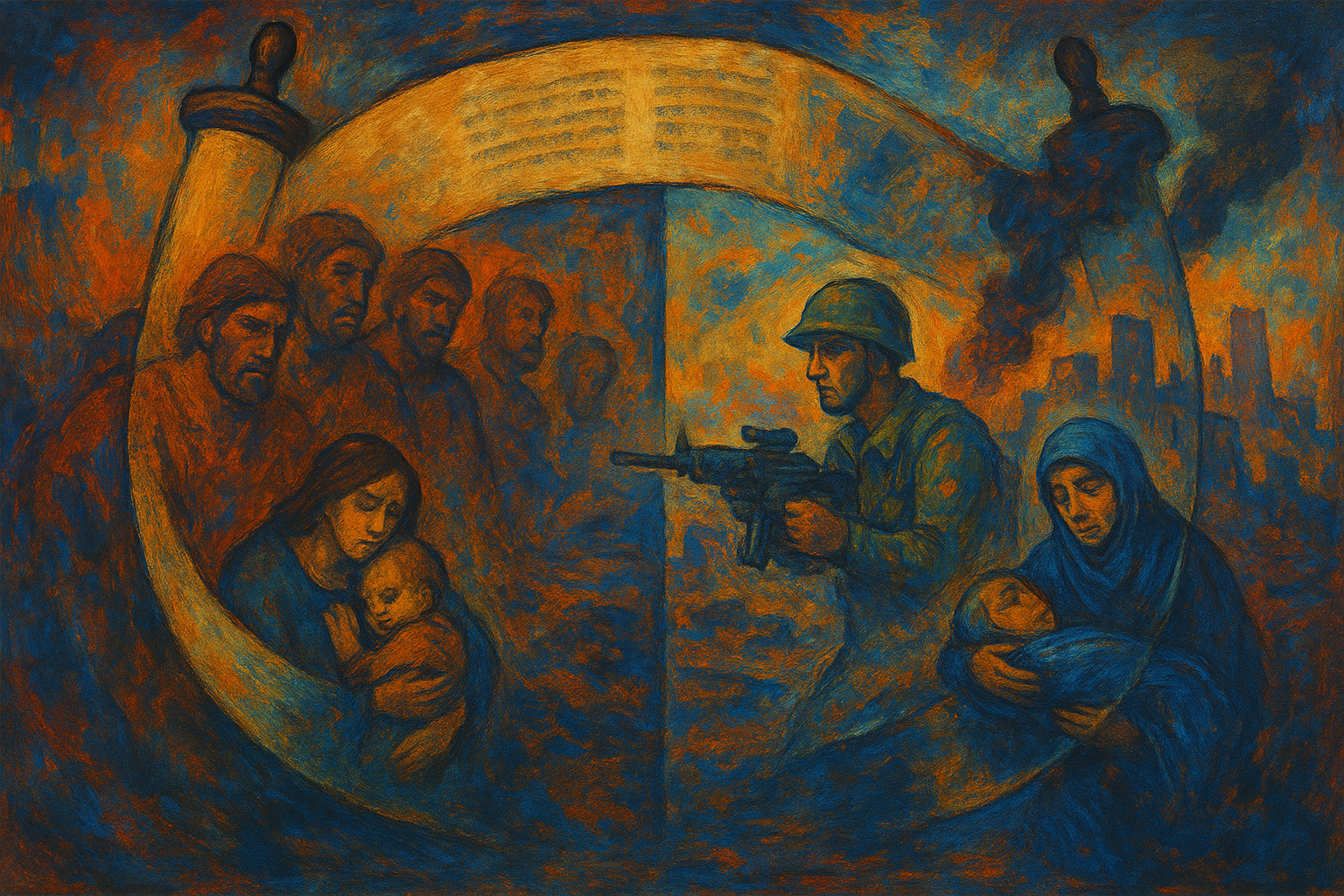
Image generated by the author
This week’s Torah portion is not a good vibes only kind of read.
So consider this your trigger warning:
Parashat Matot is soaked in blood. Like, literally.
Moses tells the people: “Take vengeance against the Midianites.”
So they do.
1000 soldiers from each of the tribes of Israel draw their swords and storm Midian.
They kill every man.
Then they drag the women and children back as prisoners, spoils of war.
Faces streaked with dust and tears, bodies trembling, mothers clutching babies who will never understand what’s happened to their world.
And Moses? He isn’t satisfied.
He sees the captives and he rages:
“Why did you let the women live?”
These women, he says, led the Israelites into sin.
So the soldiers draw their blades again.
They slaughter the women.
They slaughter every boy.
Only the virgin girls are spared — to be absorbed into the camp.
And we’re supposed to read this and be cool with it?
I don’t think so.
We’re supposed to read this and ache.
We’re supposed to read this and really understand that this is what war looks like.
Even holy war.
Even “justified” war.
Blood on hands.
Children dead.
Moral clarity drowned in a red tide of retribution.
So how do we live with this?
How do we read these verses while a real war rages?
While hostages are still in Gaza.
While we bury soldiers, some barely old enough to shave.
While Gazan children are pulled lifeless from collapsed homes.
While the world watches and shouts, and sometimes, forgets to see us as human.
We know what it means to be hunted. To be hated.
To be nearly erased.
So yes — we fight. And we absolutely must sometimes.
After all, we have to protect our camp.
We have to survive.
But Matot dares us to ask:
At what cost?
How do we strike back and still keep our soul?
How do we hold the sword in one hand and compassion in the other?
How do we protect our people without becoming destroyers?
Moses — our greatest prophet — loses his way in this moment.
And if even Moses can be consumed by rage, what about us?
And then comes Masei.
Forty-two stops in the wilderness.
Every place named.
Every failure remembered.
Every moment of grace marked.
Because you can’t move forward without memory.
And you can’t build a future without reckoning with where you’ve been.
But it doesn’t end with memory alone.
Before the Israelites cross into the Promised Land, God gives one more command: Destroy the idols. Define your borders. Clear the land of what corrodes the soul. Draw the lines that will keep your people safe.
It’s not just about geography, folks. It’s about identity.
You can’t build a holy society on bloodlust and chaos.
You need boundaries.
You need a moral core.
You need to know where your people begin — and what you will never allow them to become.
Because protecting the tribe is not the same as glorifying violence.
Justice isn’t the same as vengeance.
And safety without conscience is just another kind of exile.
And maybe that’s what this moment — this season — demands of us.
Because we’re not just reading this in a vacuum.
We’re in the Three Weeks — the narrow place between the walls. Between the breaching of Jerusalem and the burning of the Temple. Between division and destruction.
And we know why the Temple fell:
Because of hatred. Among our own.
Because we forgot that survival isn’t the same as redemption.
Because we stopped seeing each other — really seeing.
We are also reading this week’s portion in the midst of an all too real war. Where we are both the ones yielding the sword AND the embattled camp circled by jackals from all sides.
So yes, read Matot. Wince. Gasp. Let it churn your stomach.
Then read Masei.
Track the journey.
Mark every scar.
Remember who we are.
And draw the line.
Not just around the land, but around your heart, and around your conscience.
Around the things we must never destroy in ourselves — not even in war.