


A Mermaid in Jerusalem
You can’t pause a country every time history decides to show up
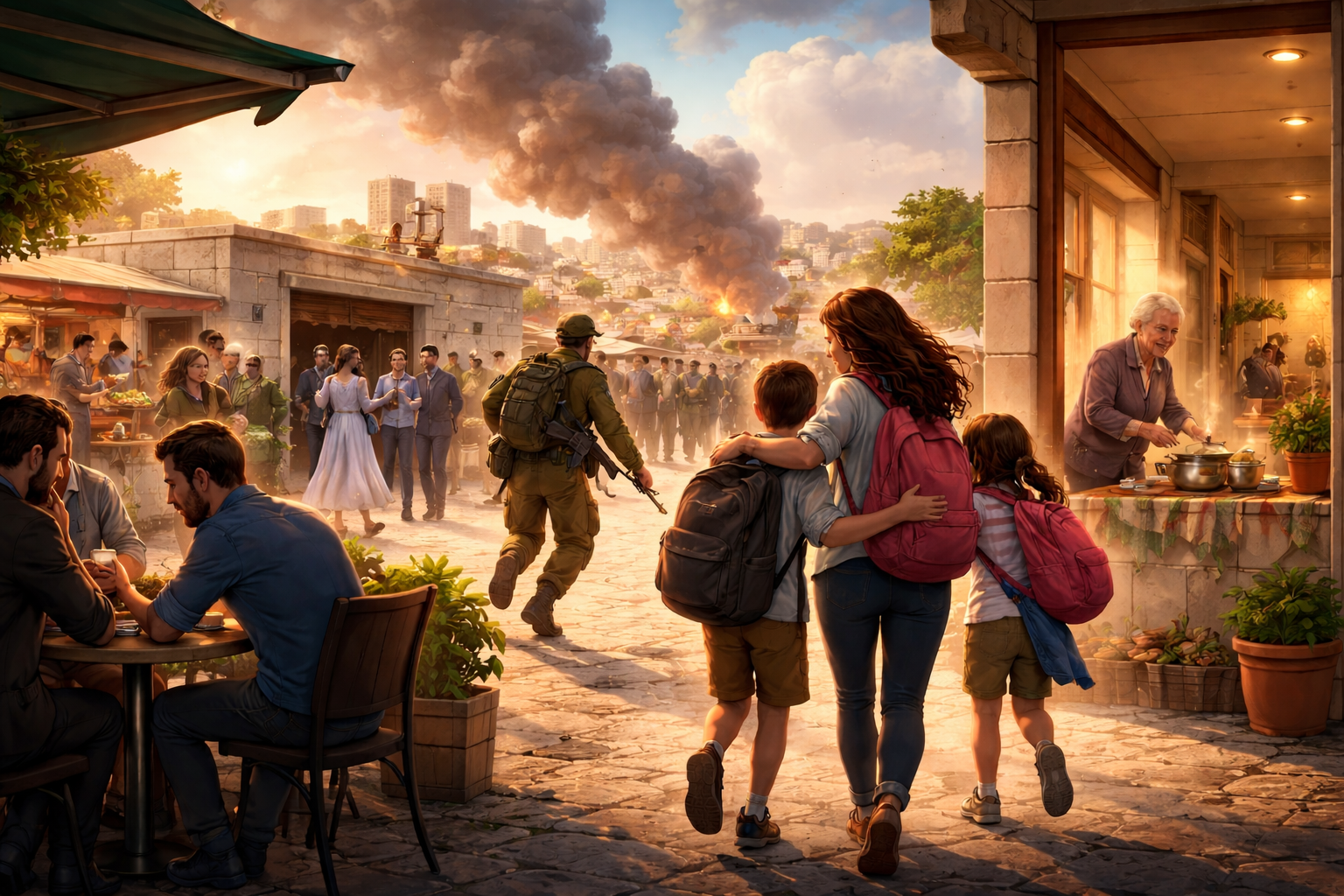
Image generated by the author using AI
What many people don’t understand about Israelis is that our emotional baseline is calibrated differently.
It isn’t because we are stronger or braver than anyone else. It’s because we live inside a reality where the ground shifts beneath our feet on a regular basis, and life still has to go on.
You can’t pause a country every time history decides to show up.
People abroad often imagine war as a clear event — something that begins, something that ends. A chapter in a history book.
Here it’s more like weather.
Sirens.
Arguments about politics.
School closures.
Work meetings.
A wedding tonight if the roads stay open.
A funeral tomorrow because this is reality, too.
All of it exists in the same hour.
We debate our government loudly and constantly — sometimes viciously — because this place matters to us in a way that is difficult to explain to people who see their country as a setting rather than a lifeline.
Before October 7, we spent months arguing in the streets over judicial reform. Families fought at Shabbat tables. Friends stopped speaking. Hundreds of thousands of people protested week after week because Israelis believe fiercely that the future of this country belongs to them.
And then October 7 happened.
And suddenly the argument didn’t stop — it just moved underground while the country mobilized to survive.
Since then we’ve been living inside something most people abroad can barely imagine: a long season of grief layered on top of constant vigilance.
Missiles.
Hostages.
Funerals.
Reserve duty.
Children doing homework between sirens.
And still — life continues.
Cafés open.
Babies are born.
People fall in love.
Someone’s grandmother insists you eat more.
Because Israelis understand something that outsiders often miss: if you wait for calm in this region before living your life, you will never live at all.
So we live loudly.
We argue.
We laugh.
We complain about the government.
We show up for each other.
We keep building things even when they might be knocked down tomorrow.
When there’s danger, we run toward it, not away from it because we want to help and we know we are all responsible for each other.
It can look chaotic from the outside.
But from the inside it’s something else entirely.
It’s resilience.
Not the heroic kind you see in movies.
The ordinary kind.
The kind that wakes up, makes coffee, sends the kids to school when it’s possible, runs to shelter when it isn’t, and then goes back to making dinner.
Over and over again.
Because here in Israel, resilience isn’t a slogan.
It’s just an ordinary day.
Make it a good one.