Russian-American-Israeli Palestinian. Palestine is Israel.
You Don’t Choose Your Children’s Future

Raised to Become, or Raised to Escape? Image © Ivan Bassov, 2026. Created using AI. Licensed under CC BY 4.0.
Raised to Become, or Raised to Escape?
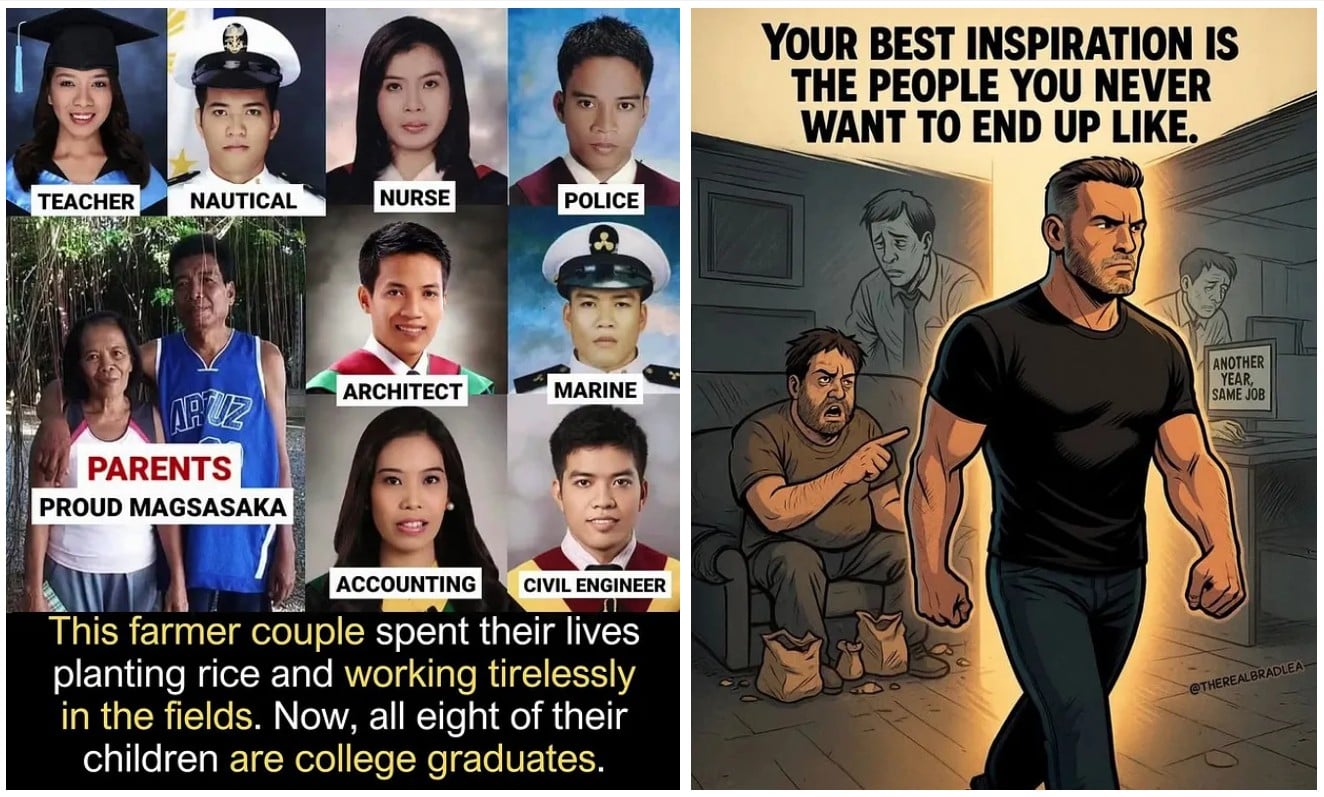
Two inspiring stories circulate online.
The first is familiar. A farmer couple spends their lives under the relentless sun, working the land so their children don’t have to. Years later, a photograph appears: eight children, all educated, all professionals—engineers, nurses, teachers, accountants. The caption writes itself: sacrifice, love, triumph.
The second story is shorter, sharper, almost brutal in its honesty:
Your best inspiration is the people you never want to end up like.
We usually treat these as opposites—one uplifting, the other cynical. But what if they are describing the same force from two directions?
What if those children did not rise only because they admired their parents…
but also because they refused to become them?
Inspiration Has Two Directions
We like clean narratives. Children either follow in their parents’ footsteps or break away from them. In reality, both forces operate at once.
Some children move toward their parents:
They become doctors like their parents, musicians like their parents, builders of the same life, continuing a visible line. We call this tradition, legacy, even destiny.
Others move away:
They grow up watching exhaustion, limitation, or hardship—and make a quiet decision: not this. Not this life. Not this repetition. Their drive is not imitation, but refusal.
Both paths produce success stories.
But what we celebrate is shaped by perceived status.
The Bias We Don’t Notice
When a farmer’s children become engineers, we call it inspiring.
When a farmer’s children remain farmers, we call it… nothing.
Silence.
Why?
Because modern culture worships escape more than continuity.
We glorify departure, not preservation.
On the other hand, when an engineer’s children become engineers, we also call it inspiring.
But when an engineer’s children become farmers, the tone changes.
Suddenly, the story feels puzzling. Even disappointing.
So what are we really celebrating?
Not movement. Not continuity.
Status.
Some professions are labeled “higher,” others “lower.”
And we quietly rank life paths accordingly.
We praise:
- moving up
- staying at the top
We hesitate—or fall silent—when the movement goes the other way.
Parents as Blueprint—or Boundary
We like to believe that parenting is a kind of engineering.
Apply the right methods, and you produce the desired outcome.
But reality refuses to cooperate.
Children raised in the same household diverge wildly.
Some mirror their parents almost exactly.
Others invert them.
Some stay close but reshape the pattern.
Some drift into entirely different worlds.
If there were a reliable formula—raise a child this way, get this result—everyone would use it. Outcomes would be predictable. Families would look like factories.
They don’t.
Because parents do not program their children.
They position them.
A parent can become a blueprint—something to follow.
Or a boundary—something to push against.
Often, without realizing it, they become both at once.
The Illusion of Control
For generations, people believed they could control outcomes that mattered deeply.
Even something as basic as a child’s sex was surrounded by rituals and confident advice: timing methods, dietary rules, cultural practices—each claiming certainty.
None delivered it.
Only modern intervention changed that—because it moved from belief to actual control.
And once that door opened, a new assumption quietly followed:
that control might extend further.
Not just boy or girl—
but traits, abilities, even life paths.
To a point, it already does.
Certain genetic tendencies can be identified. Some risks reduced. Some traits selected or influenced at the margins.
But the leap from influence to design is where the illusion returns.
We still act as if the right environment, the right discipline, the right values will reliably produce a specific kind of person.
As if a child can be shaped into a profession the way a blueprint shapes a building.
But raising a child is not like following a recipe.
It is closer to setting initial conditions in a complex system.
You influence. You shape. You constrain.
You do not determine.
The Role of Isolation
You might argue that control becomes possible in fully closed environments.
In tightly sealed communities—sects, cults, or highly insular groups—children are raised with minimal exposure to alternative ways of thinking. Information is filtered. Behavior is regulated. Norms are reinforced constantly.
Under those conditions, the probability of children following the group’s blueprint increases significantly.
History offers extreme examples. Organizations like Islamic State have deliberately isolated and influenced children, attempting to shape not just beliefs but actions, even to the point of self-sacrifice.
And yet—even there—the pattern is not absolute.
Some individuals resist. Some escape. Some reinterpret what they were taught.
Which reveals something important:
Isolation can amplify influence.
It still cannot guarantee outcomes.
And that is precisely why such systems depend on strict boundaries.
The moment alternative perspectives enter, the illusion of total control begins to fracture.
Escape Works Both Ways
Some people dream of joining closed communities.
Others spend years trying to leave them.
Some pursue prestigious professions.
Others walk away from them.
The movement is not one-directional. It never was.
Even at the highest levels of status, the same pattern repeats.
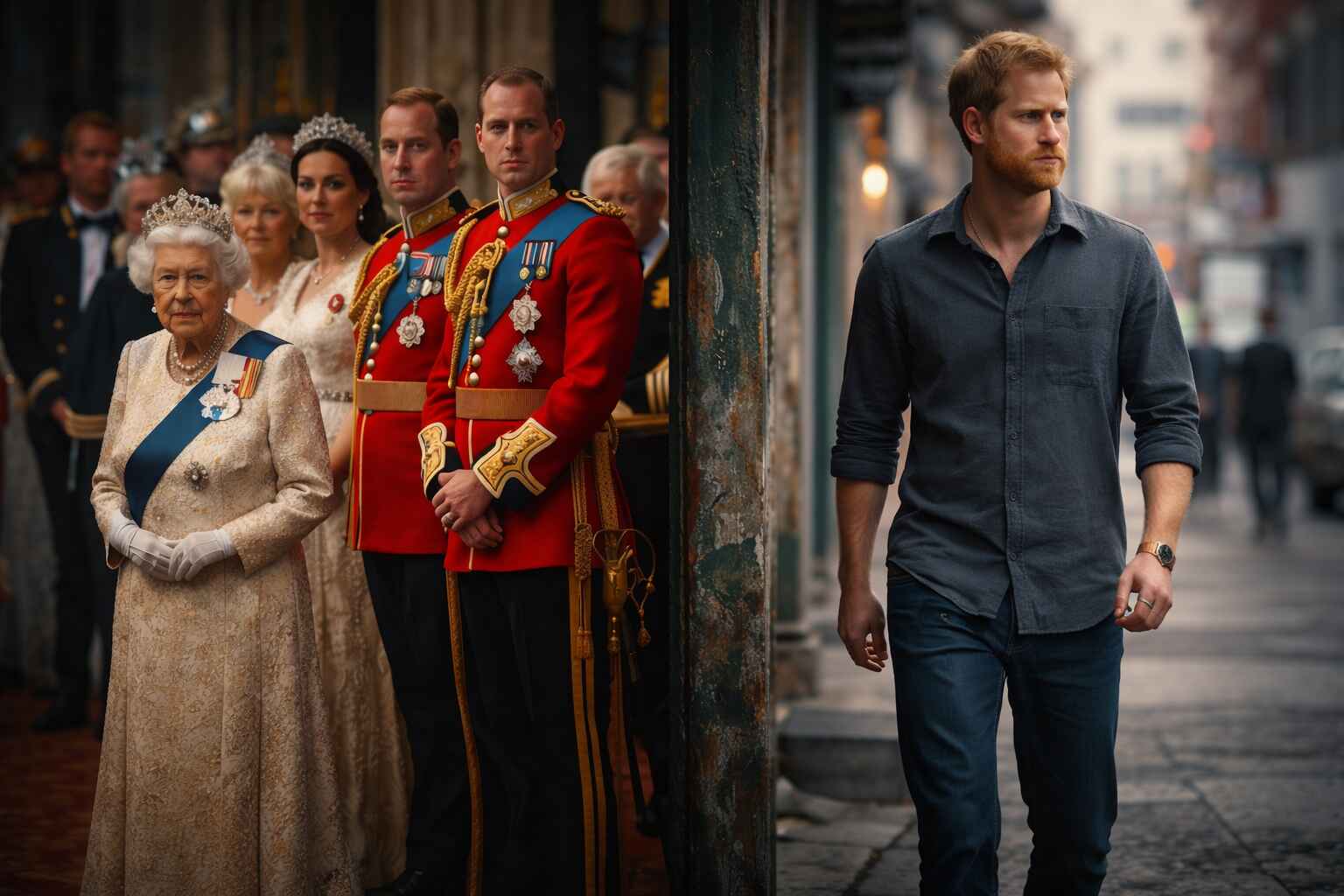
Members of royalty—seemingly at the top of any hierarchy—have chosen to step away from the roles they were born into. Prince Harry, Duke of Sussex, publicly withdrew from royal duties, rejecting a life defined by tradition and expectation. In Japan, Mako Komuro gave up her royal status to marry a commoner, accepting an ordinary life over a prescribed one.
And yet, in the same cultures, the opposite movement is just as celebrated.
Folklore is filled with stories of ascent:
Cinderella rises from obscurity to royalty.
But it also preserves stories of descent:
princes and princesses abandoning status for love, choosing ordinary life over privilege.
Both directions are romanticized.
Both are seen as acts of courage.
Which reveals something deeper:
It is not the direction that inspires us.
It is the act of choosing.
The Uncomfortable Truth
The farmer parents in that viral story gave their children something real:
- endurance
- discipline
- a model of sacrifice
But they also gave them something equally powerful:
- a life they might not want
And from that tension—admiration and refusal—direction emerges.
Not randomly. Not mechanically.
But unpredictably.
What We Actually Pass On
We pass on habits, values, and examples.
We pass on opportunities—or the lack of them.
We pass on stories about what life is and what it should be.
But we do not pass on outcomes.
The same experience can produce opposite decisions in different children.
The same parent can be a hero to one child and a warning to another.
That is not failure.
That is reality.
Final Thought
If there were a formula for producing specific futures, it would already dominate the world.
The fact that it doesn’t tells us something essential:
Influence is real—but control is an illusion.
Parents do not write their children’s destinies.
They define the space in which those destinies take shape.
They become, inevitably,
either a blueprint… or a boundary.
Related Topics
Related Posts