You Don’t Have to Be at 100%, 100% of the time
I trained for an Ironman mostly on my own.
That does not mean nobody supported me. Friends joined me for certain rides, runs and training sessions, and those moments mattered. My fiancé deserves a special mention for the sacrifice she made. But much of the process still felt solitary: the early mornings, the long weekends and the sessions where nobody was waiting for me and nobody would have known if I had stayed in bed.
In South Africa, the training groups I knew had always felt like communities. People took the work seriously, but once the session ended, the seriousness ended with it. You trained together, suffered together, had a coffee, made jokes and became friends.
In Israel, I struggled to find the same thing.
The groups I encountered often felt intensely focused on performance. There is nothing wrong with that. An Ironman demands commitment, discipline and seriousness. But I missed the part that came afterwards: the friendships, the laughter and the feeling that the people beside you cared about more than your pace, power or result.
So, while I was not completely alone, much of the journey felt like something I had to carry myself.
Long rides. Long runs. Early mornings. Weekends built around training while most people around me continued living normally.
There is a particular kind of loneliness in preparing for something that slowly consumes your calendar. Your social life changes. Your body is almost permanently tired. You organise your sleep, meals, work and travel around a race that is still months away.
Nobody forces you to continue.
That is partly what makes it valuable.
Then, as the race approached, Disaster hit!!!
The obstacles became slightly more dramatic than simply convincing myself to get out of bed.
The conflict between Israel and Iran created uncertainty over whether I would even be able to reach Frankfurt. My original flight was cancelled. After months of preparing my body for one specific day, there was suddenly a real possibility that circumstances completely outside my control would prevent me from reaching the starting line (and proposing, I got engaged a few days later).
I eventually had to leave earlier and reroute through Athens, working while travelling and trying to maintain some sense of calm during what was supposed to be my carefully planned taper week.
Then my bike broke.
Days before the race, I discovered what appeared to be a crack in the carbon frame. The bike I had trained on for months—the bike I knew, trusted and had spent countless hours riding—could no longer safely be used.
I had to find another bike at the last minute and prepare to race on unfamiliar equipment.
By that point, I almost had to laugh.
Months of training that had often felt solitary. A war disrupting the journey. Cancelled flights. An emergency reroute. A broken bike. And somewhere at the end of all of it, 3.8 kilometres of swimming, 180 kilometres of cycling and a marathon were still waiting for me.
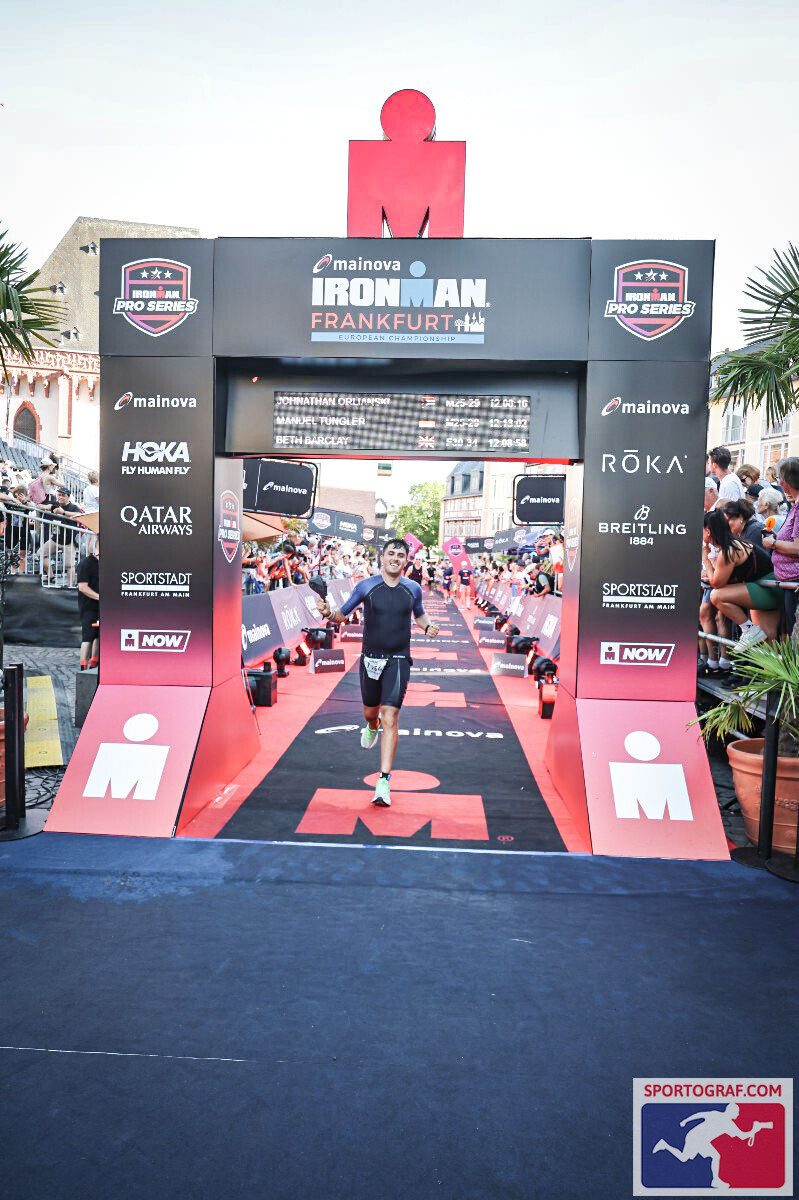
But I made it to the start line.
And I finished.
I do not believe everyone needs to complete an Ironman. For many people, the idea of swimming, cycling and running for an entire day sounds less like a personal challenge and more like evidence of poor decision-making.
But I do believe that everyone should spend six months to a year of their life deliberately doing something that makes them uncomfortable.
Choose something with a meaningful possibility of failure. Something that requires consistency long after the initial excitement disappears. Something that cannot be completed through motivation alone.
Motivation is unreliable.
Some days during training, I felt strong and disciplined. Other days, I was tired, distracted or simply not interested. There were sessions when I performed well and sessions when I merely completed what was required.
The Ironman taught me that you do not need to be at 100% every day.
You do not need to wake up inspired. You do not need every training session, working day or difficult conversation to be your best performance. You do not need perfect conditions before taking the next step.
You just need to keep doing things that move you towards where you want to be.
Some days, that means a brilliant session. Some days, it means doing half of what you planned. Some days, the victory is simply not stopping entirely.
Progress is rarely one dramatic act of courage. It is usually a series of ordinary decisions made while you are tired, uncertain and uncomfortable.
Get out of bed.
Complete the session.
Adjust the plan.
Find another flight.
Find another bike.
Keep going.
When setbacks arrive, we often treat them as evidence that the plan is failing. But setbacks are not interruptions to the story. They are the story.
Losing my father had already taught me something about continuing while carrying something heavy. Grief does not disappear because life needs to move forward. You learn, slowly and imperfectly, that pain and progress can exist at the same time.
Training did not remove that grief, nor was it meant to. But the discipline of continuing, of doing the next thing even when I did not feel completely whole, helped me through challenges both inside and outside the sport.
Had the preparation gone perfectly, I would still have been proud to finish. But the problems surrounding the race changed what finishing meant to me.
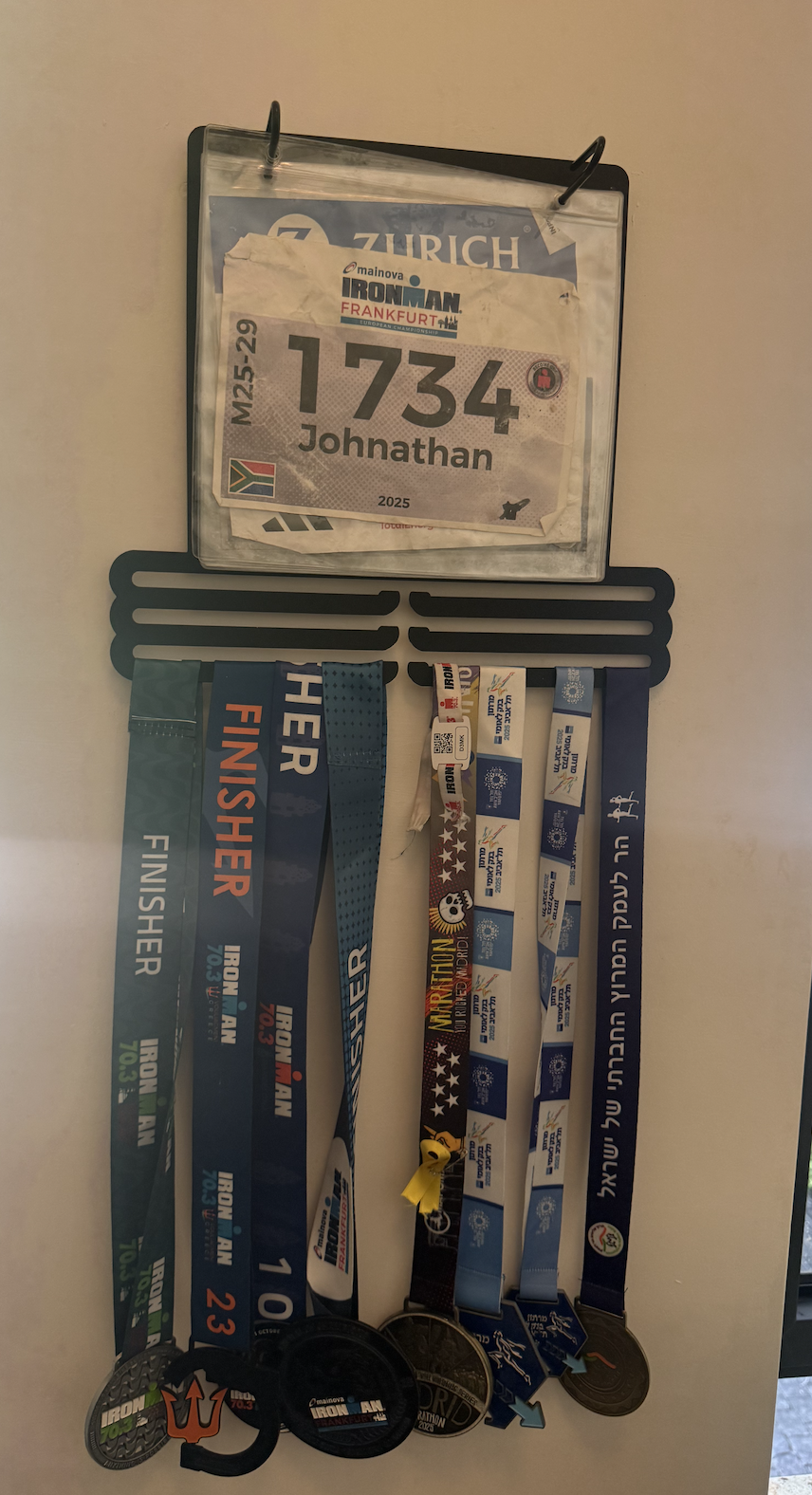
The medal did not represent one good day in Frankfurt. It represented every morning I trained when staying home would have been easier. It represented the sessions friends joined and the many hours I completed by myself. It represented adapting when circumstances changed. It represented accepting that I could not control everything, but I could still control my next decision.
That lesson extends far beyond endurance sport.
People facing grief, career uncertainty, relocation, relationship difficulties or any other challenge are often waiting to feel ready again. They believe they need to recover their old energy, confidence or certainty before they can begin moving forward.
Sometimes that feeling does not arrive first.
Sometimes the movement creates the feeling.
You take the next step while still uncomfortable. You do the work imperfectly. You allow yourself to operate at 60% without concluding that you have failed.
And then you do it again the next day.
An Ironman is often presented as a test of physical endurance. It is, but the more important lesson was psychological.
I learned that I could be tired without quitting.
I could be uncertain without freezing.
I could feel alone without actually being unsupported.
I could carry grief without allowing it to stop my life.
I could encounter setbacks without allowing them to determine the ending.
You do not have to be extraordinary every day.
You just have to keep making decisions that give you a chance of eventually becoming the person you want to be