
A Jew from Texas, who knew?
Young, Jewish, Wild, 1986: ‘A Gorgeous Excitement’
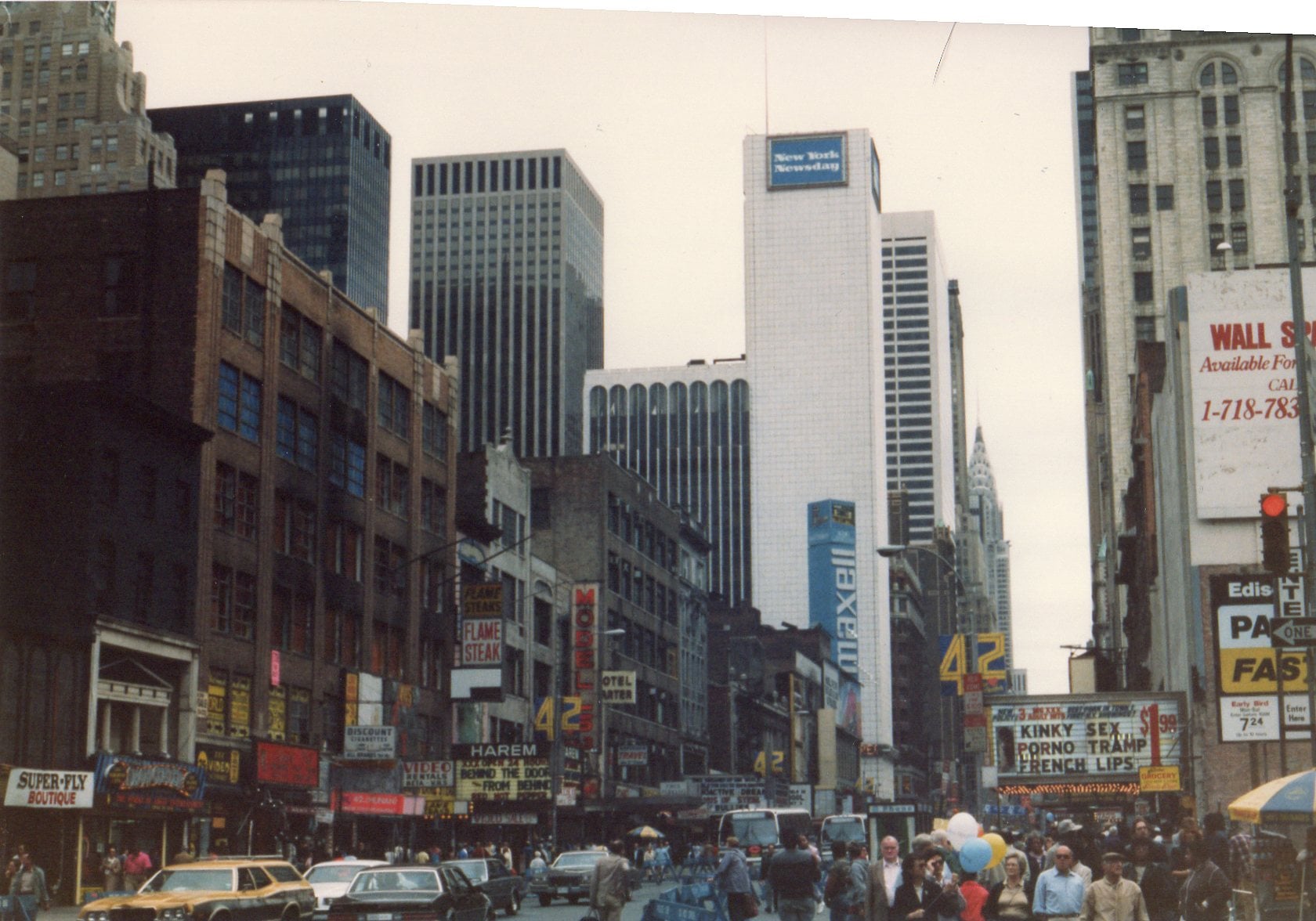
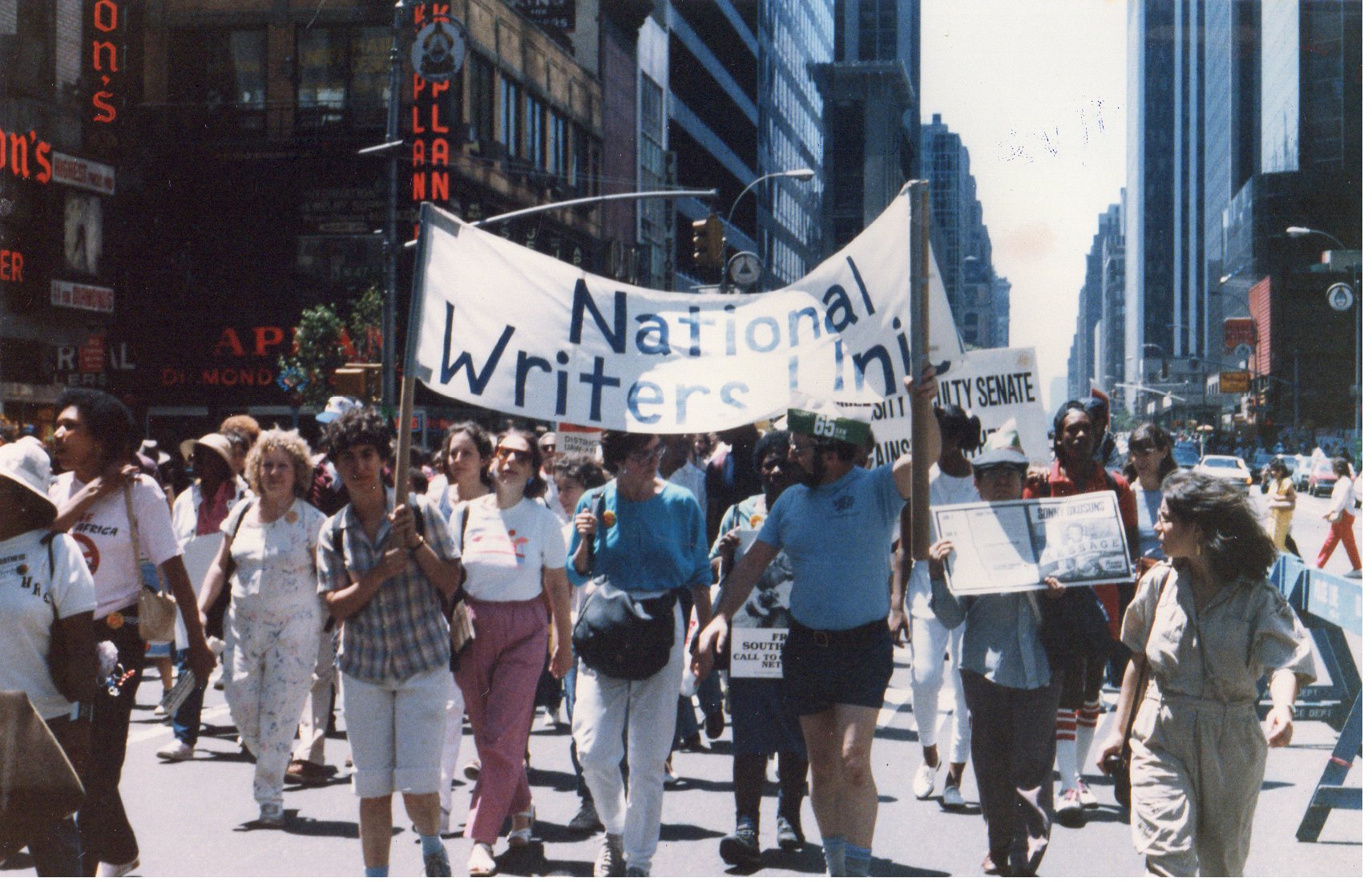
Times Square in 1986.
Cynthia Weiner’s first novel, “A Gorgeous Excitement,” caught my interest when I got it as an uncorrected proof at Whitelam Books in Reading, Mass. The novel’s location and timing—New York, summer of 1986—exactly overlapped with my time in the Big Apple. I was 10 years older than the lead character in the novel, high school senior Nina Jacobs, but our social lives intersected at some of the dance clubs in the book, like Limelight.
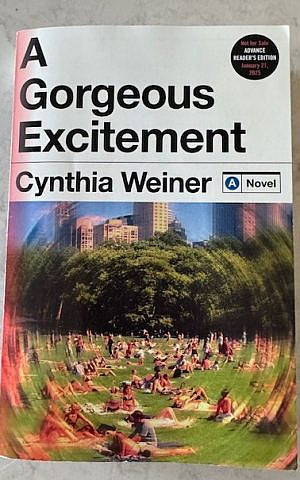
Taking its name from Sigmund Freud’s description of cocaine, A Gorgeous Excitement builds on Weiner’s experiences living in a Jewish family near her grandparents on the Upper East Side, attending the private Chapin School and having first-hand connections to the infamous “Preppy Murder Case” of August 1986. An author’s note states, “I also knew the guy who would be charged with murdering the girl in the park and spent many nights drinking with him and his friends at Dorrian’s (the model for Flanagan’s bar).”
Weiner deftly and successfully balances a lot of themes: urban lifestyles of the young, restless and drug-enhanced, mental illness, job struggles, tensions among parents and children, shifting friendships and rivalries, and timeless teen longings. Her work impressed me more than other novels I’ve read in recent years.
While I spent a lot more time hanging around in synagogues than bars in my rogue 80s days, the book captures the headlines of the Yuppie era—crime, sinister Central Park, AIDS tests, the Statue of Liberty centennial, the Mets’ Dwight Gooden, mob boss John Gotti and trendy drugs (one girlfriend from that era dabbled in Ecstasy, so I saw how that works). What struck me most was how an uneasy secular Jewish identity and casual antisemitism permeated the novel from its very first chapter. Weiner’s author’s note mentions she grew up Jewish and that forms a core part of her outsider status among a social set with exaggerated WASP names like Paige Waterbury, Cricket Hutchinson, Mimi Foxwell, Calista Cooke and Marina Delafield.

With her father Ira a tax lawyer from St. Louis and her mother Frances from a successful Queens construction family, Nina leads an upper-class life, but nobody lets the family forget or escape their identity, as this passage about the family’s co-op shows:
Nina still wasn’t sure why her parents so badly wanted to live here. Yes, it was an elegant building in a desirable neighborhood, but how elegant and desirable could Ira and Frances feel when, even now, the co-op board president, Carter Lorillard, insisted on greeting them in the lobby as “the Jewish Jacobses,” as in, ”Always good to see the Jewish Jacobses,” or “How are the Jewish Jacobses this evening?” Nina had yet to hear him greet “the Episcopalian Sloanes,” or ask “the Catholic Ryans” how they were doing.
The digs go deeply into Nina’s social circle, where college plans and status signals are almost as important as the boys they angle to bed, especially the blue-eyed dreamboat/troublemaker Gardner Reed (a stand-in for Robert Chambers). Consider:
Never hugely cheerful anyway, [Meredith] had been even crabbier than usual ever since getting rejected by every Ivy besides Penn, which she called Jap City even in front of Nina but was resigned to starting in the fall. The fact that Leigh was going to Princeton didn’t make things easier.
A critical plot element is Nina’s relationship with her mother Frances, a manic depressive who spends much time in bed with her bottles of Xanax, Klonopin and Halcion, scribbling notices and scattering them around the apartment “as if it were one big Wailing Wall.”
Nina maintains a tender relationship with Frances’s father Seymour, with his own dementia struggles made worse by the death of his wife Pearl. Weisman artfully sketches the doting grandparents who pass on a schmear of the shtetl to Nina: “He might throw in a little Yiddish here and there, which made Nina nostalgic. When she was little he would make her laugh by whispering Yiddish words in her ear while Pearl went on about some friend or relative.” One’s always kvetching, another is a shmendrik. But that slender cultural connection is fraying fast.
Surrounded by the WASP elites, Nina sees herself failing to measure up:
Gardner’s girlfriend, Holland, was gliding by their table, Delft-blue eyes and an iridescent satin halter top that left her tiny shoulders bare.”
Why couldn’t Nina be named for a country? Except her parents would have probably picked someplace dank and weird like Latvia. . . . .
She noticed Holland staring at her with a confused look.
“Is her name Miriam,” she mumbled to Gardner out of the corner of her mouth.
Nina blushed. Of course Holland would pick the Jewiest name she could think of. She waited, breath held, for Gardner to answer. Although obviously he didn’t know her name. Why would he? There would be no reason. For all she knew, he thought her name really was Madonna.
“Nina,” he said to Holland. But he was looking at her.
Nina’s observations about Jewish rituals are scathing, drenched in the same level of loathing that she felt about her name. A new friend, Samantha, mentions she once attended a bar mitzvah, which leads Nina to memories of her own bat mitzvah, where “thick Jewish women in Suntan pantyhose, with clunky sandals and clunky names like Yarkona and Batya washing down bricks of bone-dry marble cake” with Manischewitz wine. Afterward she and friends headed for lunch at a fancy club “everyone making fun of the rabbi’s accent in the taxi.”
If Nina accepts stereotypes, her companion/rival Allison Block isn’t having any of it. In one of the book’s most striking passages, Nina panics over responding to direct antisemitism from Gardner’s skeezy friends Walker and Rex:
“What’s a girl from 850 Park doing with a super’s son anyway?” Walker asked . . .
Rex shrugged. “Spoiled kike decided she wanted to go slumming.”
Nina went hot with shock. She’d never heard anybody say “kike” out loud. She opened her mouth but no sound came out: there was no breath in her body to make one, not that her brain was supplying any.
Brian [son of the bar’s owner] started toward them, but Allison got there first. “Spoiled kike right here!” Her face was flushed crimson, her eyes black as bullets. “Say it to my face, Nazi dickweeds.”
Rex’s eyebrows shot up, a twitch of surprise before the haughtiness returned to smooth over his features.
“Gay kaken ofn yahm,” Allison hissed. “That’s kike for go fuck yourself.”
Walker smirked uncomfortably as Allison turned on her heel and walked away.
Next to Nina, Brian bristled. “I should kick those guys out.”
“Don’t make a worse scene,” Nina pleaded. “They probably have to leave soon for a Hitler Youth meeting, anyway.” She signaled the bartender to order a real drink. There was too much crashing around inside her for just a Pepsi, the old interloper shame that came and went but never full disappeared. Her humiliation that it had taken Allison Bloch—who knew she was Jewish?—to call out Walker and Rex while Nina stood mute. Although didn’t Allison knew that they weren’t supposed to call attention to themselves?
The book mixes in Holocaust jokes and a reference to lampshades at Buchenwald, Jewish noses and Jewish menstrual initiation rituals; I found myself longing for encounters with no-apologies observant Jews, but that’s not what this novel is about.
The sense of authenticity wobbles after the killing in Central Park, when Nina is talking to others at the Jewish funeral. A woman asks Nina if she had attended an event the night before.
Nina looked back at her, confused.
“The visitation,” the woman said, “for family and close friends to say good-bye before they seal the casket. Even with all the makeup they put on her, you could still see the purple.”
Nina was having a hard time focusing. “Purple?”
The woman peered at her. “The bruises. All around her throat. It was horrible.” She jammed a tissue against her streaming eyes. “If I ever run into that boy, I’ll strangle the life out of him.”
I couldn’t find any reference to “visitations” in Judaism, certainly not with an open casket. Shiva is something else. I can only see this as an awkward plot device to work in a description of the deceased’s appearance.
As the book nears its conclusion, Nina finally finds her voice in her group’s favorite bar, when Nina asks her friend Meredith about a bracelet. Meredith responds,
“It’s my roommate’s. She’s Jewish, from Scarsdale. She came to Penn with satin sheets and a fur coat!” Meredith held out her arm to admire the bracelet. “On her it just looks Jappy.”
Nina’s internal monologue in response touches on the murder case, Jews involved in it, whether her Jewish identity disqualified her from being a character witness for the killer she swooned over, the long list of casual insults she had heard and experienced. Finally:
She held her breath, heart racing, and leaned forward.
“Listen,” she said to Meredith, and had to force herself to keep going. “You know I’m Jewish, right?”
What follows brings realism and hope to the novel. Nina speaks up, likes the results and later has breakthroughs in her relationship with her mother.
I’d like to know how the characters’ lives unfolded in the 40 years since the dangerous, drug-infused summer of 1986, as they moved from hard-living teens touched by violence to adults crashing into their 60s.
I can envision Nina joining the National Writers Union, building a career as a journalist and eventually penning a novel about her circle and their unhinged experiences in New York in the summer of 1986 . . .
Related Topics
Related Posts