
You’re Flying Home to Vote. Where Were You When Israel Needed You?
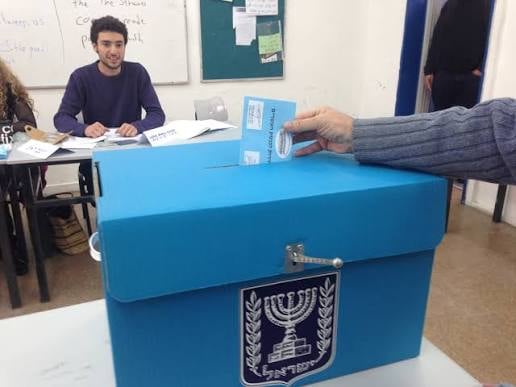
In the coming days, tens of thousands of Israelis living abroad are expected to board airplanes for Israel for one reason: to vote in the October 27 election.
I admire their willingness to spend the money, endure the travel and make the effort to participate in Israeli democracy.
But I have an uncomfortable question for some of them:
Where were you when Israel needed you for something other than your vote?
That question will annoy people. Perhaps it should.
For nearly three years, Israelis who remained here have carried burdens most citizens of Western democracies can scarcely imagine.
Reservists have repeatedly left their homes, jobs, businesses, spouses and children. Some have accumulated hundreds of days of reserve duty. Careers have suffered. Businesses have struggled. Marriages and families have been strained.
Some soldiers never came home.
The rest of the country has hardly been untouched. Israelis have lived through rocket and missile attacks, sirens, evacuations, interrupted schools, economic disruption and the constant knowledge that a son, daughter, husband, wife or neighbor might be fighting somewhere.
Now comes Election Day.
And Israelis who have made their lives in New York, Los Angeles, London, Amsterdam and elsewhere are getting on planes so they can help decide who will govern the people who actually live with the consequences.
Legally, they unquestionably have that right.
I am asking a different question.
What about the responsibility that accompanies the right?
Let me immediately draw some lines, because otherwise this argument will be deliberately distorted.
I am not talking about every Israeli who happens to live abroad.
Some are students. Some have temporary job assignments. Some are unable to serve because of age or health. Some long ago completed their military obligations.
And many Israelis living abroad answered Israel’s call after October 7. They scrambled for flights, came home, put on uniforms and reported to their units.
To those people I say: Welcome home. Vote.
You have demonstrated in the most tangible way imaginable that Israel remains more than an entry on your passport.
My question is directed elsewhere.
It is directed at Israelis who were capable of sharing Israel’s burdens but chose instead to place their lives comfortably beyond them—and who now consider it essential to fly back for a few days to determine Israel’s political future.
Citizenship cannot be only about privileges.
If Israel matters enough for you to fly 6,000 miles to choose its government, shouldn’t Israel also matter enough for you to share some responsibility for what happens here?
There is an especially striking contrast this election.
While Israelis abroad are boarding planes to come cast their ballots, Israeli soldiers—including reservists—will be voting at military polling stations, some of them mobile stations serving troops in operational areas.
Think about that picture.
One Israeli may cast a ballot in uniform, after months away from his family.
Another may fly in from Manhattan, vote, have dinner in Tel Aviv and return to JFK.
Their ballots count exactly the same.
Under the law, they should.
But surely we are permitted to ask whether their relationship with the country is exactly the same.
This is not an argument for taking away anyone’s vote. I would vigorously oppose making military service a legal prerequisite for the franchise. Israel has citizens who cannot serve, citizens whom the state does not draft and citizens who have contributed enormously without ever wearing a uniform.
The ballot is a right of citizenship.
But democracy depends on something more than legal rights. It depends on a sense of mutual obligation.
And that is what troubles me about the celebration surrounding the effort to bring expatriate Israelis home to vote.
We keep hearing how deeply they care about Israel.
I don’t doubt it.
But caring about Israel from America is not the same as living in Israel.
Watching the sirens on an iPhone is not the same as hearing them outside your window.
Reading about another reserve call-up is not the same as telling your children that Abba will be gone again.
Discussing Israel’s economy at a Manhattan dinner table is not the same as trying to keep an Israeli business alive while employees disappear into reserve duty.
And voting for policies whose consequences you will experience from thousands of miles away is not the same as voting for policies under which you and your family will actually live.
That distinction deserves more attention than we are giving it.
Indeed, the current system has its own absurdity. Israel generally does not allow expatriates to vote from abroad. So the practical qualification for a long-term expatriate who wants to vote is not how strong his continuing connection to Israel is.
It is whether he can afford an airline ticket.
Perhaps after this election Israel should have a serious discussion about the relationship between residence and voting.
Not Right versus Left.
Not Netanyahu versus his opponents.
Residence.
Responsibility.
Participation in Israeli life.
Because this principle should be exactly the same whether overseas Israelis are expected to elect a government I support or one I oppose.
For now, however, the law is the law. Israeli citizens who return are entitled to vote.
I welcome them.
But as they stand in line at the polling station, I hope at least some will ask themselves a question that goes beyond politics:
If Israel is important enough for me to come home to choose its government, is it important enough for me to come home and share its burdens?