1,000 days after: How will the voices of October 7 be heard?
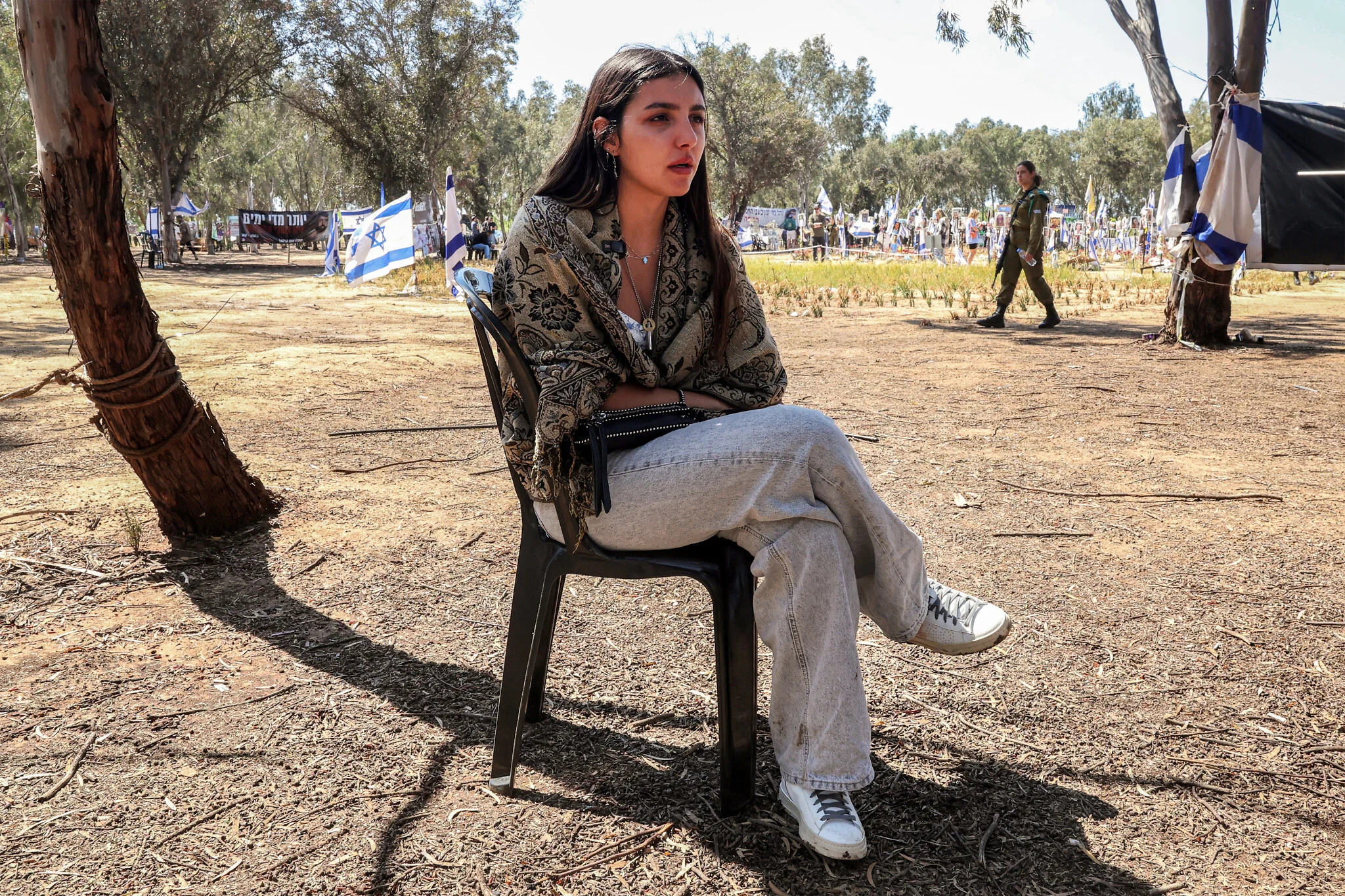
One thousand days after October 7, we have entered a new phase in our relationship with the events of that day.
The urgency of collecting testimony remains. But another challenge has come into view: ensuring that these voices continue to be encountered, studied, taught, and understood long after the moment of testimony has passed.
For generations, those who worked with survivor testimony understood their mission as one of preservation. Record the testimony. Safeguard it. Archive it. Ensure it will not be lost.
That work remains indispensable. But in an era of misinformation, denial, and information overload, preservation alone is no longer enough.
Historical memory is not secured simply because thousands of testimonies have been collected. It endures because people can continue to engage with them: educators preparing lessons, researchers asking new questions, museum curators creating exhibitions, artists seeking to interpret lived experience, and future generations trying to understand events they did not witness themselves.
This is what I mean by a living archive of the present.
A living archive of the present is not simply a repository where testimonies are stored. It is an archive created while history is still unfolding, in close proximity to the events it documents and amid conditions of ongoing uncertainty, trauma, and emergency. At the same time, it is designed to remain active: enabling authentic voices to continue speaking across time, connecting individual stories to broader historical understanding, and ensuring that testimony remains both accessible and meaningful as new questions emerge.
Since October 9, 2023, just two days after the attacks, the civic initiative “Edut 710” has recorded nearly 2,000 testimonies from survivors, first responders, bereaved families, released hostages, and witnesses to the October 7 attacks. Driven by the urgency of the moment, the collection (edut means testimony) began in the direct aftermath of the violence. The archive began while the violence and its consequences were still unfolding, preserving experiences in close proximity to the events themselves. Together, these testimonies form the largest and one of the most significant collections of first-person accounts ever assembled in such a short period of time.
Each testimony is an individual story. Each preserves a singular human experience that cannot be reduced to statistics, summaries, or historical conclusions. Yet together, these voices form a body of knowledge that allows us to understand the many dimensions of October 7 through those who lived it.
The challenge is preserving both the personal story and the broader picture.
An archive must never flatten individual voices into data. At the same time, it must allow us to navigate thousands of testimonies in ways that reveal connections, themes, places, and experiences that no single testimony can encompass on its own.
This is where universities have a unique responsibility.
Universities have never simply stored knowledge. Their role is to preserve it, organize it, interpret it, and make it accessible to society. Libraries and archives have always evolved alongside new forms of scholarship. Today, as testimony is increasingly created at an unprecedented scale, universities must also develop the ethical framework and technological methods that will allow these collections to remain meaningful for generations to come.
Fulfilling that responsibility will require new forms of collaboration between universities, archivists, and those documenting history in real time.
Artificial intelligence makes this possible in ways that were unimaginable only a few years ago. But technology is not the story.
Too often, artificial intelligence is discussed as a force that distances us from human experience. Used responsibly, it can do the opposite. It can help us navigate large collections without reducing them to abstractions. It can connect testimonies across languages, places, and experiences while always leading us back to the words of those who lived them. It can strengthen historical understanding without replacing historical interpretation.
In that sense, AI becomes a bridge to the testimonies.
When former hostage Ilana Gritzewsky addressed the United Nations Human Rights Council last week, she reminded the world: “I’m standing here today – not as a report, not as a statistic. I am living proof.”
Her words capture the enduring power of testimony. History is ultimately understood not through numbers, but through people. Not through summaries, but through voices.
As time passes, survivors grow older. Public attention shifts. New crises emerge. Yet the responsibility to preserve these voices does not diminish. It grows.
Nor is this challenge unique to October 7. Around the world, societies are documenting wars, genocide, terrorism, forced displacement, and political violence on an unprecedented scale. Collecting testimony remains an essential moral act. But ensuring that testimony continues to be accessible, meaningful, and ethically preserved may become one of the defining archival challenges of the twenty-first century.
Leading a project at the Hebrew University of Jerusalem that applies artificial intelligence to the Edut 710 testimony archive has convinced me that universities are uniquely equipped to combine scholarship, ethics, and long-term stewardship to lead that effort.
A living archive of the present is, ultimately, an act of faith in the future. It reflects the belief that these voices will continue to matter, not only to those who lived through October 7, but also to those who will seek to understand it decades from now.
Our responsibility is not only to preserve testimony.
It is to ensure that every testimony remains both an individual story and part of the shared historical memory from which future generations will continue to learn.