
12 Days That Proved Israel’s Tech Edge
When the dust settled after the 12-day war with Iran, I found myself sitting in quiet awe. Not just at the resilience of the Israeli people, but at the sheer brilliance of Israel’s military technology and strategic planning. What we witnessed was not just a victory, it was a live demonstration of what happens when a nation invests in human capital, innovation, and the courage to do what others only theorize.
Professor Isaac Ben-Israel, one of the architects of this strategy, said it best: “That meant investing in human capital, in science and technology, primarily for our defense.” That investment, made over decades, is precisely what gave Israel a decisive edge in this high-stakes, high-tech confrontation with Iran.
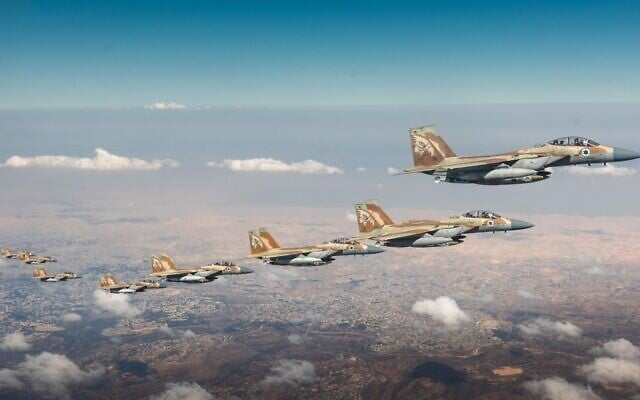
The 12-day campaign was not just a military engagement. It was a masterclass in multi-domain warfare. Land, air, space, and cyberspace, all seamlessly integrated in real time. The operation began with Israel’s daring preemptive strike, “Red Wedding,” targeting Iranian nuclear facilities and missile sites. Over 200 aircraft, 330 precision-guided munitions, and complete air superiority deep in enemy territory. This was not science fiction. It was Israel doing what it does best: innovating the future.
Take air defenses, for example. Iran launched hundreds of ballistic missiles and drones with one goal: to overwhelm the system. But Israel’s upgraded Arrow missile systems, fresh from a rollout just a week earlier, held firm. Despite headlines suggesting otherwise, the data tells a different story, an 86% interception rate against ballistic missiles and over 99% success rate against drones.
Take a moment to absorb that. These were not random rockets, they were deliberate, coordinated salvos engineered to overwhelm Israel’s defenses. But they didn’t. Because Israel didn’t just prepare, it anticipated, adapted, and upgraded in real time. The shield held, and resilience prevailed.
And if that were not impressive enough, consider this: drone warfare now accounts for 60% of the Air Force’s operational flight hours and half of all countermeasures. At this stage, Israel was no longer merely defending its borders, it was projecting intelligence and precision deep into enemy territory, quietly, efficiently, and with remarkable effectiveness.
“In terms of high-quality operational planning, we overcame them,” said Brig. Gen. (res.) Dr. Daniel Gold, the head of the Defense Ministry’s R&D division. He is right, of course. This war showed that Israel does not just build tools, it builds frameworks for agility, resilience, and renewal.
Space-based intelligence was another silent hero of this operation. Imagine 12,000 high-resolution satellite images processed during the war, enabling real-time adjustments to hundreds of targets across Iran. These were not just eyes in the sky, they were minds in motion, providing Israeli commanders with a digital battlefield map that turned uncertainty into clarity.
The bottom line is that while Iran sought to cripple Israel, it was Israel that redefined the rules of the engagement. The IDF operated in Iranian airspace with the same fluency it has over Gaza.
And yet, amid the smoke and missiles, Israel didn’t lose its soul. While many countries talk about humanitarian corridors, Israel does it, even while under attack. That is what makes this country so extraordinary. Israel does not just build weapons; it builds values into every system. This is resilience and renewal in its purest form.
Perhaps most inspiring is that Israel’s greatest strength lies not in its hardware but in its people—young soldiers, engineers, scientists, and commanders who grew up knowing that survival demands more than strength. It demands innovation. Creativity. Unity. These are not just buzzwords, they’re the blueprint for a nation that must win every war just to exist.
The operation “Rising Lion” showed us what that blueprint looks like when fully activated. It also reaffirmed that while Iran may continue to bluster, Israel leads with brains, not bravado.
As defense officials noted, the estimated cost of the war was far outweighed by the damage averted. That is what smart nations do. They invest wisely, act decisively, and prepare relentlessly. “We’re already developing the next generation,” said Moshe Patel, head of the Israel Missile Defense Organization. And you better believe it. The next generation is already on the runway.
So yes, Israel fought back. But more importantly, it forged ahead.
To those who wonder what it means to build a future in the shadow of war – look no further. Israel’s 12-day tech triumph is a beacon for every democracy under threat. It is proof that resilience is not just surviving, it is thriving with purpose. And renewal is not just rebuilding, it is reinventing what is possible.
And that, my friends, is what truly defines the innovation powering Israel’s future.