
21 Hours, No Deal—But Progress: JD Vance on Iran Talks
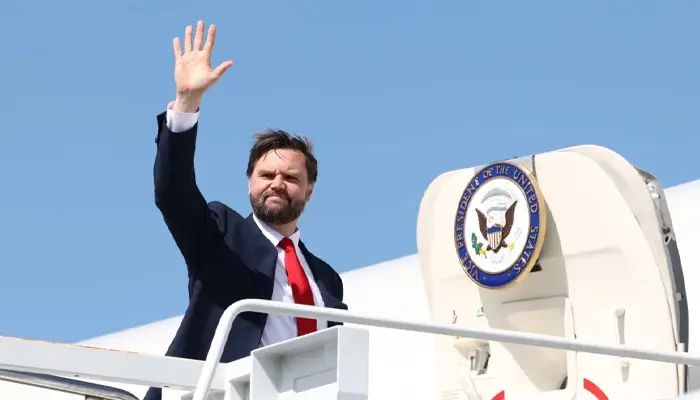
U.S. Vice President JD Vance appeared on Fox News’ Special Report with Bret Baier for his first major interview after leading a high-level U.S. delegation to Islamabad, Pakistan, for direct face-to-face negotiations with Iranian officials.
The talks, which took place over the weekend of April 11–12, 2026, spanned nearly 21 hours and aimed to solidify a fragile ceasefire into a more lasting agreement. This agreement could potentially address Iran’s nuclear ambitions, reopen the Strait of Hormuz, and help cool down the rising tensions from recent confrontations. Although a final deal didn’t materialize, Vance made it clear that the lack of an agreement doesn’t equate to a lack of progress.
.@VP in Islamabad, Pakistan: "We’ve had a number of substantive discussions with the Iranians. That’s the good news. The bad news is that we have not reached an agreement — and I think that’s bad news for Iran much more than it's bad news for the United States of America." pic.twitter.com/RLIQ30btO5
— Rapid Response 47 (@RapidResponse47) April 12, 2026
For nearly 21 hours, American and Iranian officials sat down for direct discussions—something that has been quite rare, if not nearly impossible, in recent years. JD Vance noted that this might be the first time we’ve witnessed the Iranian government and the U.S. government meeting at such a high level, perhaps in the entire history of Iran’s current leadership. So, I consider that a positive development—and once again, we did make some strides in the negotiations.
"I think it was the first time that you'd ever seen the Iranian government, the U.S. government meet at such a high level, maybe in the history of the current leadership of Iran. So that's, I think, a positive—and again, we did make some progress in the negotiation," says @VP.… pic.twitter.com/PGN6tNZag8
— Rapid Response 47 (@RapidResponse47) April 13, 2026
The United States entered the talks with defined objectives—verifiable constraints on Iran’s nuclear ambitions, guarantees on maritime access, and a broader framework for de-escalation. Those priorities were neither softened nor obscured. Instead, they were laid out directly, leaving little room for ambiguity about where the U.S. stands.
???? JD VANCE JUST DROPPED A BRUTAL TRUTH BOMB
After 21 hours of intense negotiations in Islamabad, Vance made it crystal clear:
“We have NOT reached an agreement…
and that’s bad news for Iran — much more than it is for the USA.”Translation:
America is not desperate for a… pic.twitter.com/cFYSGihJb6— JD Vance News Commentary (@JDVance_News) April 12, 2026
JD Vance had a good reason for framing the talks as significant. When it comes to diplomacy, especially with a country like Iran, we rarely see immediate breakthroughs. Progress tends to happen gradually, often in ways that the public doesn’t notice. By that standard, the discussions in Islamabad weren’t a failure at all. They helped clarify positions, reduce misunderstandings, and set a foundation for what a future agreement could look like.
The VP also made it clear that Islamabad talks did not falter over a lack of effort, but over a lack of authority on the Iranian side. According to him, the delegation present at the table was not in a position to finalize an agreement and would need to return to Tehran for approval from higher leadership.
JD Vance says the Iranian delegation in Pakistan lacked authority to finalize a deal and needed approval from higher leadership.
“This is ultimately why we left Pakistan because what we figured out is that they were unable.”
“I think the team that was there was unable to cut a… pic.twitter.com/Rptd20jDfZ
— Open Source Intel (@Osint613) April 13, 2026
The phrase “the ball is in Iran’s court” has become a quick way to express the U.S. stance. However, there’s a deeper strategy at play. Washington has made it clear that it’s open to ongoing discussions, as long as Tehran is ready to engage within certain parameters. This approach—standing firm on principles while being flexible on the process—aims to strike a balance between applying pressure and allowing for potential progress.
“We've made clear that we absolutely need to see the nuclear material come out of the country of Iran…the ball is in the Iranians' court because we put a lot on the table.” — VP Vance pic.twitter.com/s4Ki2HqL4U
— Vice President JD Vance (@VP) April 14, 2026
Pakistan’s role was crucial in making the talks a reality. While the discussions were mainly between Washington and Tehran, the neutral ground of Islamabad created the right atmosphere for meaningful dialogue. Pakistan went beyond just hosting; it played an active role in facilitating the talks, providing a buffer that allowed both sides to focus on the important issues rather than just the surface-level optics. From the U.S. viewpoint, this kind of mediation is invaluable. Vice President JD Vance himself acknowledged this, commending Field Marshal Asim Munir and Prime Minister Shehbaz Sharif for their diplomatic skills, describing them as exceptional hosts who helped foster a rare direct conversation between two countries that have long been diplomatically distant.
I have to give a lot of credit to Field Marshal Asim Munir and Pakistan’s PM Shehbaz Sharif. Both were exceptional hosts and showed real statesmanship in helping mediate the conversation between us and the Iranians, two countries that have not had serious talks in a very long… pic.twitter.com/JwC0wjl8XI
— The Thursday Times (@thursday_times) April 13, 2026
Prime Minister Shehbaz Sharif’s remarks about working “day and night” to sustain the process reflect the intensity behind the scenes. The ceasefire, brokered earlier this month, still holds—but just barely. It is under pressure from deep mistrust, competing priorities, and the ever-present risk of miscalculation. In such a scenario, keeping both sides at the table—even temporarily—is an achievement in itself.
As the Islamabad Talks commenced today, the Prime Minister of #Pakistan, Muhammad Shehbaz Sharif held a meeting with H.E. JD Vance, Vice President of the United States of America.
The U.S. Vice President was assisted by Special Envoy Steve Witkoff and Mr. Jared Kushner.
The… pic.twitter.com/INntOCMb3M
— Pakistan Armed Forces News ???????? (@PakistanFauj) April 11, 2026
In this context, what unfolded in Islamabad is part of a bigger picture of cautious engagement. There wasn’t a dramatic breakthrough or any headline-making agreements. However, there was also no breakdown or sudden end to the talks. The communication channel is still open, the terms are clearer, and while the next steps may be uncertain, they’re still within reach.
There are indications that the US-Iran negotiations are still happening, with Pakistan acting as a facilitator for these back-channel discussions. There are reports that Pakistan has proposed hosting a second round of talks between the United States and Iran in Islamabad in the coming days, before the end of the ceasefire, two Pakistani officials say.
US-Iran negotiations continue through back channels facilitated by Pakistan:
"Two other people briefed on the situation said that despite the failure to reach any immediate agreement, the two sides had shown flexibility in the talks, adding that neither Washington nor Tehran…
— Lily Lynch (@lilyslynch) April 13, 2026
For Vance and the administration he represents, that’s the takeaway that really counts. Diplomatic progress isn’t always a straight path, and it rarely happens right away. Sometimes, it’s about the ability to keep the conversation alive, to outline the areas of disagreement, and to keep the door open for what lies ahead.