
Can Israel Alone Send Iran Back to the Stone Age Without Nuclear Weapons?
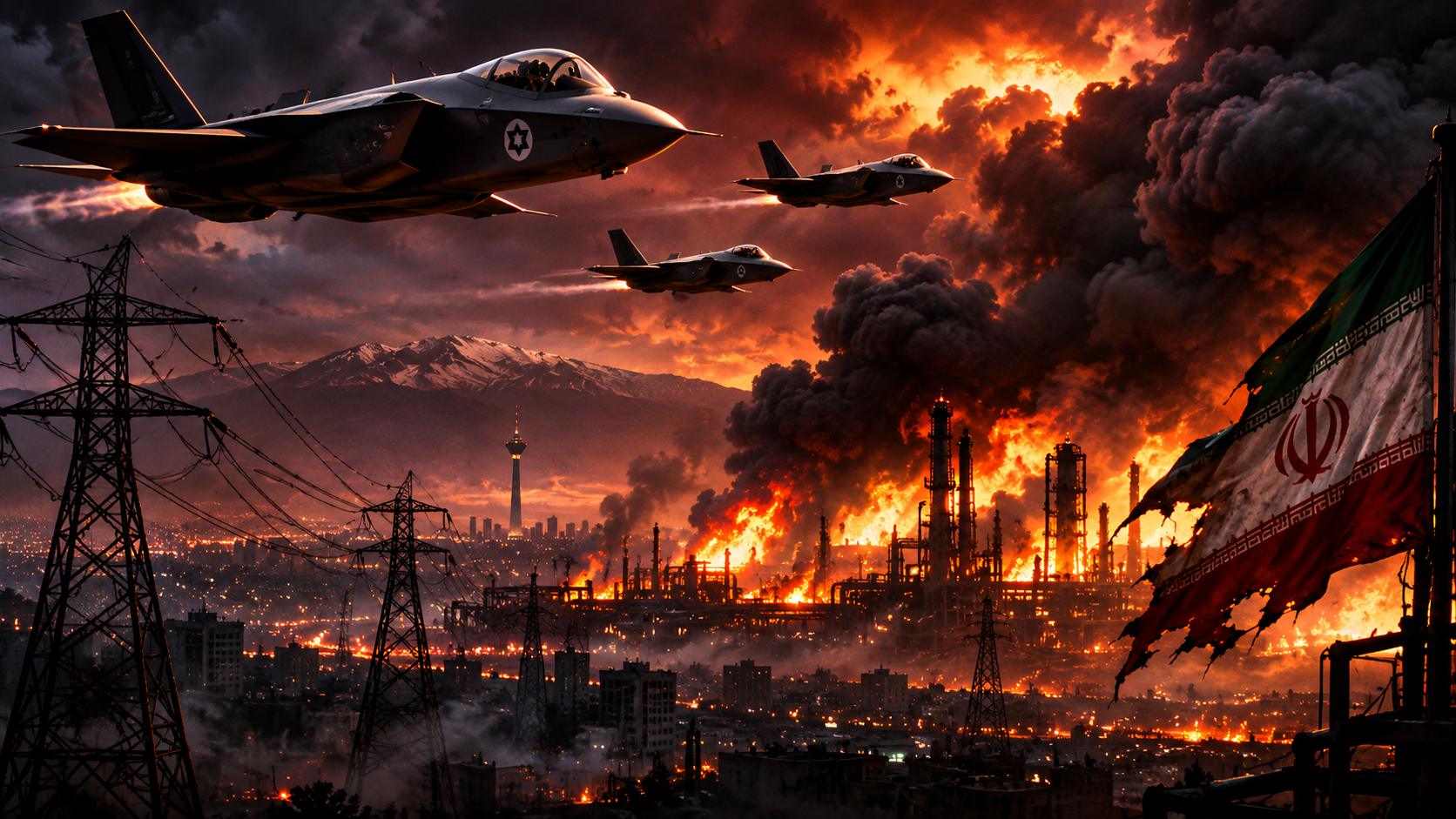
On November 22, Israeli television reported that Prime Minister Benjamin Netanyahu was contemplating another attack on Iran, potentially without American participation or approval. According to Channel 12, Israeli Military Intelligence warned that such an operation could ignite several fronts, challenging expectations that the fighting might last only three to five days.
But could Israel go considerably further? Could it inflict such extensive damage on Iran that the country would be pushed back decades, using conventional weapons and without American assistance?
Israeli Defense Minister Israel Katz has already indicated what such a campaign might involve.
On July 28, Katz acknowledged that Israel wanted to strike Iran’s energy infrastructure, but Washington opposed the idea because Iranian retaliation against neighboring countries could provoke a global oil crisis. He added that Israel was prepared to set Iran back 40 years.
On September 3, Katz warned that an Iranian attack would remove Israel’s existing constraints, allowing it to strike energy infrastructure and return Iran to the Stone Age and darkness.
The question is whether Israel possesses the military capability to translate that threat into reality.
Iran’s remaining underground military infrastructure presents a challenge extending beyond its nuclear program. The tunnel complex at Isfahan is believed to contain substantial quantities of highly enriched uranium, while Pickaxe Mountain, near Natanz, remains under scrutiny despite recent evidence of inactivity.
Iran’s underground military infrastructure extends far beyond its nuclear program. A detailed investigation by Iran International identifies approximately 30 missile bases across the country, including underground storage and launch complexes, alongside major production and research facilities. Sites in Isfahan, Shahroud, Khojir, Parchin, Shiraz, Qom and other regions have suffered varying degrees of damage during previous military campaigns. Yet the condition of many underground sections remains uncertain, and the surviving network continues to represent a formidable military challenge.
Destroying every fortified installation would require capabilities, intelligence, and resources that Israel may not possess independently. But does Israel necessarily need to destroy the machinery buried beneath those mountains to disrupt the military and industrial systems that sustain it?
Consider Iran’s strategic infrastructure as a clock. Its intricate internal mechanisms may remain physically intact, protected beneath layers of rock and concrete. Yet even the most sophisticated clock cannot function without energy.
Israel’s alternative would be to attempt to remove the batteries from Iran’s clock, rather than destroy every component inside it.
Nuclear enrichment, missile manufacturing, advanced electronics, and other strategic industries depend on electricity, specialized equipment, transportation, and functioning supply chains. Extensive disruption of those systems could impair production even when underground facilities survive bombardment.
Iran’s energy system is particularly dependent on fossil fuels. According to electricity data compiled by Ember, natural gas supplied approximately 73% of Iranian electricity generation in 2025, with oil providing another significant share. Hydroelectric and nuclear generation represented comparatively small portions of actual output.
The country operates numerous power stations across a large geographical area. Their distribution provides some resilience, but the dependence of industry and essential services on reliable energy creates vulnerabilities during prolonged interruptions.
More importantly, Iran is already struggling to supply electricity under existing conditions.
On November 22, authorities reportedly introduced scheduled power rationing because of fuel shortages affecting electricity generation. Initial measures involved interruptions of approximately two hours every other day, with the possibility of more frequent cuts as winter demand increased.
The crisis has also been aggravated by damage to natural-gas infrastructure. Iranian officials have acknowledged that previous attacks reduced processing capacity at South Pars, an important source of domestic gas. Aging facilities, insufficient investment, and rising demand have compounded the difficulties.
Iran’s broader economic situation offers little relief. Sanctions, restrictions on oil exports, currency depreciation, and inflation have weakened purchasing power and government finances. The American naval blockade has added pressure to an economy already damaged by months of conflict.
A major military campaign against energy infrastructure would therefore confront a country whose ability to absorb additional disruption is already under strain.
But could Israel carry out such an operation independently?
Its air force operates F-35I stealth fighters, F-15 aircraft suited to long-range missions, and a substantial fleet of F-16s. Previous campaigns have demonstrated the ability of Israeli aircraft to strike targets inside Iran, while earlier attacks have damaged elements of Iran’s air-defense network.
Iran retains an aging combat aircraft fleet and surviving air-defense systems, although both have suffered extensive damage in previous campaigns. Iranian forces reportedly fired a surface-to-air missile at an American fighter near Qeshm Island on November 2, demonstrating that some defenses remain operational. For Israel, however, the principal challenge of a sustained independent campaign would include long-range logistics, particularly aerial refueling. Although Israel received its first KC-46 tanker in May 2026, its previous operations over Iran relied heavily on American refueling aircraft.
Israel has accelerated domestic munitions production and strengthened its multilayered air-defense network, including upgrades to David’s Sling designed to intercept a broader range of ballistic threats and withstand prolonged attacks. Rafael has also unveiled Super Ice, a new cruise missile carrying a 1,000-pound warhead and equipped with advanced autonomous navigation and precision-strike capabilities. Its exact range and operational status remain undisclosed. Nevertheless, the precise endurance of any sustained Israeli campaign conducted without American support remains uncertain.
Reaching Iranian territory, however, is not the same as sustaining a campaign capable of producing nationwide, long-lasting devastation.
Some damaged infrastructure can be repaired relatively quickly. Other losses can create prolonged industrial consequences. Emergency generation, fuel reserves, and independent power systems may preserve selected military functions even while civilians experience widespread shortages. Existing Iranian missile and drone stockpiles could also remain available for retaliation.
There are legal limits that military capability cannot erase. Civilian electricity and water infrastructure cannot be treated as unrestricted targets merely because their destruction might weaken a country’s economy. International humanitarian law requires distinction, proportionality, and precautions, with particular protections for dams and nuclear electrical generating stations where attacks could release dangerous forces.
For Israel, however, the decision to launch an operation involves two considerations that cannot be separated: national sovereignty and the possibility of an existential threat.
The United States can oppose an Israeli attack, withhold participation, and exert considerable diplomatic and logistical pressure. It cannot automatically determine every decision made by Israel’s government.
The strategic calculations also differ. Israel lies within range of Iranian ballistic missiles, while the continental United States is geographically removed from that immediate threat. Washington must consider its military personnel throughout the Middle East, the security of Gulf partners, and the consequences for international energy markets.
Those differences help explain why an operation considered necessary in Jerusalem might be regarded as dangerously premature in Washington.
Indeed, the latest reporting reveals disagreement within Israel itself. Channel 12 described warnings from Military Intelligence about a potentially wider war, while opposition figure Avigdor Liberman argued that an immediate attack would be unjustified.
On November 23, former Mossad director David Barnea introduced an even more ambitious objective. Speaking at the ELNET Jerusalem Summit, he argued that diplomacy with Iran’s ruling establishment would not succeed and called for decisive action to bring about the regime’s downfall, even if that required another war.
His remarks raise an important distinction between inflicting severe economic damage and achieving political change. A government can survive extensive destruction, and military force alone does not guarantee that its leadership will fall.
Whether Israel should launch such a campaign is therefore different from whether it possesses the means to do so. The first involves political judgment, intelligence assessments, legal obligations, and the likely consequences. The second concerns military capabilities and the vulnerabilities of Iran’s infrastructure.
The available evidence establishes that Israel can conduct independent conventional attacks inside Iran. Whether those capabilities would be sufficient to achieve the full scale of devastation Katz described remains uncertain, particularly against a dispersed infrastructure network with some capacity for repair and substitution.
Yet there is another uncertainty, one concealed within the title of this article.
Israel might be capable of launching a devastating campaign without nuclear weapons. But no government can determine in advance exactly how its adversary will respond once a war begins.
What if Iran retaliates with far greater force than anticipated? What if American installations or neighboring countries become involved? What if an expanding conflict eventually creates circumstances in which Israeli leaders believe their country’s survival is at stake?
Israel maintains a policy of nuclear ambiguity. There is no public evidence that its leaders intend to use nuclear weapons in the scenario discussed here. Nor is there any certainty that the United States would remain outside a war that Israel initially undertook alone.
Israel may not need nuclear weapons to send Iran back to the Stone Age. But whether it could finish the war without them might depend on what Iran decides to do with an arsenal that, for all its leaders know, could be the last they ever produce.