London based entrepreneur, cybersecurity analyst doing a PhD in AI
24/7 WiFi: Going Beyond Starlink.
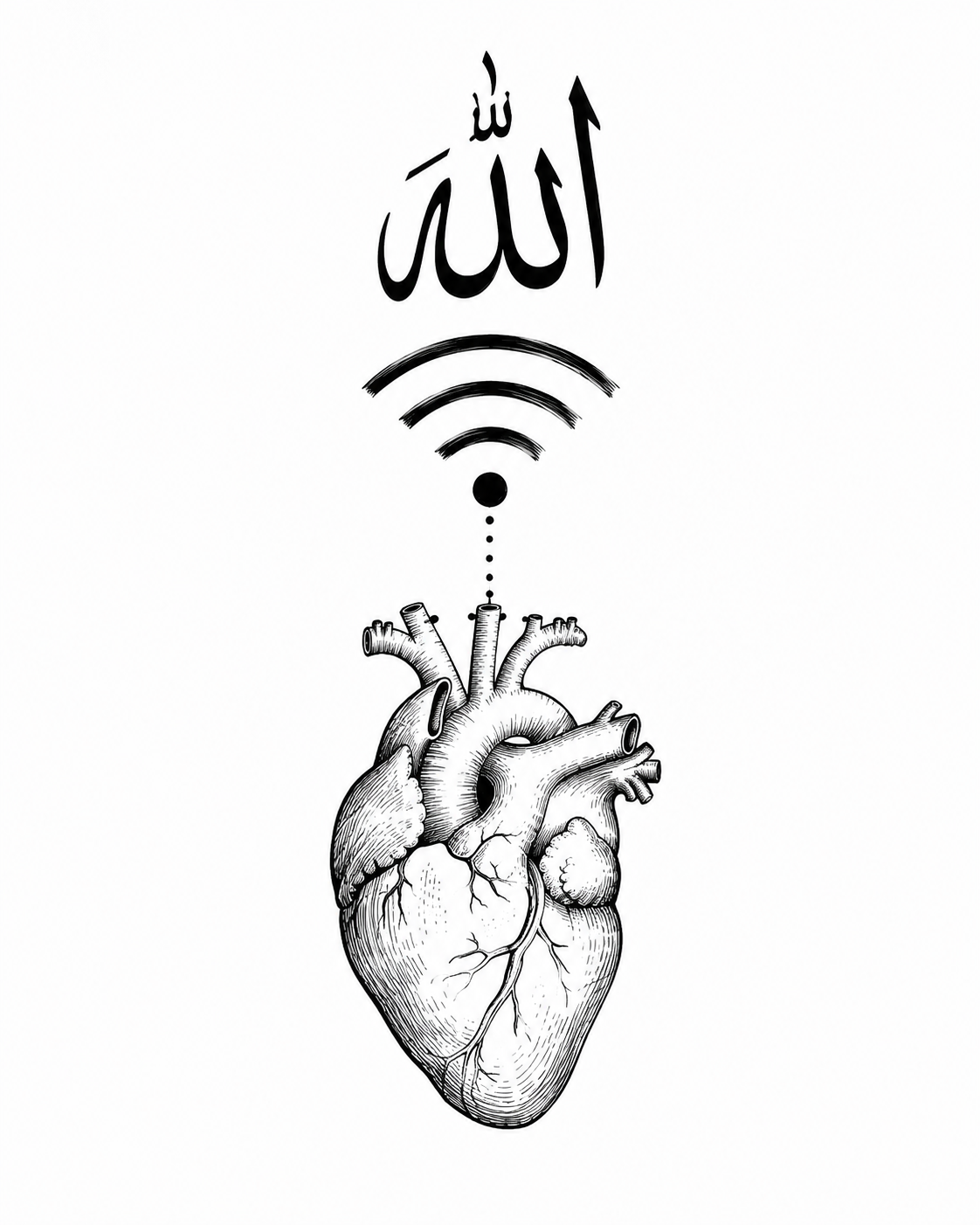
24/7 WiFi: Going Beyond Starlink
We live in an age obsessed with connection.
We become irritated when WiFi takes five seconds to load. We carry phones capable of speaking across continents. Fibre-optic cables run beneath oceans. Starlink and other satellite systems increasingly reach places where conventional communications infrastructure cannot.
Humanity has spent extraordinary amounts of ingenuity—and money—eliminating the places where people cannot connect.
But some of the most important moments in a human life occur when none of that technology is useful.
The diagnosis comes back.
The relationship collapses.
Your child is in trouble.
You lose your livelihood.
You have made a terrible mistake.
Someone you love dies.
Or you simply wake at three in the morning feeling completely alone and lost and with an existential crisis.
Who do you call then? Modern life tells you it’s “therapy”. I have spent an extraordinary amount of time studying Kierkegaard, Jung, Freud and the other psychologists who go behind what we call therapy and CBT. There is good in this – even books like PsychoCybernetics from Maxwell Maltz are good.
There is good in these tools, and some are backed by empirical evidence. However, none of them address the core yearning of a human being for truth and guidance at anything more than a surface level.
My background to claim this is a MSc in Psychology which is accredited by the British Psychological Society, someone born in Hinduism – having spent time in Yoga Ashrams, Tibetan Buddhist Monasteries in India, learning from Rabbis in Stamford Hill in London as well as being exposed to church history, and different Islamic “groups” like Sufis and Tabligh.
The Qur’an offers a remarkable answer :-
“And when My servants ask you concerning Me, indeed I am near. I respond to the call of the caller when he calls upon Me.”
— Qur’an 2:186
There is something beautiful even about the structure of this verse. In a number of Qur’anic passages, people ask Muhammad ﷺ something and Allah tells him, “Say…” But here, when they ask about Allah, the answer is immediate and personal. In the first person, not the third person.
“I am near.”
No satellite.
No subscription.
No signal bars.
No intermediary is required for duʿāʾ.
Like a 24/7 WiFi, always there, connect anytime.
In that metaphorical sense, every human being has been given something beyond permanent WiFi: the capacity to call upon the Creator at any time.
Not because Islamic theology teaches that Allah is physically located inside us. It does not. Rather, the “connection” is always available: Allah hears, knows and responds wherever His servant may be.
The receiver, so to speak, travels with us.
This Hadith captures it beautifully :-
Ibn Umar reported: The Messenger of Allah, peace and blessings be upon him, said, “Whoever among you has the door of supplication opened for him, the door of mercy is opened for him as well. Allah is not asked for anything more beloved to Him than to be asked for wellness. Supplication benefits by what is sent down and what is not sent down. O servants of Allah, you must supplicate.”
Source: Sunan al-Tirmidhī 3548
Grade: Hasan (fair) according to Al-Albani
The Man With No Signal
Perhaps no Qur’anic story illustrates this more beautifully than Dhul-Nun—“the man of the fish”—the Prophet Yunus عليه السلام, Jonah.
Imagine his position.
Inside a great sea creature.
Beneath the ocean.
Surrounded by what the Qur’an calls darknesses.
No ship could hear him. No friend could reach him. No doctor could treat him. No search-and-rescue system could locate him.
If human connectivity has a dead zone, this is it.
And yet Yunus called:
لَا إِلَٰهَ إِلَّا أَنْتَ سُبْحَانَكَ إِنِّي كُنْتُ مِنَ الظَّالِمِينَ
Lā ilāha illā anta, subḥānaka, innī kuntu minaẓ-ẓālimīn.
“There is no deity except You. Glory be to You. Indeed, I have been among the wrongdoers.”
And then:
“So We responded to him and saved him from the distress. And thus do We save the believers.”
— Qur’an 21:87–88
His prayer is psychologically fascinating.
First comes tawḥīd: there is no god except You.
Then tasbīḥ: glory be to You.
Then something difficult but enormously important: self-accountability.
He does not blame the sea.
He does not blame the creature.
He does not blame everybody else.
He names his own condition.
The Prophet Muhammad ﷺ specifically taught this supplication of Dhul-Nun as a prayer to use in distress.
There is therefore nowhere a believer can fall where duʿāʾ has no reception.
Allah Actually Invites the Call
This is not merely a poetic interpretation of Islam.
The invitation appears repeatedly.
“Call upon Me; I will respond to you.”
— Qur’an 40:60
And:
“Who responds to the distressed one when he calls upon Him and removes the evil?”
— Qur’an 27:62
Then Allah tells us how to call:
“To Allah belong the Most Beautiful Names, so call upon Him by them.”
— Qur’an 7:180
And again:
“Call upon Allah or call upon the Most Merciful. Whichever you call upon, to Him belong the Most Beautiful Names.”
— Qur’an 17:110.
The authentic hadith establishes that Allah has ninety-nine Names, and whoever encompasses them has an extraordinary promised reward. Scholars have discussed the precise canonical enumeration; the specific traditional list often memorised by Muslims is associated with a narration in al-Tirmidhi whose complete enumeration has weakness in its chain, while the basic hadith about the ninety-nine Names itself is authentic in Bukhari and Muslim.
That distinction matters academically.
But the larger Qur’anic principle is beyond dispute:
Know Allah through His Names—and call upon Him through them.
Ninety-Nine Ways of Remembering Who You Are Calling
The traditional list commonly memorised by Muslims is:
Allah; Ar-Raḥmān, Ar-Raḥīm, Al-Malik, Al-Quddūs, As-Salām, Al-Mu’min, Al-Muhaymin, Al-ʿAzīz, Al-Jabbār, Al-Mutakabbir, Al-Khāliq, Al-Bāriʾ, Al-Muṣawwir, Al-Ghaffār, Al-Qahhār, Al-Wahhāb, Ar-Razzāq, Al-Fattāḥ, Al-ʿAlīm, Al-Qābiḍ, Al-Bāsiṭ, Al-Khāfiḍ, Ar-Rāfiʿ, Al-Muʿizz, Al-Mudhill, As-Samīʿ, Al-Baṣīr, Al-Ḥakam, Al-ʿAdl, Al-Laṭīf, Al-Khabīr, Al-Ḥalīm, Al-ʿAẓīm, Al-Ghafūr, Ash-Shakūr, Al-ʿAliyy, Al-Kabīr, Al-Ḥafīẓ, Al-Muqīt, Al-Ḥasīb, Al-Jalīl, Al-Karīm, Ar-Raqīb, Al-Mujīb, Al-Wāsiʿ, Al-Ḥakīm, Al-Wadūd, Al-Majīd, Al-Bāʿith, Ash-Shahīd, Al-Ḥaqq, Al-Wakīl, Al-Qawiyy, Al-Matīn, Al-Waliyy, Al-Ḥamīd, Al-Muḥṣī, Al-Mubdiʾ, Al-Muʿīd, Al-Muḥyī, Al-Mumīt, Al-Ḥayy, Al-Qayyūm, Al-Wājid, Al-Mājid, Al-Wāḥid, Aṣ-Ṣamad, Al-Qādir, Al-Muqtadir, Al-Muqaddim, Al-Muʾakhkhir, Al-Awwal, Al-Ākhir, Aẓ-Ẓāhir, Al-Bāṭin, Al-Wālī, Al-Mutaʿālī, Al-Barr, At-Tawwāb, Al-Muntaqim, Al-ʿAfuww, Ar-Raʾūf, Mālik al-Mulk, Dhul-Jalāli wal-Ikrām, Al-Muqsiṭ, Al-Jāmiʿ, Al-Ghaniyy, Al-Mughnī, Al-Māniʿ, Aḍ-Ḍārr, An-Nāfiʿ, An-Nūr, Al-Hādī, Al-Badīʿ, Al-Bāqī, Al-Wārith, Ar-Rashīd and Aṣ-Ṣabūr.
They are not merely a vocabulary test.
They provide a vocabulary for life.
If you are frightened about money:
Yā Razzāq — O Provider.
If every door appears closed:
Yā Fattāḥ — O Opener.
If you have sinned:
Yā Ghafūr. Yā ʿAfuww. Yā Tawwāb — Forgive me, pardon me, accept my return.
If you do not understand what is happening:
Yā ʿAlīm. Yā Ḥakīm — You know; You are Wise.
If you feel powerless:
Yā Qawiyy. Yā Matīn — O Strong, O Firm.
If you are desperate for direction:
Yā Hādī. Yā Rashīd — Guide me.
And if the problem is simply loneliness, one Name becomes extraordinarily beautiful:
Al-Waliyy.
The word waliyy can carry meanings of protector, guardian, ally and protecting friend. The Qur’an says:
“Allah is the Waliyy of those who believe. He brings them out of darkness into light.”
— Qur’an 2:257.
And there is Al-Wadūd — The Loving.
The person who feels that nobody wants to listen can call upon As-Samīʿ — the All-Hearing.
The person who believes nobody sees what they are going through remembers Al-Baṣīr — the All-Seeing.
The language itself changes the psychological frame.
“I am alone” becomes:
“Yā Waliyy.”
“I am trapped” becomes:
“Yā Fattāḥ.”
“I have destroyed everything” becomes:
“Yā Tawwāb.”
“I have no idea what happens next” becomes:
“Yā Hādī.”
The circumstance may not have changed yet.
But the mind confronting it has.
Psychology Already Knows Something About Naming Pain
Modern psychology has discovered something interesting here.
There is a field of research around affect labelling—putting emotions into words.
In a well-known neuroimaging experiment, by Matthew Lieberman, who I had the pleasure to briefly talk to – participants who labelled negative emotional images showed reduced activity in the amygdala and other limbic regions compared with other forms of processing, alongside increased activity in areas of the prefrontal cortex associated with regulation.
The broad idea is surprisingly simple:
“I feel terrible” is cognitively different from:
“I am frightened.”
Or:
“I am ashamed.”
Or:
“I am grieving.”
Naming an emotion creates some distance between the person and the emotional storm.
It turns an undefined internal state into something that can be observed.
Subsequent work has continued to examine how affect labelling can reduce aspects of emotional reactivity.
Now look again at duʿāʾ.
A person says:
Allah, I am frightened.
Allah, I am lonely.
Allah, I am ashamed of what I did.
Allah, I do not know what to do.
The believer is doing at least three psychologically meaningful things at once:
identifying the emotion, articulating the need and placing it within a relationship of meaning.
Islam then adds something psychology cannot empirically establish:
the believer holds that the One being addressed actually hears.
We Spend Billions Helping People Talk
Modern societies rightly invest enormous sums in mental-health care.
In England alone, NHS spending across mental-health services reached about £13.379 billion in 2025/26. NHS Talking Therapies—where CBT and related evidence-based psychological treatments feature prominently—is one component of that much larger system.
And that investment is important.
This article is not an argument to replace psychiatrists, psychologists, medication or CBT with prayer. Severe depression, psychosis, suicidal thoughts, trauma and other conditions can require professional treatment.
But there is another avenue that costs nothing, requires no appointment and can operate alongside treatment:
Talk to Allah.
Therapy may teach a person to name a thought.
CBT may ask:
What happened?
What did you think?
What did you feel?
Is that interpretation necessarily true?
Duʿāʾ can contain something parallel—but inside a theological relationship.
I am afraid.
You are Al-Mu’min, the Granter of security.
I cannot see a solution.
You are Al-Fattāḥ, the Opener.
I feel abandoned.
You are Al-Waliyy.
I have failed.
You are At-Tawwāb.
I cannot carry this.
You are Al-Wakīl, the One to whom affairs are entrusted.
That does not make Islamic spirituality identical to CBT.
It means human beings discovered clinically that articulating inner experience can help regulate it, while religious traditions have long provided structured languages through which people articulate fear, guilt, hope and helplessness.
Duʿāʾ Is Not Passivity
There is another important distinction.
Calling upon Allah is not an excuse to sit still.
Yunus called upon Allah—but Islam repeatedly joins reliance on God with human action.
Tawakkul does not mean refusing to tie the camel.
You apply for the job—and ask Ar-Razzāq.
You study—and ask Al-Fattāḥ.
You see the doctor—and ask Ash-Shāfī, the One who heals, a divine description established in the Sunnah even though it is not in the conventional enumerated list above.
You apologise—and ask Al-Ghafūr.
You make the decision—and ask Al-Hādī.
Duʿāʾ changes “I have no control” into:
“I will exercise the control I have, and entrust what I do not have to Allah.”
That is psychologically very different from helplessness.
Beyond Starlink
Starlink is an extraordinary achievement.
We have learned how to bounce information through orbit so that somebody standing in an isolated landscape can communicate with the rest of humanity.
But Yunus عليه السلام was farther beyond human reception than almost any metaphor we could devise.
Beneath the sea.
Inside the creature.
Inside darkness.
And he called.
That story does not promise believers a painless life.
Yunus suffered.
Ayyub suffered.
Yaʿqub suffered.
Muhammad ﷺ suffered.
The promise is subtler:
there is no condition in which you lose the ability to turn toward Allah.
No roaming charge.
No password.
No appointment.
No waiting room.
No geographic dead zone.
Sometimes the entire prayer is simply:
Yā Allah.
Sometimes:
Yā Raḥmān.
Sometimes:
Yā Waliyy—I feel alone.
Sometimes it is the prayer from the darkness:
Lā ilāha illā anta, subḥānaka, innī kuntu minaẓ-ẓālimīn.
Humanity has spent billions trying to make sure that wherever we go, we can still reach another human being.
Islam gives us an even more radical invitation:
“Call upon Me.”
And when the servant asks how far away God is, the Qur’an’s answer contains no distance at all:
“I am near.”
Perhaps that is the connection we were designed never to lose.
Related Topics
Related Posts