
25 Years of Reaching for the Stars
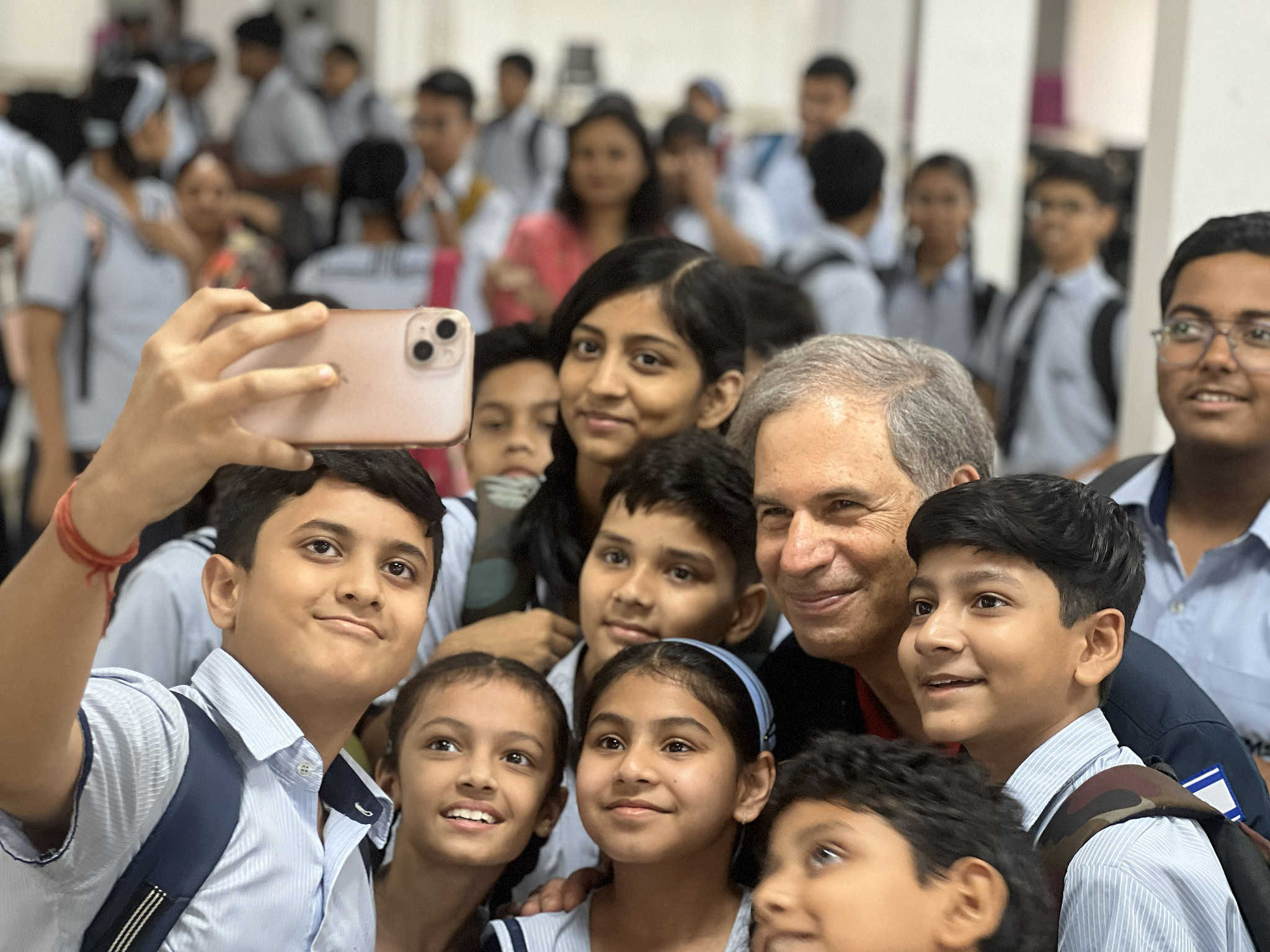
It has been a mere three years since my arrival at the International Space Station (ISS), marking the launch of the Rakia Mission. It has been an absolute honor to have been a part of such a meaningful and impactful project, contributing to the social and scientific progress of humanity. However, the ISS and its ongoing international cooperation began long before my visit in April of 2022. In fact, the station is now celebrating 25 years of operation, commemorating more than two decades of triumphing over political conflict in favor of technology’s development.
The International Space Station
The ISS officially opened its doors on November 2nd, 2001, when Expedition 1 crew members William M. Shepherd, Yuri P. Gidzenko, and Sergei K. Krikalev arrived at the station and spent 136 days in international cooperation. Since then, the ISS has stood as a peaceful territory for more than 280 people from 23 countries around the world. Among them were professional astronauts, businessmen, and even celebrities.
However, the idea of a space station did not originate as a pillar of international cooperation. During the Cold War, arriving in space not only represented a technological advantage but also proved the political and strategic strength of a nation. Thus began the race to space. Both the United States and the Soviet Union began building their own revolutionary equipment in an attempt to demonstrate their superiority. Following many unsuccessful trials, it soon became clear that the power of two nations could never compare to that of one.
Soon after the fall of the Soviet Union, Russia and the United States began their partnership, setting off a historical event that would be known as one of the largest international collaborations to date. Multiple countries contributed to the expansion and development of the station, making it the cultural and united pillar that it is today.
The ISS serves as a platform for research in various unique conditions, with over 4,000 experiments conducted already. Testing biology, medicine, and physics on the ISS has further expanded the comprehension of the influence of gravity on different aspects of life on Earth. In addition, many technological developments for the astronauts were adopted and remodelled into gadgets we own today, such as smart watches and air purifiers. Lastly, due to the unique conditions of life on the ISS, crucial psychological and physiological research was conducted, revealing groundbreaking treatments for low bone density and osteoporosis.
Experience and Experiments
In April of 2022, I, along with the rest of the Ax-1 team, boarded the Dragon spacecraft for a 19-hour trip to the ISS. I spent 16 days on the station, carrying out several studies and projects, and experiencing for the first time a platform dedicated to collaboration and teamwork.
Although the station’s modules are divided between Japan, Europe, the USA, and Russia, crossing into another country’s module was nowhere near what is seen on Earth. No visa or passports are required. The astronauts and cosmonauts move around freely, spending a good portion of the day with one another.
I conducted more than 140 scientific, educational and artistic activities in space. Among them, two of the main scientific endeavors were identifying viruses and bacteria in space and documenting a red “lightning sprite” from space, enhancing our understanding of upper-atmosphere electrical phenomena.
Beyond the scientific research, the Rakia mission aspires to make technology and science accessible to Israeli youth. Educational projects included reading the book “What a Beautiful World” to kindergarten children from orbit and a collaborative project allowing high school students to participate in direct radio communication with the ISS. The mission also fostered creativity through a poetry writing competition, with the winning poems being the first Hebrew poems read in space. Lesson plans based on the mission’s experiments allowed students to conduct similar hands-on science activities. Post-mission surveys highlighted the success of these efforts, with 98% of educators reporting that the activities aroused student curiosity, and 88% noting an increase in student creativity.
Finally, the mission incorporated art projects created in collaboration with the Israeli Center for Digital Art. Selected Israeli artists developed works that explored themes such as the non-human dimensions of space, the human body and psychology in orbit, and sound and communication within the space station, often connecting with and expanding upon the mission’s scientific and educational goals.
Rakia’s Collaborations
In 2023, Rakia joined Axiom Space’s Access Program, representing Israel among all the countries involved in the ongoing exploration of space and its opportunities. This collaboration sparked Rakia’s pivotal role in the Ax-4 Mission, which marked the return of India, Poland, and Hungary to human spaceflight. Rakia helped propel the scientific, educational, and international collaboration efforts.
Thanks to this collaboration, Rakia partnered with the Hungarian Space Program (HUNOR). The Rakia team shared crucial knowledge on mission planning, public engagement, and provided strategic support for the development of the HUNOR Payload Control Center. This partnership led to the joint UHU experiment, which aimed to study Transient Luminous Events (TLEs) like sprites using synchronized ISS imagery and ground-based observations. Rakia provided pre-flight training to the entire Ax-4 (2025) crew and facilitated real-time data collection protocols.
Rakia also drove educational outreach in India, the home country of Ax-4 pilot Group Captain Shubhanshu Shukla. They collaborated with the City Montessori School (CMS) in Lucknow, helping them establish a mission control center and designing an extensive program that engaged thousands of students and educators through interactive space-related activities.
Additionally, Rakia partnered with VCE to bring the Ax-4 mission to public schools in Karnataka, inspiring curiosity among young learners in the region. Throughout these initiatives, the Rakia Mission demonstrated a deep commitment to the United Nations Sustainable Development Goals (SDGs), specifically promoting inclusive Quality Education (SDG 4), strengthening space-related Innovation and Infrastructure (SDG 9), and fostering Reduced Inequalities (SDG 10) by broadening access to space engagement and scientific inspiration across the globe.
Conclusion
Sadly, NASA has recently announced the end of the International Space Station’s mission and its de-orbit in 2031. This news sparked a concern regarding the continuation of the ISS’s international collaboration.
Yet that does not mean it is the end of our mission as a whole. The launch of the Ax-1 Mission marked the beginning of Israel’s space research and pursuit of an accessible space for all. Ax-4 proved our commitment to this endeavor. I believe that, even though the ISS in his current form is going to end its activity by 2031, we must all remember the importance of humanity coming together for the exploration and research of space and the impact it has had during the last 25 years of operation. For now, we may only hope for many more peaceful partnerships to come.