
Expose hate. Educate with integrity. Empower through action.
250 Years of Freedom: Don’t Take It for Granted

250 Years of Amercian Freedom
This Fourth of July is unlike any other.
America is celebrating 250 years of freedom. It is 250 years since a bold nation declared that liberty was worth fighting for and that people were born with rights no government could take away.
For many Americans, freedom has always been there. It is woven into daily life. It feels permanent. It isn’t. I know because I grew up without it.
I grew up behind the Iron Curtain in the Soviet Union, where freedom was not a birthright but a privilege granted, or taken away, by the state. Every word mattered. Every conversation could become a report. Every stranger could become an informant. Even the air felt censored.
Despite the consequences, we were a Jewish family that openly somewhat observed Judaism. We went to synagogue on the High Holidays knowing someone could report us to the authorities. Jewish identity was not something many people displayed publicly because doing so came with a price. My parents paid that price. Professional opportunities disappeared. Doors quietly closed. Certain careers were simply unavailable. Jewish families learned early that merit alone was never enough.
Freedom was something we admired from afar. I still remember my father saying that Canada was one of the greatest countries on Earth—a nation built on freedom, democracy, meritocracy, free enterprise, and respect for individual liberty. He believed we had arrived somewhere extraordinary. For many years, he was right. Today, I struggle to recognize the country that welcomed us.
Last December, I wrote that antizionism had reached what I called “Stage 4 cancer” in Canada. Seven months later, I believe Canada is at Stage 5 cancer. The disease is no longer confined to isolated incidents. It has metastasized throughout our institutions, our campuses, our streets, and increasingly into our political culture.
Like cancer, societies rarely collapse all at once. They weaken cell by cell, institution by institution, freedom by freedom. Rights that once seemed untouchable begin disappearing piece by piece. Speech becomes more restricted. Citizens become afraid to express unpopular opinions. Merit gives way to ideology. Public institutions lose the confidence of the people they are meant to serve.
Having lived under Soviet authoritarianism, I recognize these patterns. They arrive gradually, wrapped in promises of justice, safety, or moral certainty.
Over the past decade, I have watched Canadian society decline, become increasingly polarized, free expression become more contested, ideological conformity grow stronger, and extremist rhetoric become increasingly normalized.
As someone who has spent years researching contemporary antizionism, I believe this movement has become far more than a disagreement over Middle East politics. It increasingly functions as a broader ideological framework that divides society into permanent oppressors and oppressed, justifies exclusion, and erodes the liberal democratic values that allowed pluralistic societies to flourish.
The consequences extend far beyond the Jewish community. History teaches that hatred rarely stops with its first target. Today, Jews are at the center of that hatred. Tomorrow, it is everyone else.
Throughout history, societies have not collapsed overnight. They weakened gradually. First came demonization. Then exclusion. Then intimidation. Eventually, violence.
When calls for violence become normalized, when democratic institutions hesitate to enforce the law equally, and when intimidation replaces dialogue, societies enter dangerous territory.
The warning signs should concern everyone, not only Jews.
What concerns me most is that Canada is no longer an isolated case. The same ideological currents are increasingly visible throughout the United States. The coalition of revolutionary Marxist and Islamist movements, which many have described as the “Red-Green alliance,” has spent decades embedding itself within universities, activist organizations, parts of the media, and cultural institutions.
Marxist frameworks, such as DEI, have become vehicles for antizionism, and antizionism, in turn, has become one of the most effective hate systems in the modern world. While presented as a campaign against Israel, its rhetoric increasingly challenges the broader foundations of Western liberal democracy, individual liberty, national sovereignty, and the principles upon which free societies were built.
That is the lesson of every society that has lost its freedom, and it is a lesson America cannot afford to relearn the hard way.
America today remains the strongest defender of the democratic ideals that transformed the modern world. For 250 years, it has represented something extraordinary — free expression, religious liberty, self-government, innovation, opportunity, and much more.
In America, the belief is that people should be judged by their character and contributions rather than by immutable characteristics. These principles have inspired billions of people across the globe, including my own family.
But freedom has never been self-sustaining. Every generation inherits it and must protect it. As the Torah instructs, “thou shalt teach them diligently unto thy children” (Deuteronomy 6:7) — freedom, like faith, survives only when each generation deliberately hands it to the next.
Canadians are learning a painful lesson: freedoms are rarely lost overnight. They disappear one policy, one precedent, one institution, one concession at a time. By the time many citizens realize what has happened, recovering those freedoms becomes far more difficult than protecting them in the first place.
Freedom is not self-executing. Liberty survives only because ordinary citizens choose to defend it.
Much of Western Europe is already struggling with profound questions about democratic resilience, social cohesion, and the rise of ideological extremism. Canada faces its own difficult debates about polarization, extremism, and foreign influence. In my view, Canada has become the North American battleground in a civilizational struggle between the values of liberal democracy and the ideological convergence of Marxism and Islamism. Across much of the Western world, the Red-Green alliance has steadily entrenched itself, while institutions that once defended liberal democracy have increasingly been captured by its ideology.
This is what ideological colonization looks like. It does not arrive with bombs. It advances through ideas, institutions, and narratives until a society gradually begins to abandon its own civilizational foundations and surrender the very values that made it free. While many Western societies were encouraged to adopt Marxist frameworks since the 1990s, Islamist movements expanded their influence within institutions, communities, and public discourse.
America now stands as the strongest remaining defender of the principles that built the modern free world. That is why what happens in America matters far beyond America’s borders.
If America ultimately fails to defend those principles, the consequences will not stop at its shores. The world would lose its strongest defender of constitutional liberty, democratic government, freedom of speech, religious liberty, and free enterprise. History shows that when free societies retreat, authoritarian movements advance. My concern is that if America loses this battle, the free world would enter a new dark age, one in which liberty gives way to censorship, fear, and ideological conformity. Having lived behind the Iron Curtain, I do not use the phrase “dark age” lightly. I know what life looks like when freedom disappears, and I believe the world cannot afford to lose its greatest defender of liberty.
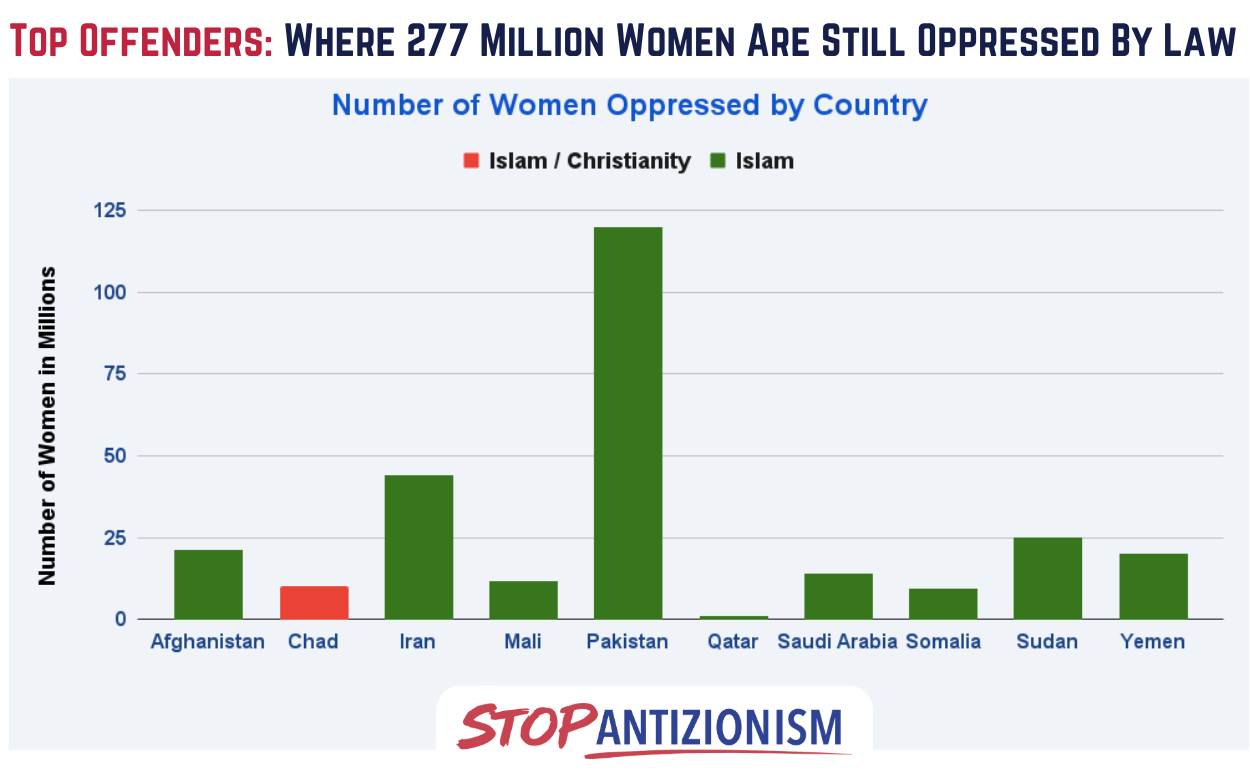
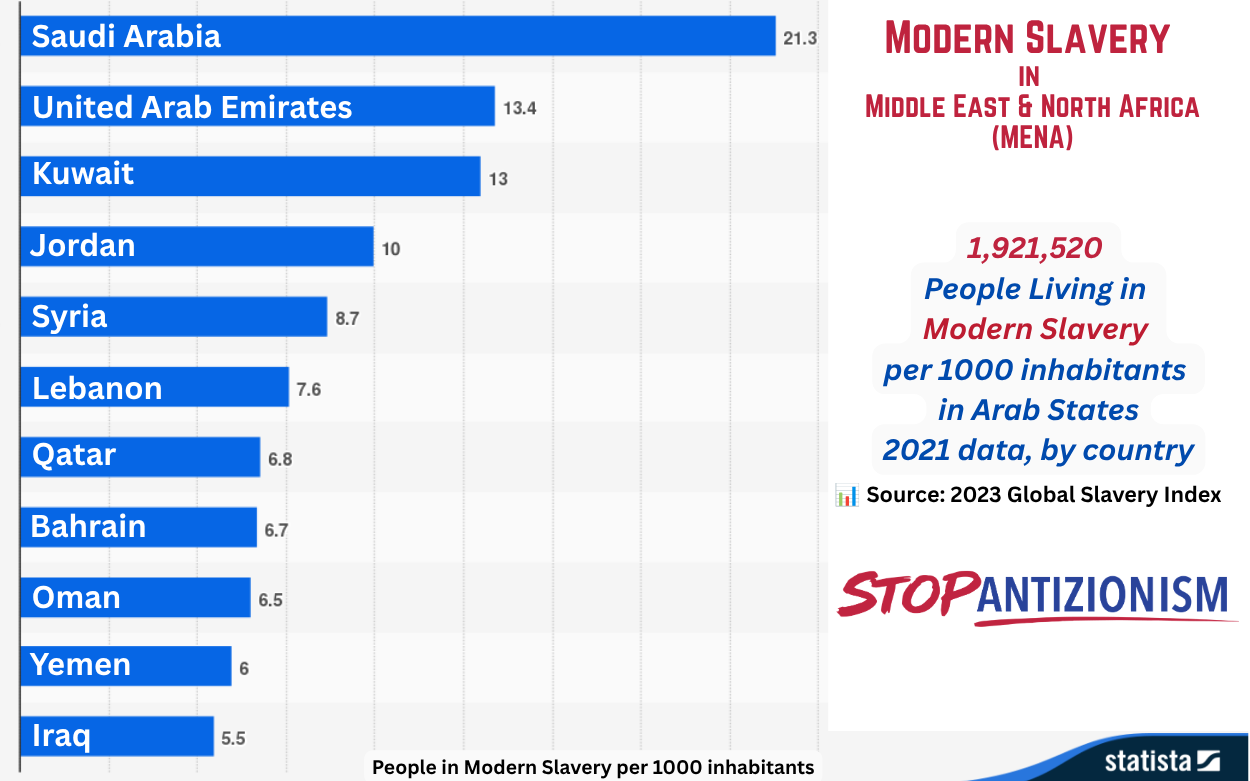
If anyone doubts what happens when liberty gives way to authoritarianism and extremism, they need only look to North Korea, Iran, Afghanistan, Sudan, Yemen, and large parts of the Middle East and North Africa (MENA). Across these regions, millions live without the rights and civil liberties many in the West take for granted. In MENA, more than 277 million women live under systems of gender apartheid, denied equality, personal autonomy, and fundamental freedoms that should belong to every human being. LGBTQ+ individuals face criminalization, imprisonment, or worse. Religious minorities — including Christians, Jews, and others — continue to face persecution. According to the 2023 Global Slavery Index by Walk Free (based on 2021 data), modern slavery continues to affect over 1.9 million people across the Arab states. These are not relics of history. They are realities of the present, proof of what life becomes when fundamental liberties are abandoned and authoritarian ideologies prevail. If you have never lived without freedom, it is easy to believe it cannot disappear. It can.
Americans should pay attention, not because history repeats itself exactly, but because complacency is dangerous. Liberty disappears gradually before it disappears suddenly.
Many Westerners have never lived without freedom. They have never experienced life where speaking freely can cost them their future and where people are imprisoned or killed because of who they are.
Freedom is not humanity’s default condition. It is the exception.
I have seen societies where citizens feared speaking openly, governments that controlled thought as much as law, and I have seen what happens when ideological conformity replaces free debate.No free society should ever assume it is immune.
This anniversary should therefore be more than a celebration. It should be a renewal of purpose — a chance to be proud of your country, grateful for the liberties generations before you secured, and a commitment to teaching your children why freedom matters.
Etched into the Liberty Bell is a line from Leviticus 25:10: “Proclaim liberty throughout all the land unto all the inhabitants thereof.” It is fitting that a nation built on freedom drew its founding symbol from an ancient promise — one my own ancestors carried through centuries of exile and persecution.
America’s greatest achievement is not simply that it became prosperous or powerful. Its greatest achievement is that, for 250 years, it has remained an imperfect but enduring experiment in liberty. That experiment deserves defenders.
As someone who escaped a society where freedom did not exist, I know its value.
Liberty is precious precisely because it is fragile. Never assume it will always be there. Protect it. Cherish it. Pass it to the next generation. On this 250th anniversary of American independence, celebrate — but also remember what made this nation exceptional.
Be patriotic. Be proud of your country. Protect your freedoms before someone else decides they are no longer yours. Defend democratic institutions. Stand together against extremism. Reject hatred. Reject political violence, regardless of where it originates. Reject movements that divide Americans into permanent oppressors and victims while attacking the principles that have made America the most innovative, prosperous, and influential democracy in history.
Antizionism does not merely threaten Jews. Antizionism is a civilizational crisis that has become a broader movement that increasingly undermines the democratic values upon which Western societies depend. A movement built on hatred cannot build a free society. As Ben Shapiro said at the World Symposium Against Antizionism on May 17, 2026: “Antizionism is evil as it must lie to survive.”
America’s next 250 years will depend not only on military strength or economic power, but on whether its citizens have the courage to defend the civilization they inherited, and to pass it, stronger than they received it, to the next generation.
May G-D continue to bless America, and may Americans never take their freedom for granted.
Related Topics