


A Betrayal as Old as Time
Antisemitism is nothing new. That may be its most terrifying quality. It is the oldest of political hatreds, a worldview so durable that it survives every era by reinventing itself. From Roman suspicions to medieval blood libels, from Enlightenment conspiracy-writing to the racial pseudoscience of the 19th century and the annihilationist fantasies of the 20th, it has adapted with unnerving ease. Jews are accused of being too assimilated or too separate, too powerful or too weak, too nationalist or too rootless. Antisemitism never needs coherence. It needs only a vessel.
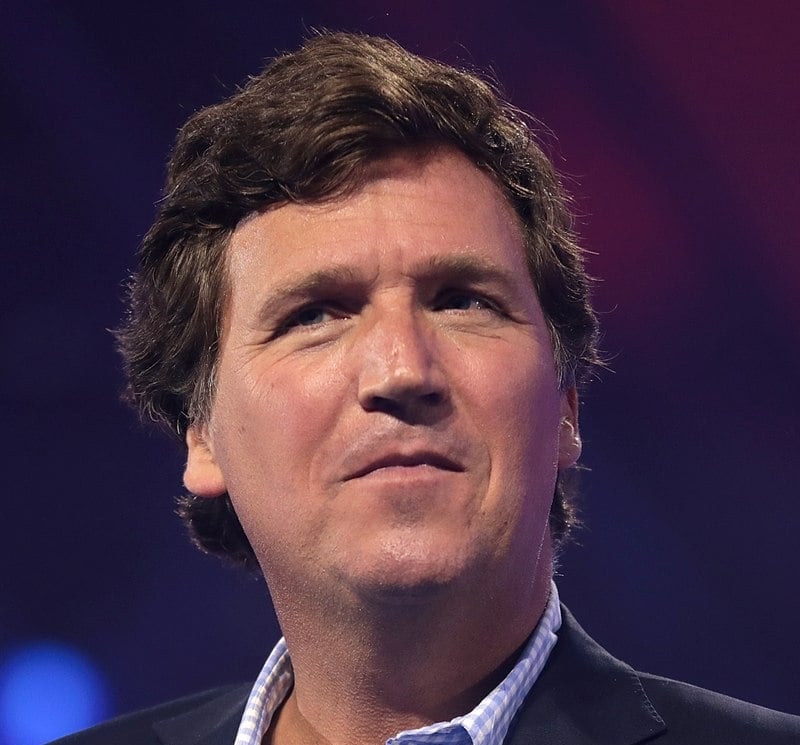
And today, one of its most effective vessels is Tucker Carlson.
The question is not whether Carlson is historically unprecedented — he is not. The question is why he matters. He matters because in the fractured ecosystem of modern conservatism, he has become one of the most influential storytellers shaping the worldview of a generation of young, disaffected conservative men. He matters because he translates resentment into meaning, grievance into identity, and suspicion into narrative. He matters because he speaks not like a political operative but like a mentor: calm, certain, articulate, emotionally compelling. He matters because millions trust him—sometimes more than they trust their clergy, their teachers, or their elected officials. Even after leaving Fox News, his viewership dwarfs that of many traditional media outlets.
When someone with that level of cultural reach flirts with antisemitism — or gives oxygen to those who openly revel in it — it is not simply another offensive episode in the news cycle. It represents a profound shift in the moral boundaries of the American right.
The Carlson–Nick Fuentes interview was that kind of moment. Fuentes is a man whose record is not ambiguous. A Holocaust minimizer, a white supremacist, someone who praises Hitler and attributes the chaos of the world to “organized Jewry.” And yet, Carlson’s demeanor during their two-hour conversation was cordial, inquisitive, respectful. He nodded thoughtfully as Fuentes resuscitated century-old conspiracies about Jewish power, cultural corruption, and global manipulation. What once would have been relegated to the fever swamps of fringe chatrooms streamed, unchallenged, to millions.
The backlash came quickly, yet the hesitation from many corners of the right was just as telling as the condemnation. Some Republicans spoke forcefully — Ted Cruz among them, calling silence in the face of Hitler-praise “cowardice.” But others hesitated. Others waited. Others weighed whether repudiating Carlson would cost them with the people who matter to their future: the young men who fill his comment sections, share his clips, and treat him as a kind of secular rabbi of grievance and clarity.
To understand why that hesitation is so dangerous, one must understand who listens to him. Carlson’s audience is large, digitally fluent, and disproportionately composed of young conservative men who distrust institutions, feel politically unmoored, and crave a narrative that explains their anxiety. He offers them exactly that story. He doesn’t need scholarly rigor; he wields the cadence of conviction. He doesn’t need theological grounding; he speaks with the confidence of someone who believes he is revealing hidden truths. When Carlson reframes Zionism as “an attack on Western civilization,” he is not offering a policy critique; he is reframing Jewish self-determination as a civilizational threat. And those young men listen.
The Carlson–Cruz interview months earlier, reported widely in the Forward, was the warning sign. Cruz explained that his support for Israel was rooted in the biblical promise that those who bless Israel will be blessed. Carlson pressed relentlessly: Did this refer to the modern state of Israel or only the biblical people? Was this theology? Politics? A metaphor? As the conversation unwound, Cruz’s answers collapsed under the weight of Carlson’s certainty, revealing confusion that did not exist only within Cruz, but within a large swath of conservative Christian support for Israel. When modern Israel becomes indistinguishable from an abstract biblical symbol, it becomes easy to strip the Jewish people of their political legitimacy — and even easier to reduce them to a moral or civilizational problem.
This is precisely how antisemitism operates in its subtler modern forms. Not through shouts but through insinuations. Not through explicit hatred but through civilizational analysis. Not through explicit bigotry but through theological gamesmanship. Carlson’s line — that Zionism is an attack on the West — is simply the latest iteration of a very old claim: that Jews threaten the cultural integrity of the societies they inhabit. Once it was Christendom that needed protection. Now it is “Western civilization.” Change the vocabulary and the target remains the same.
More troubling still is that institutions once committed to drawing a line against such rhetoric are wavering. When the president of the Heritage Foundation initially defended Carlson after the Fuentes interview, dismissing critics as part of a “venomous coalition,” it signaled a shift. The conservative movement is no longer anchored by the moral boundaries that once governed it. The center of gravity has moved — toward a populist-nationalist worldview in which conspiracy, grievance, and essentialist thinking are not deviations but core commitments.
For American Jews, especially those disillusioned by left-wing anti-Zionism, this is destabilizing. Many turned toward the right believing it was a safer harbor, a place where Jewish sovereignty was respected and Jewish safety taken seriously. And for decades, that was often true. But the support was sometimes a mile wide and an inch deep — rich in rhetoric, thin in understanding. If the relationship was sustained by eschatology, political convenience, or symbolic projection rather than moral commitment, then it was always vulnerable to collapse. And now the cracks are beginning to show.
Which brings me, inevitably, to why I care — not simply as a writer, or as a citizen, but as a rabbi.
I care because my people carry the memory of every century in which this pattern played out. I care because I am responsible for teaching a tradition that knows how quickly admiration can turn to suspicion, how quickly “Judeo-Christian values” can be repurposed against Jews, how quickly the rhetoric of civilization can be weaponized to exclude the very people who helped shape it.
I care because I am entrusted with the spiritual safety of a community — parents, grandparents, children — who need to understand the world around them not with fear, but with clarity. It is my responsibility to teach them that history does not repeat, but it rhymes. And right now, the rhyme is unmistakable.
I care because I have sat with congregants who feel politically homeless, who wonder where Jews belong in an era where both extremes of the political spectrum are drifting into forms of antisemitism. I care because young Jews need someone to translate the moment for them — to explain that the danger does not come only from those who shout, but also from those who whisper with confidence and charisma.
I care because the Torah commands me not to stand idly by the blood of my neighbor, and that includes naming dangers before they become disasters. Silence is not pastoral. Silence is not prophetic. Silence is complicity dressed up as caution.
And I care because, as a rabbi, my loyalty is not to the political right or the political left, but to the Jewish people and to the moral tradition that sustains us. That loyalty demands honesty even when honesty is inconvenient, clarity even when clarity costs us allies, courage even when courage isolates.
We are living through a moment in which antisemitism is becoming culturally fashionable again — not only in the obvious places, but in the subtle ones, the clever ones, the influential ones. It does not look like 1939. It looks like a studio, a microphone, a man with a steady voice telling millions whom to fear.
The betrayal we are witnessing within parts of the American right is not unprecedented. But it is significant. It demands from us not panic, but purpose; not despair, but discernment. It demands that leaders — political, cultural, religious — speak without equivocation. And it demands that we remember who we are: a people with long memory, unwavering resilience, and a covenant that has outlasted every empire that believed it could define, contain, or destroy us.
Antisemitism is ancient. Its messengers today are new. But the Jewish response remains what it has always been: moral courage, historical consciousness, and the unshakable belief that truth — real truth — can outlast even the most charismatic lies.