
A blessing for Dinah
In fourth grade, we learned Parshat Vayechi. My teacher had us memorize all of the blessings that Yaakov bestowed upon his children. At the time, I knew all of them by heart (as well as all the accompanying hand movements), but I didn’t notice any absences. Today, I no longer remember all of the words, but I do see one glaring omission: Where is Dinah?
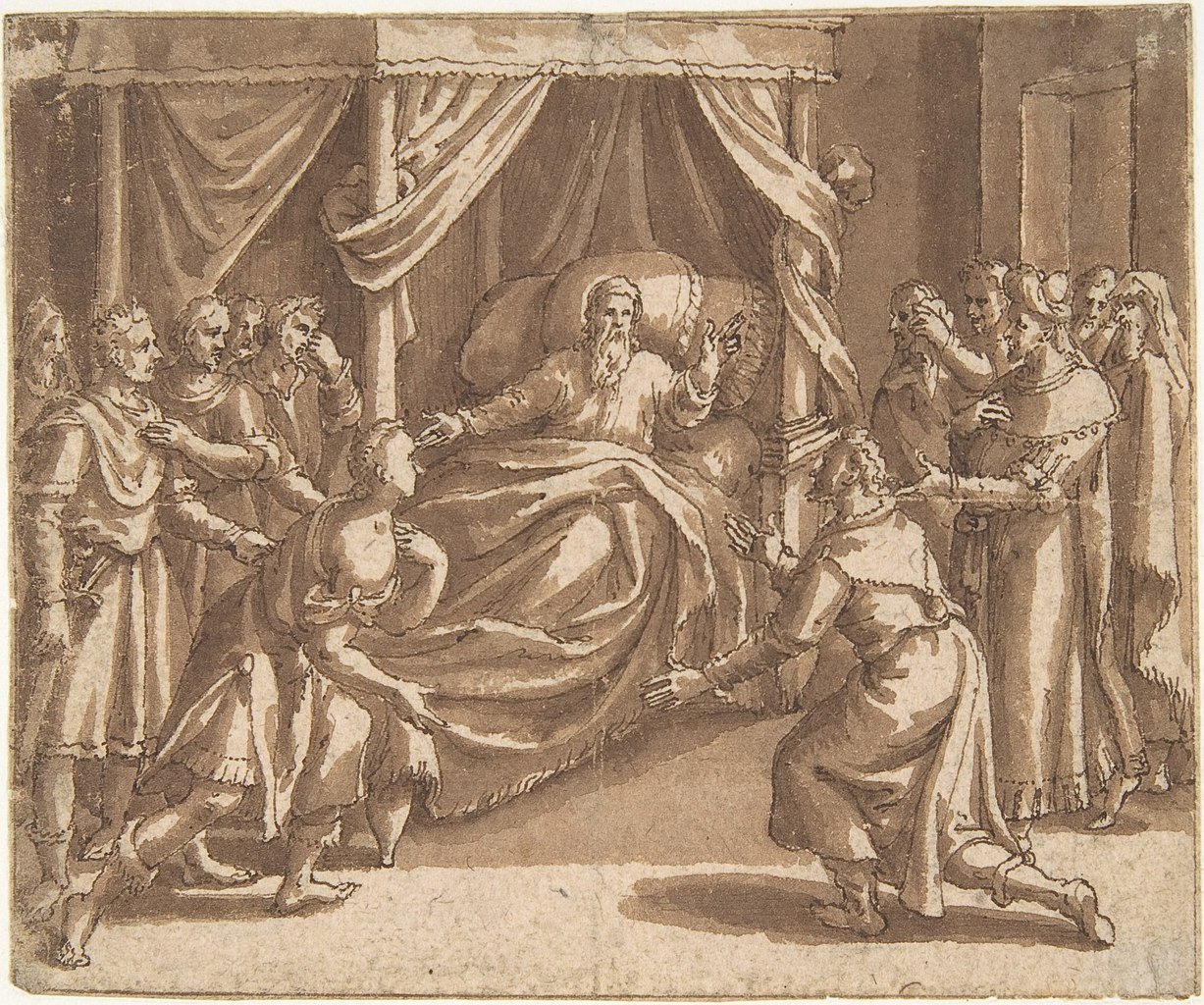
Before Yaakov dies, he summons his children: “And Jacob called his children/sons and said, “Come together that I may tell you what is to befall you in days to come” (Genesis 49:1).
Although many translations define the word “banim” as sons, it could also be translated as “children.” The choice to define it as sons assumes that Dinah was not to be included in the gathering. Why would Yaakov exclude her?
This question is all the more poignant in light of the talmudic interpretation that Yaakov wished to convey a message of comfort to his children. According to Pesachim 56a, Yaakov sensed his impending death and “wished to reveal to his sons when the complete redemption would arrive at the end of days.” A slightly different interpretation found in the medieval commentary by Chizkuni suggests that Yaakov wished to offer words of comfort about his descendants’ impending 400-year sojourn in Egypt. Either way, Yaakov is attempting to convey reassurance about difficult days ahead. This is arguably one of the greatest gifts he could afford his children upon his deathbed. Why exclude Dinah, especially considering how much she had already suffered in life?
One answer may be derived from Midrash Bereishit Rabbah 80:11, which offers the startling insight that Dinah was married to her brother Shimon! According to Rav Huna, in the aftermath of Shechem’s assault on Dinah (and Shimon and Levi’s subsequent retribution), Dinah lamented “‘But I, where will I carry my shame?’ Whereupon Shimon proclaimed to her that he would take her.” Although other midrashim do not adopt the narrative that Dinah married her brother, this particular midrash is cited by Rashi (Genesis 46:10) and cannot be overlooked.
Controversial content notwithstanding, the midrash does imply an answer to the question of why Dinah never received a blessing from Yaakov. Simply stated, Dinah’s blessing came through her husband Shimon. And even though Shimon’s blessing reads as more of a curse, Ibn Ezra and others suggest that the Torah omitted some of the content of the blessings, and that each one did indeed contain actual blessings.
Nonetheless, we may still inquire as to why Yaakov never shares his message of comfort with Dinah, nor, apparently, does he address her directly with any message, blessing or otherwise.
Perhaps these noteworthy omissions suggest great uncertainty on Yaakov’s part as to how to approach Dinah. How can he reassure her of better days to come, particularly after his noticeably passive role in Parshat Vayishlach? Could Yaakov really say that things would eventually be okay, and even if he could, how would such a message land with his survivor-daughter?
But why still couldn’t he have just given her some sort of a blessing?
Perhaps what Yaakov knew of blessings was incompatible with Dinah’s life. The blessings Yaakov was familiar with involved acquisition and prosperity of the land, as well as dominion over enemies. As a woman, Dinah was not going to receive a portion of the land, so perhaps Yaakov considered a blessing to be irrelevant.
If only Dinah had been granted the ability to look ahead several generations. If only, as she sat in the next room with her mother pondering her life as a woman, while her brothers received their blessings, she could have known that other women would fight for their portion in the land of Israel and they would succeed. Might it have brought Dinah comfort to know that the daughters of Tzelofchad were coming (Numbers 27): strong women who would suffer loss, approach Moshe and Aaron, and become the beneficiaries of divine intervention when the leaders were left speechless. Would it bring Dinah comfort to know that they would reap the benefits of life under different circumstances, which enabled them to push back against exclusion?
This past summer, a group of my relatives traveled to Germany to attend a dedication ceremony for our family members who had lived there before the Shoah. The group included numerous descendants from various countries, with the largest group coming from Israel. I wonder what comfort it might have brought my grandfather’s parents and sisters, all of whom were murdered in the Shoah, to know that, although they did not live in a time when they would receive salvation, in the next few generations, their relatives would grow and live as free Jews in the Jewish homeland, able to return to Europe to honor their memory. If only someone could have approached them in those horrific times to share Yaakov’s message with them: “I (will) tell you what is to befall you in days to come.” You are going through unspeakable darkness, but better times will come.
Alternatively, perhaps we can also return to that first verse and read it differently. Perhaps when it says that Yaakov spoke to his “banim” it really meant children, not only sons, and Dinah did actually hear those words of comfort. Maybe she knew from Yaakov, or from her own intuition that, in the future, women would enjoy more blessings, opportunities, and freedoms than she did, and that, sooner or later, whether in her generation or the next, better times would come. I hope and pray that she received comfort from that message, and that any woman who needs to hear that today is able to access and receive that message.
May we all enjoy the blessing of peaceful days in which women are shielded from harm and showered with blessing.