One year after the ‘Daughters of Zelophehad’ ruling: A marathon, not a sprint

Today, the 18th of Tammuz, marks exactly one year since the ruling in the petition over women’s right to sit the Chief Rabbinate’s ordination exams (the “Yoreh Yoreh” track) on the same terms as men. The presiding justice, Noam Solberg, cast it as a modern case of the daughters of Zelophehad, the women in tomorrow’s Torah portion, Pinchas. I am one of the petitioners in that case, brought by ITIM, the Rackman Center, and Kolenu (formerly Kolech). Registration for the October session closed yesterday, and a year on, we can only hope for a second round of halakhic exams, for women too, on a wider range of subjects.
Over the past year, the Rabbinate’s halakhic exams moved in a rhythm of advance and retreat. Registration, for women and men alike, was shut down almost immediately after the ruling, then reopened in February. The exam eventually held still bore the marks of gender discrimination, and the court had to intervene. The Rabbinate then threatened legislation to bar women, and the July session’s registration was closed again. Only afterward was the October session opened. At last, despite every obstacle and every act of harassment, the grades came with news and, in the end, one of them passed.
Just as we return to each Torah portion seeking new meaning, this one too calls for a fresh look. The powerful link forged between the daughters of Zelophehad and a petition before Israel’s Supreme Court is not merely something to marvel at for the resemblance between today’s petition and the biblical plea and demand. It is worth contemplating the space between two moments: the one in which the daughters came before Moses with their plea, and with their winning it and “the law was hidden from Moses” so that justice had to be established anew; and the one in which that justice is tested in practice.
A State Institution May Not Discriminate, and the Correction Is for Women and Men Alike
The correction this petition seeks is not for women alone, but for women and men together. We should not be seen as “orphaned” petitioners forced to act on our own and turn to the court, as the daughters of Zelophehad surely felt; opening the Rabbinate’s gates to us as well is a shared request. The growth of the women’s world of Torah matters to the life of whole communities, far beyond the private lives of learned women.
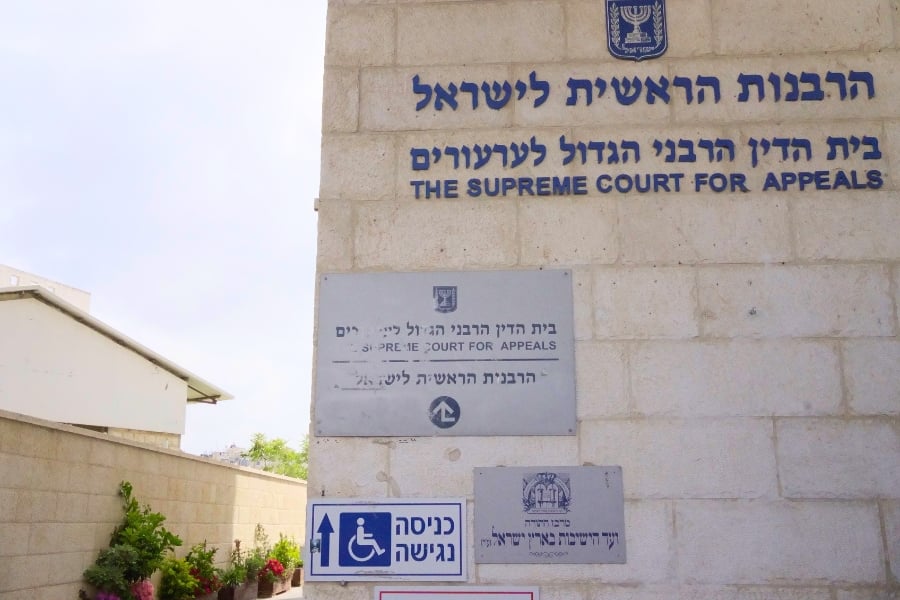
The system of halakhic examinations sits within the Chief Rabbinate, a state institution funded by the taxes of us all: religious, secular, traditional, and Haredi. It touches the life of every citizen at life’s most significant crossroads, from birth to marriage to burial, even for those who place no faith in it whatsoever. A state body may not discriminate on the basis of gender, and so this ruling concerns all of Israel’s citizens, including those who keep their distance from the rabbinic establishment. This is no narrow sectoral matter, but a specific instance of state-sanctioned discrimination against women.
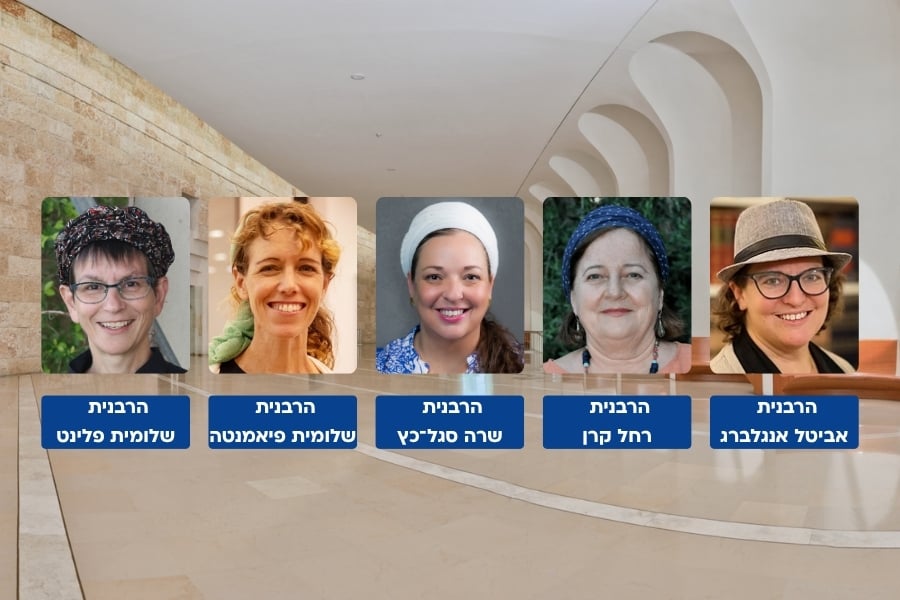
Rabbanit Shlomit Piamenta, one of the six petitioners and the director-general of Beit Hillel, the first Israeli Orthodox organization to include both male and female rabbis, knows the world of yeshivas and women’s study halls, of synagogues and communal life, from within. Again and again she says: “Women’s Torah leadership is an existing fact, and broad segments of the religious world welcome it.” In that spirit, the organization has formed a support group for the women sitting the next exam; reaching the exam, holding it fairly, and succeeding in it are a personal undertaking, but also a public mission.
If One Has Passed, Others Will Follow
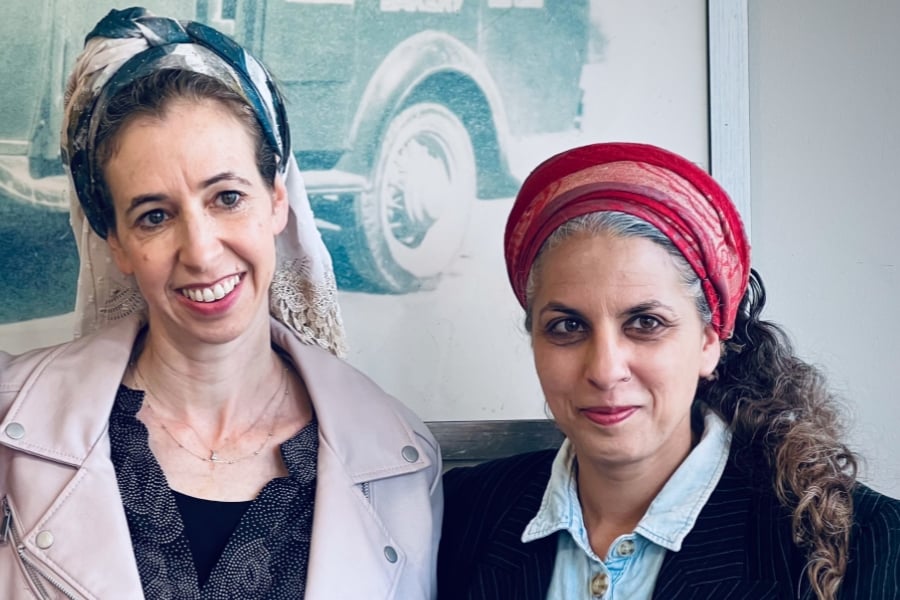
In April, three women sat the exam on the laws of mourning at the Ministry of Religious Services: Rabbanit Yaara Wiedman-Samuel, Dr. Ruth Agiv, and Rachel Tzaban. Theirs was a significant act. They endured a saga of delay lasting several hours that kept them from being tested, until the Supreme Court intervened. In the end they were indeed examined, in a test never before open to women, and answered its questions, under conditions unlike those granted the men, who were tested at the Jerusalem International Convention Center. The women contended with the delay and the wearing down, with the absence of a rabbi from the exam-writing team to answer questions, and with answer booklets that left the room in a marked box, raising the fear of a loss of anonymity. The crisis of trust in how the Chief Rabbinate’s examinations department conducted itself has yet to be resolved.
Throughout the years of the petition, and once the ruling came, I was the one who sought to exercise this right in practice. I have not yet realized that aspiration: I registered for the April session, but once the Rabbinate announced that we would be tested in a location separate from the one where thousands of men are tested, I knew I could not present myself under conditions that contradict the principle at the heart of our petition: “separate is not equal.” I withdrew, in the hope of being tested soon at a later session, on equal terms. Indeed, once registration reopened, I signed up. Three women chose to appear, and I chose to wait; despite our differing decisions, there is full mutual understanding between us, and our shared belonging to the same broad beit midrash is what illuminates the field of Torah scholarship and the social change that religious feminism is bringing about.
And now, this past week, we learned that one of the women had passed the exam, despite the inequality and despite the fear over anonymity in the grading of the booklets. Once one has passed, we may suppose that other candidates will reach this achievement too. The gates, at last, have opened.

The Story Doesn’t End in Pinchas and Neither Does Ours
Religious feminism is part of a historical continuum, and we — the group of petitioners — stand at the seam between the “desert generation” and the passage through the gates into the “Promised Land.” Each of us stands on the shoulders of giants, and the victory in the High Court is one link in a long process of women and men seeking a fuller partnership in religious life. Some paid a heavy price: contempt, humiliation, bans, and ostracism. A religious feminist knows that she never walks alone, and that her success is the success of a very wide community.
The research of Dr. Hagit HaCohen Wolf on female rabbis points to how essential family support is, and to the great contribution of community life and a broad net of backing. Every woman who arrives at the exam carries the sum of her studies, and her personal biography matters, but no less critical is the contribution of her family, and of communities, whether physical or digital, that sustain her intellectually, morally, and in the small things of daily life. The exam is, on its face, a simple moment: a student facing an exam paper. Yet as long as it still requires being a pioneer, it resembles the first steps of women entering universities and professional guilds. Religious feminism is engaged in the work of tikkun olam, the repair of the world, and it is itself learning to grow broader and more diverse in ideas, in ethnic background, in geography, and more. All of these processes show growth, for all the challenges of the moment; and, God willing, a day will come when all of this is so ordinary that we will no longer need to explain why a woman is entitled to be examined, just as men are, on her knowledge of Jewish law.
The story of Zelophehad’s daughters does not end in the portion of Pinchas, with their plea, “Give to us a possession among the brethren of our father,” and with their winning it. At the close of the Book of Numbers, in the portion of Masei, there is a sequel. The clan heads of the tribe of Manasseh come back to Moses with a worry and ask to qualify the daughters’ gain, so that the inheritance will not “pass” from the tribe. In other words: already within the biblical text, the daughters’ victory is immediately followed by a kind of “adjustment”, though this one neither wounds them nor restores the discrimination. One cannot say that the inequality enacted on exam day is identical to the request of Manasseh’s clan heads. And indeed: because the deception surrounding the change of location, an attempt to keep women from sitting the exam, quickly drew legal action. The exam was ultimately held almost five hours late, and the Supreme Court ordered the Chief Rabbinate, the Ministry of Religious Services, and the examination system to pay 15,000 shekels to the petitioners and the organizations leading the petition.

There is no equating Manasseh’s request with the spring exam day. And yet, perhaps as Rashbam (Rabbi Samuel ben Meir) suggests, the arrangement of the daughters marrying within their own tribe was an immediate remedy, never meant to bind future generations in similar cases. That reading can inspire the hope that no such “adjustment” to the ruling will take hold, and that no further obstacles will stand in the way of its full fulfillment.
What happened this past April with the women’s exams cannot be allowed to recur. One can only hope that the next exam date, which was meant to take place in July, but, owing to yet another blockage, was pushed off to October, will be held under fair conditions and will honor the authority of Israeli law, which forbids gender discrimination. Only in this way: without changes of date or place, without delays, without a box marked to identify the exams that women wrote, without a suspicious reading of the answers, without astonishment at the very existence of “women fluent in halakha” only with the simple, professional mindset of testing proficiency and command of a halakhic curriculum. A year after the petition’s victory, we will not settle for declarations, but only for proper, kosher action in how the next exam is conducted: one that must take place at the same time, in the same place, and under the same conditions as the men’s.
Worth Remembering: Implementing a Petition’s Victory Takes Time and Calls for Wisdom
The earlier chapters of religious feminism in Israel, case after case, have taught us that winning a petition does not translate at once into full implementation, and that the marathon runs far longer than one might have guessed. And yet: the High Court of Justice ruling in the Leah Shakdiel case has long since become a living reality on the ground, and women serve on religious councils. The ruling on women as rabbinical court advocates, and the ruling on women as kashrut supervisors, have likewise been implemented, and women hold those positions today. True, the ruling affirming a woman’s right to immerse in a mikveh (ritual bath) on her own, without an attendant, sometimes needs refreshing and reinforcing, but more than a decade on, we can acknowledge that it, too, has been implemented. The full implementation of other petitions does not necessarily arrive smoothly or without effort. And yet the gains accumulate across the marathon, a marathon that is also a relay race, a continuity held together by lasting solidarity. We have to trust that the ruling on the Chief Rabbinate’s exams will likewise reach full implementation. May the conditions of equality already prevail in the coming exam, and may we watch, little by little, an expanding circle of women pass these exams, a picture of the ongoing flourishing of the world of Torah, for the whole of the Jewish people.
The daughters of Zelophehad will remain a source of inspiration for us, and it is ours to work with wisdom toward realizing the justice their story carries.