


Where Jews and Judaism Meet the Political Road!
A Complicated Connection: Trump & American Jews, From Engagement to Rejection
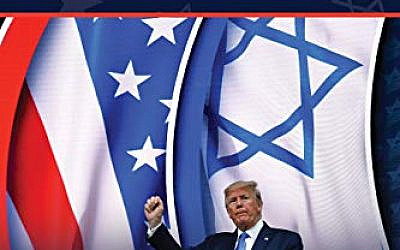 Recently, I explored on this site the Trump Effect, analyzing those generic elements that led to the two election victories of Donald Trump to the Presidency of the United States. Both, in earlier blog entries and in my 2021 volume covering Trump’s first term, I have studied this President’s impact on American Jewry. In this essay, we want to explore in more detail 47’s imprint on the Jewish community, especially in connection with his second term.
From every study we have, most U.S. Jews still lean Democratic, but Donald Trump has made noticeable gains among some Jewish subgroups in 2024, especially Orthodox Jews and some disaffected Democrats and independents. Different polls give different headline numbers: exit polls showed a large majority for Vice President Harris, while post-election analyses found a larger-than-usual GOP share, in excess of 30%. The gap is mainly due to who’s being sampled based on geography, denomination, methodology.
Why Some Jews Support Trump?
Religiosity as a Factor: Observant Orthodox Jews are more likely to back Republicans — data confirms very high Trump support in Orthodox communities, often 70–90% in various local surveys. Conservative religious voters prioritize issues such as judicial appointments, religious liberty protections, public funding for faith-based schools, and exemptions for religious practice — areas where Trump policies often align with Orthodox priorities.
Strong Pro-Israel Policies: Trump’s record, including his recognizing Jerusalem as Israel’s capital, his staunch support for Israeli government positions, his strong rhetoric on Israel, and his perceived toughness in confronting pro-Hamas actors, attracted pro-Israel Jews who prioritize foreign-policy and Israel’s security as their primary voting considerations.
Culture & Security Priorities: For some Jewish voters — particularly religiously observant and suburban conservatives — issues like crime, immigration, and broader conservative cultural priorities, as well as presidential appointments to the federal judiciary, outweighed concerns concerning the President’s rhetoric. Pew’s 2024 electorate analysis shows Trump mobilized voters around economy/immigration/crime — priorities shared also by parts of the Jewish electorate.
Why Many Jews Oppose Trump?
Rhetoric and Perceived Normalization of Anti-Semitic Tropes: Many Jewish leaders believe that some of Trump’s statements, invoking “dual loyalty” themes, public attacks on Jewish critics, and vague praise or tolerance for extremist individuals and groups, have tapped into or amplified harmful tropes, making large numbers of Jews uneasy or opposed.
Concerns about Democratic Norms & Rule of Law: A substantial portion of Jewish voters — particularly liberal Jews — view threats to democratic institutions, attacks on the judiciary, or rhetoric about dishonest elections. Those institutional concerns weigh heavily in these voters’ calculus.
Israel Policy Nuance / Gaza and Humanitarian Concerns: While Trump’s pro-Israel posture appealed to specific Jewish audiences, liberal Jewish groups criticized aspects of his Israel/Gaza policies — especially measures perceived as endorsing harsh actions toward Palestinians or proposals they believed that endorsed ethnic cleansing. Recent public statements and signed ads illustrate this growing split.
The Role of Anti-Semitism and Israel in Shaping Jewish Political Opinion
In recent years, governmental sources and Jewish agencies have recorded a sharp increase in anti-Semitic incidents, especially following Oct. 7, 2023. There has been a corresponding acceleration of concern and fear for personal and community safety as a result of these hate-based attacks and statements.
Some Jews credit Trump with taking aggressive action against anti-Semitic incidents in connection with America’s campuses; others worry however that his tactics, including cutting off campus funding and limiting speech will create further polarization and may actually accelerate anti-Jewish sentiment. The President’s handling of anti-Israel and anti-Jewish expressions has sparked mixed reactions.
Israel is a Wedge Issue: Pro-Israel policy have pulled some voters toward President Trump, but disagreements over specific policies, involving Gaza strategy, the treatment of Palestinians, and settlement policies, are further alienating many liberal Jews. Reflecting these differences, Pew polling shows Jewish Americans are divided on whether Trump favors Israel “too much” or “about right.”
How Trump’s Domestic Policies Have Impacted Jewish Voters
Religious Liberty and Judicial Appointments: Many Orthodox and Jewish conservative voters have been energized by the President’s judicial appointments and explicit religious-liberty initiatives that they view as protecting communal practices and private parochial school education, while celebrating American values and reaffirming traditional cultural norms. The White House’s religious liberty priorities have been prominently highlighted to the nation’s most religious constituencies.
Law-and-Order / Cultural Issues: Worried about safety, anti-Israel agitation, and protection of traditional social values, some Jewish voters have embraced the policies and political priorities of the President in connection with crime, immigration, and education. A sector of Jews welcomed the administration’s attempts to clamp down on campus anti-Israel protests, while other Jews viewed those measures as an overreach, endangering civil liberties.
Economic Policy: For a minority of Jews, especially small-business owners or higher-income households, tax and economic policies mattered — but on balance economic policy has been a secondary driver compared with identity, Israel, antisemitism, and normative concerns.
The Numbers, and Why Polls Differ
Exit-poll estimates showed ~70–80% of Jewish voters supported the Democratic candidate in 2024. Yet, post-election analyses identified larger GOP gains, citing Trump’s success with specific Jewish constituencies. The data varied in part depending on the specific state(s) and communities studied and by the definitions employed regarding “Jewish” (religious vs. cultural vs. heritage). As a result, the polling data has generated some conflicting outcomes.
The Bottom Line:
The Jewish electorate is not monolithic. Orthodox and more religious Jews have moved strongly toward Trump and the GOP, while liberal Jews remain opposed to this President. As with all the data noted here, the findings vary depending on methodology and specific audiences interviewed, as well as geographical regions surveyed.
A majority of American Jews still lean Democratic, but Trump has made measurable gains in 2024, mostly concentrated in specific subgroups, including Orthodox Jews.
What all of this may mean moving beyond Donald Trump remains uncertain. How both political parties handle their respective internal challenges will be the critical test in connection with the Jewish vote, for Republicans, managing their isolationist wing and far right activists and for Democrats, in dealing with their left-wing Progressives.
Likewise, the priorities of voters evolve and change over time. What will be the primary considerations for Jews in 2028, for example, maybe significantly different than what defined the Trump era agenda.