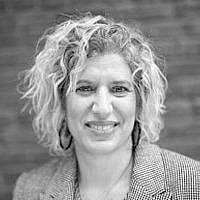
B’Yachad candidate for Knesset and a biotech executive
A country is not a startup. But like one, it needs a bold vision

A general view shows the center of Tel Aviv, Israel, on Thursday, December 2, 2021. (AP/Oded Balilty)
I have spent much of my professional life in high-tech. When you pitch an idea, there is one rule: don’t build your pitch around how bad your competitors are. Explain what you will build.
A good pitch starts with a bold vision and a clear plan. Then come the harder questions: Who will lead it? And who can actually deliver?
A country is not a startup. But those principles apply to national leadership too.
A startup can sometimes afford time to pivot. Israel cannot.
October 7 made that painfully clear. Our border was breached, communities were overrun, and citizens were left without the protection they had every right to expect from their state. It exposed the cost of complacency, failed assumptions and institutions that were not prepared when they were needed most.
We cannot afford another term of drift.
Yet for years, Israeli politics has focused mainly on what we oppose: Bibi or not Bibi. “Anyone but him.” “Anyone but them.”
But replacing a government is not a plan. Replacing one person is not a national vision.
The urgent question is: what are we for? What is our vision for Israel?
Nearly eighty years ago, Israel’s founders established a Jewish state in the Land of Israel. In the Declaration of Independence, they left us a compass: a state rooted in freedom, justice and equal rights.
It is time to lift our eyes to that compass again.
An Israel proudly Jewish, uncompromising in defending its borders and security, and liberal in its values.
An Israel that strives for excellence — in science, technology, medicine, education, culture and spirit. A small country unafraid to dream big and produce ideas that change the world.
A strong Israel that can defend itself, while strengthening its alliances and building new bridges.
That is why the constitution we propose, with the Declaration of Independence as its preamble, matters. It is about renewing the covenant between us and setting a compass for our future.
But vision is not enough.
For me, October 7 changed the question from whether to enter politics to whether I could justify staying out. It is a central reason I chose to join B’Yachad and Naftali Bennett.
What I took from that day is that leadership is tested long before a crisis arrives. It is tested in the assumptions we challenge, the people we put in place and the preparations we make before they are needed.
Naftali Bennett has carried national responsibility before as prime minister. Around him is a team of people from security, business, high-tech, healthcare, education and public service who know how to get things done.
And after two years of work, there are detailed plans so that rebuilding can begin from the first day — on security, education, healthcare, the cost of living, government and growth.
Israel cannot afford to give its next government a hundred-day grace period.
Day 1 is the first day of work.
In the world I come from, you set a bold vision, build a serious plan, bring together the right people and then get to work.
The coming election cannot be another argument only about the past. October 7 made the stakes of national leadership too clear for that. It must also be a decision about what Israel becomes next.
Not only about whom we replace, but about what we build together.
Nearly eighty years ago, our founders asked what kind of country they wanted to establish.
Now it is our turn to ask what kind of country we want to leave eighty years from now.
The work begins on Day 1.
Related Topics