The Urgent and the Eternal: Jewish Life Beyond Politics
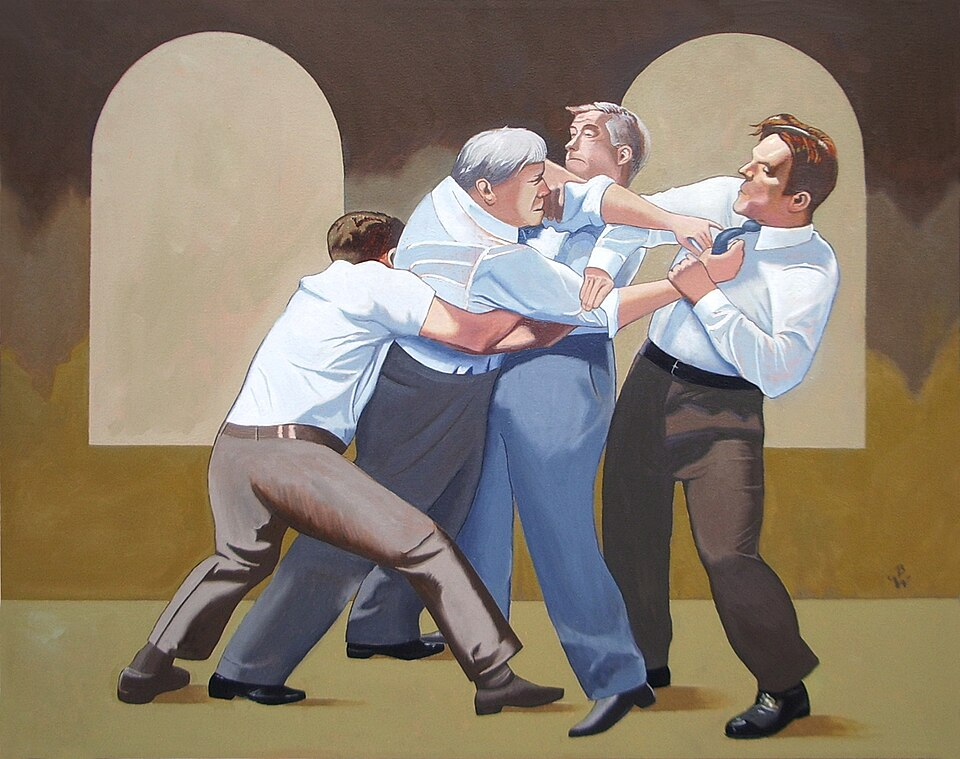
I can’t remember the last time I had a conversation where there wasn’t any mention of this fall’s Israeli and American elections.
We’re living in an American and Jewish culture in which politics is omnipresent and pervasive. It’s simply too much.
A 2023 Pew study found that 65% of Americans say that, when thinking about politics, they “often” or “always” feel exhausted—and 55% report feeling angry.
When the majority of us get emotionally drained or unproductively riled up by our political discourse, it’s time to ask whether we’ve allowed it to take up too much of our lives.
And especially in our Jewish institutions, I can feel politics increasingly crowding out Torah, God, ethics, community and friendship.
That may sound surprising coming from me. Uniting Torah study and outward-looking action is one of my central goals as a rabbi. Of course, there is a moral imperative to engage with our world, including politically. It would be irresponsible not to participate. As someone who engages deeply in humanitarian work that intersects with the political realm, I know we need to be politically astute.
At the same time, we have to remember that we lead with the principled, and we follow with the political. Our ideals can’t be sacrificed at the altar of pragmatism.
I’m reminded of the Talmudic story of Choni and the carob tree. In Tractate Taanit, the scholar Choni comes across a man planting a tree that will not bear fruit for 70 years.
When Choni asks the point of planting a tree whose fruits he won’t live to see, the man replies: “Just as my ancestors planted for me, I too am planting for my descendants.”
When we’re consumed by politics, we focus on today’s news cycle, the next bill, at most the next election. But not everything we do can bear fruit in the Twitter feed (X) of today and the newspaper of tomorrow. The carob tree turns our attention to the next generation and to the tension between the urgent and the enduring.
Consider also the Talmudic story of Rabbi Shimon bar Yochai and the cave, which is inherently a political story.
When other rabbis admire the accomplishments of the Roman Empire, Rabbi Shimon bar Yochai replies: “Everything that they established, they established only for their own purposes. They established marketplaces, to place prostitutes in them; bathhouses, to pamper themselves; and bridges, to collect taxes from all who pass over them.”
The government learns of this and decrees his death, so Shimon and his son hide in a cave. For 12 years, they’re sustained by a miraculous carob tree and spend their time studying Torah and Kabbalah.
Once the emperor finally dies, they emerge from the cave and see workers plowing and sowing—seemingly lowly tasks compared with Torah study. The Gemara tells us: “Every place that Rabbi Shimon and his son Rabbi Elazar directed their eyes was immediately burned.”
This angers God, who sends them back to the cave for another year. When they come back out, Rabbi Shimon puts a stop to his son’s fireballs, saying, “My son, you and I suffice for the entire world, as the two of us are engaged in the proper study of Torah.”
The rabbis’ question is a legitimate one: How can people abandon the chayei olam (eternal life) for chayei sha’ah (temporary life)?
The political crises of our time are real, and we shouldn’t ignore them, but even the most powerful rulers come and go. Elections pass, parties wax and wane, and yesterday’s biggest news becomes a footnote in the history books. But what’s left of all that is what we become in the process.
We learn not to abandon the world, but to live lives imbued with both engagement and transcendence.
This is a lesson not just for the community, but especially for Jewish leaders. We need to steer toward a healthier, more balanced conversation.
Our curricula and agenda need to pivot from political identity to people’s emotional, intellectual and relational lives. We must relate to the whole person we’re serving, not one narrow slice of their identity.
If everyone who comes to our Jewish institution thinks alike, we’re doing something wrong. A healthy community is one where people who vote differently still pray, study and serve side by side.
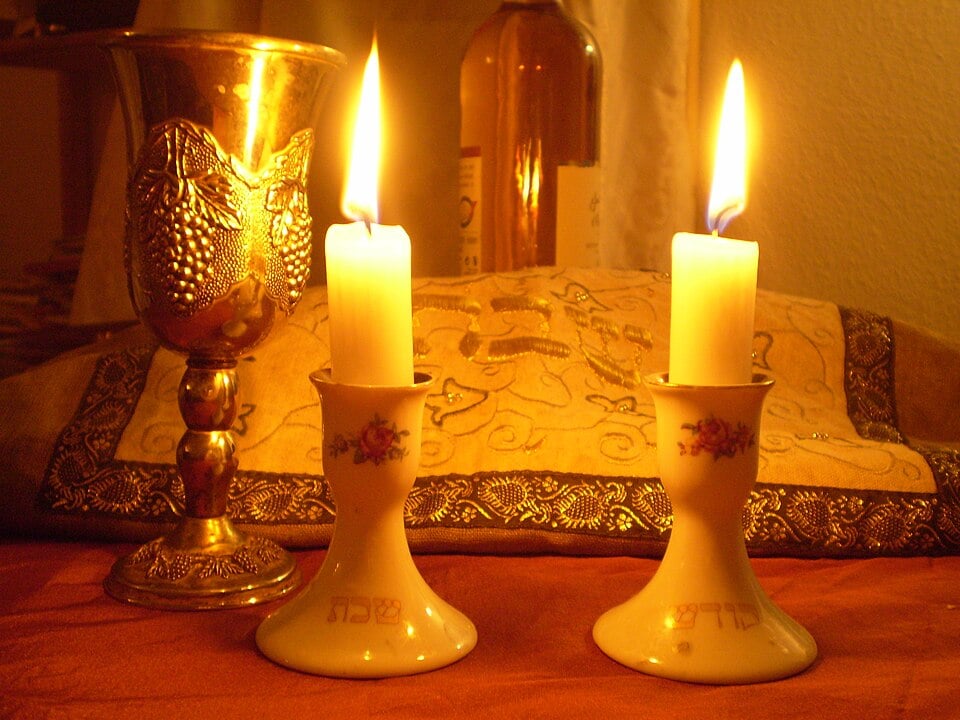
The correction, I think, comes at the end of Rabbi Shimon’s story. On Erev Shabbat, they encounter an ordinary man carrying myrtle branches in honor of Shabbat. Comforted, Rabbi Shimon says to his son: “See how beloved the mitzvot are to Israel.”
Shabbat represents engagement and transcendence. We’re in the world and we’re out of it.
This isn’t to say six days of politics and one day to take a break. It’s just a reminder of being in and being out.
We should organize, protest, vote, read, discuss and debate, but we need to dial it back right now. The temperature is just too high.
We need to engage with what endures: community, prayer, service, learning, family and friendship.
The urgent matters, but it must be informed by and subordinate to the eternal.