In defense of Liberty and Individual Rights - Writer and Speaker
A country I’ve never been to, a war I never fought
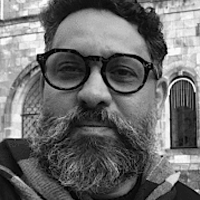
The author
There is a country I have never been to. And there is a war I have never fought. Even so, for a reason I searched for a long time to understand, that country is also my country. And that war is also my war. That country is Israel.
I have never stepped foot in Israel. I have never lived in Tel Aviv, never walked the streets of Jerusalem, never crossed the Negev Desert, never entered a kibbutz, and never had to run to a bomb shelter upon hearing a siren announcing that someone, just a few kilometers away, had launched a missile toward my home. I have never worn an Israeli uniform. I have never held a rifle to defend Israel. I have never fought that war.
Yet on October 7, 2023, when terrorists crossed the border to murder people who were sleeping, families eating breakfast, young people dancing at a festival, children, women, and the elderly, something changed inside me. I was not merely watching a distant war. I felt under attack. And I needed to understand why. Perhaps because there are wars that do not belong only to the countries where they are fought.
There are territorial wars. There are religious wars. There are political wars. But there are also civilizational wars. Wars in which what is being disputed is not just a piece of land. It is an idea about man. It is a choice between two radically different ways of confronting existence. On one side, life as a value. On the other, death transformed into a political instrument, a religious promise, and a method of power. On one side, individuals who want to live, work, produce, love, raise children, build companies, write books, develop medicines, invent technologies, compose music, disagree with one another, and pursue their own happiness. On the other, men taught from childhood that a cause exists superior to their own lives, and that dying while killing those defined as enemies can transform them into martyrs.
That was when I understood. I did not need to be born in Israel to recognize in that war something that also concerned me. Because the values attacked on that Saturday were the values I have spent my life defending. Life. Liberty. Reason. The right of every individual to exist for their own purpose, without asking permission from a tribe, a State, a priest, or a tyrant.
Israel is not perfect. No country is. No government is. Benjamin Netanyahu is not Israel. A prime minister comes and goes. Governments fall. Coalitions dissolve. Politicians make mistakes. But a civilization cannot be judged solely by the mistakes of its rulers. It must be judged by the values that make the lives of its individuals possible.
And that is where one of the greatest intellectual frauds of our time begins. They transformed Israel into the defendant. And its enemies into the victims. This inversion did not begin on October 7. It simply became impossible to hide. For decades, a narrative was constructed according to which everything could be explained by one magic word: occupation. Terrorism was supposedly a consequence of the occupation. Hatred was a consequence of the occupation. Rockets were a consequence of the occupation. Suicide bombings were a consequence of the occupation. Antisemitism was, somehow, a consequence of the behavior of Jews themselves. It is an old moral perversion. First, you choose the victim. Then, you find a justification to hate them.
Israel withdrew from Gaza in 2005. It withdrew soldiers. It withdrew Israeli citizens. It left behind territory, infrastructure, and the concrete possibility of building something. It was a historic opportunity. Gaza could have chosen Singapore. It chose Hamas. It could have invested in schools. It invested in tunnels. It could have built infrastructure to improve life. It built infrastructure to produce death. It could have transformed the Israeli withdrawal into the first chapter of a story of coexistence. It transformed it into a base for permanent war.
This is a question we rarely ask because the answer destroys the comfortable narrative: What does a society do when it receives freedom? Because freedom is not merely the absence of occupation. Freedom demands responsibility. It demands reason. It demands institutions. It demands respect for individual rights. It demands that each generation build something better than what it received.
Israel did that. A people persecuted for centuries, expelled, massacred in pogroms, confined to ghettos, hounded by the Inquisition, and nearly exterminated on an industrial scale in the Holocaust could have transformed resentment into their identity. They did not do that. They built. They bought land. They cultivated arid soil. They drained swamps. They created cities. They founded universities. They developed companies. They produced science. They created technology. They built hospitals. They transformed scarcity into abundance.
This is one of the reasons Israel bothers certain ideological movements so deeply. Israel destroys a very convenient idea: the idea that the victim must remain a victim. The Jew survived. Then prospered. And worse—for those who turned victimhood into a political philosophy—refused to apologize for having survived.
I once wrote that Jews possess all the credentials required by identity ideologies to be considered historical victims: persecutions, expulsions, ethnic cleansings, pogroms, the Inquisition, the Holocaust. But there is a problem. They did not play the role assigned to them. Instead of turning their own misfortune into a profession, they rebuilt their lives. Instead of cultivating resentment, they cultivated deserts. Instead of demanding that the world owe them something, they built something. Israel is the materialization of that choice. And perhaps that is why it evokes so much resentment.
However, it would be intellectually dishonest to say that this resentment belongs only to the left. It does not. Antisemitism has no fixed political address. On the left, it can wear the clothing of anti-colonialism. It can call Israel a colonial project. It can replace the word “Jew” with the word “Zionist” and imagine that, with this small semantic operation, two thousand years of prejudice have vanished. On the right, it wears different clothes. It can appear as ethnic nationalism. As conspiracy theory. As isolationism. As the old fantasy that Jews control banks, the press, governments, or wars. One blames the Jew for being too capitalist. The other for being too socialist. One for being cosmopolitan. The other for being tribal. One because Israel exists. The other because Jews live outside of Israel. The justifications change. The Jew remains in the witness box.
The capacity of antisemitism to adapt its language to the prejudice of the era is extraordinary. For centuries, they hated Jews because they supposedly killed Christ. Then because they were not Christians. Then because they were a race. Then because they were capitalists. Then because they were communists. Today, because they are Zionists. The name changes. The need to find a moral justification to hate them remains.
And then came October 7. For a few hours, I imagined that certain debates were settled. I was wrong. Even before the bodies were buried, another war began. The war to erase the distinction between aggressor and victim. The war of words. The war of images. The war of narratives. Massacre became “resistance.” Terrorists became “militants.” Hostages vanished from the headlines. And Israel, still counting its dead, began to be put on trial.
That was when I realized Israel was fighting two wars simultaneously. One against armed men. Another against people armed with words. And I do not know which of them will last longer. Because a terrorist can be defeated militarily. A lie can survive for centuries.
It was with this in mind that I wrote. And it was with this in mind that I composed. I wrote *Unjust War* because there is a fundamental moral difference between starting a war and being forced to fight it. A war can be terrible and yet necessary. It can be tragic and just at the same time. The death of innocents is always a tragedy. But recognizing a tragedy does not mean erasing causality. Whoever initiates a war does not acquire moral immunity simply because they lose that war. Whoever hides combatants among civilians does not automatically transform the defender into the aggressor. Reality does not cease to exist because its consequences are painful.
Then came *Streets of Gaza*. Because Gaza also has individuals. Children are not Hamas. A Palestinian baby did not choose an ideology. A mother does not transform into a terrorist simply because she was born on the wrong side of a border. Defending Israel does not require losing one’s humanity in the face of Palestinian suffering. It requires precisely the opposite.
It requires asking: Who transformed those people into instruments of a war? Who built tunnels beneath their cities? Who transformed schools, hospitals, and neighborhoods into parts of a military strategy? Who taught generations that dying for the cause is nobler than living for oneself? Who robbed those people not only of resources, but of something even more precious: the possibility of imagining a different future?
My solidarity with an innocent Palestinian does not bring me closer to Hamas. It makes me an even greater enemy of Hamas. Because an ideology that despises the lives of its enemies inevitably ends up despising the lives of those it claims to represent.
And then I wrote *The Last Wall*. The last wall. Because I began to realize that Israel’s wall is not made only of concrete. There is another wall. An invisible wall. On one side, an imperfect civilization that debates, protests, votes, creates companies, develops science, produces art, and allows its own citizens to criticize the government. On the other, political and religious forces that consider freedom a threat, divergence a heresy, and death a legitimate instrument to achieve a utopia.
This wall does not separate Jews from Arabs. There are Arabs on both sides of this moral choice. There are Jews on both sides. There are Christians. There are atheists. There are people of the left and of the right. The wall does not separate ethnicities. It separates ideas. It separates those who consider the individual to be the owner of their own life from those who believe that life belongs to some collective entity—God, State, race, class, nation, revolution, or cause.
Perhaps that is why this war became my war. Not because I am Israeli. I am not. Not because I agree with everything Israel does. I do not. Not because I consider Jews morally superior. I do not. But because I recognize in that small strip of land a border far greater than any drawn on maps. A moral border. Between life as an end in itself and death as an instrument. Between reason and dogma. Between freedom and coercion. Between individuals and tribes. Between construction and destruction. Between civilization and barbarism.
I have never been to Israel. I have never fought this war. Perhaps one day I will go there. Perhaps I will walk the streets that for years I knew only through news, books, images, and the songs I wrote. But I understood one thing. We do not need to be born in a place to recognize the values it represents. We do not need to wear a uniform to understand which side of a moral war we stand on.
There are borders drawn on maps. And there are borders drawn inside us. Israel is far from where I was born. But the values being attacked there have never been far from me. That is why that country where I have never been is, in some way, also my country. And that war I have never fought is, in some way, also my war.
Because in the end, it is not a war for a piece of land. It is a war for the right to live upon it. And when what is at stake is the human being’s right to live, think, produce, love, create, and pursue their own happiness… no one who values life can say that this war is not also theirs.
Related Topics
Related Posts