
The Clean War
The abstract patron in Tehran and Lebanon’s broken glass
Somewhere in the machinery of the delegated war the author goes missing, and nobody files a report because the war continues to arrive on schedule – unsigned – as smoke above a city that has only ever known its patron as a voice on the radio between the news and the weather.
Anyone who still asks which of the dead was consulted about the manner of his dying will find the question already filed under sentiment, in the drawer of discourse where things go that were once true and have since been absorbed into the climate.
When the word “resistance” comes down over the rubble it behaves like a lid on a pot left boiling in an empty house, keeping in the steam so that no one outside smells what is being cooked, and beneath it the body of a young man who answers to the state that sent him is entered as a debt, owed to a mother and an electorate, whereas the body lying a border away circulates as currency, tender in speeches and accepted at every lectern, since the speeches are delivered indoors.
Deniability pours itself over the chain of events like a solvent until the order issued in one city and the house collapsed in another sit side by side as two clean sentences, each well-formed and neither aware of the other; and the war that results enjoys the status of weather, which permits the patron to adopt the posture of a grave spectator with condolences drafted well in advance.
A doctrine would have to survive its own citizens, who would test it and find it light, so it is exported to a place so far away that a burning street can be photographed from a great distance and mistaken for conviction—Lebanon burning in high-definition on screens that have never smelt it, with the fire, seen from that far, pooling into a neat, stamped impression.
The victory was announced before the first shot, and the war takes place inside the announcement, each setback received as confirmation and each funeral countersigned on the day, while the sponsor, whose triumph is underwritten by its own losses, regards the prospect of peace with the distaste of a man asked to reopen the question of who was supposed to win.
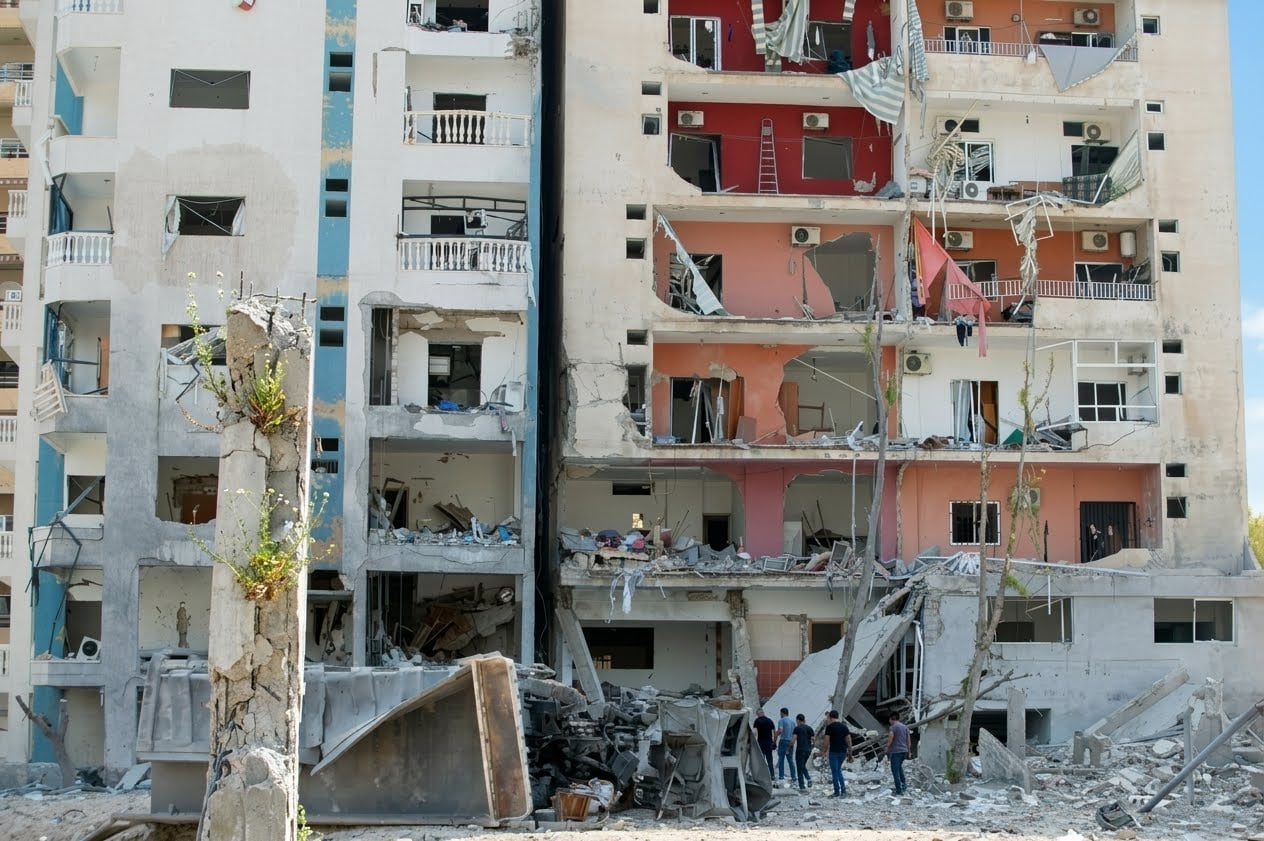
A woman sweeps broken glass from her front step into a dustpan, tips it into a bucket, and goes back inside, where the radio has begun to read out a speech.