
A comedic survival guide to a country that breaks you, rebuilds you, and calls it Tuesday.
Featured Post
A divine performance review when nobody gets a bonus
We humans have an extraordinary ability to mistake the presentation of virtue for virtue itself, especially when it comes with refreshments (Devarim)
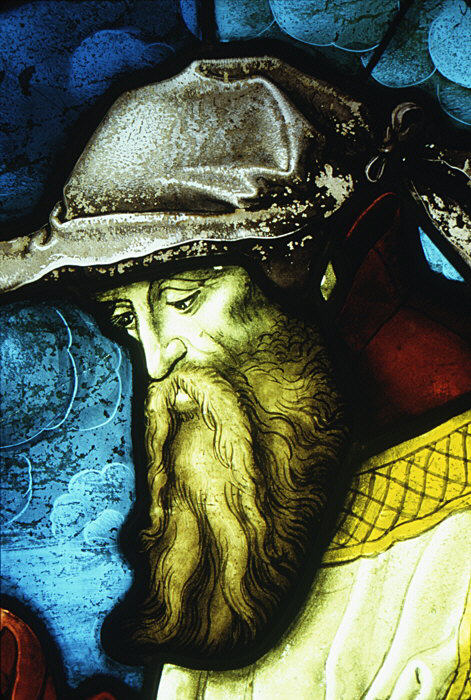
'The Prophet Isaiah,' by Valentin Bouché, 1533. (Wikimedia Commons)
There is a particular Jewish genius for scheduling the worst possible feedback session at the worst possible time, and then calling it mercy. This week, while we are already approaching Tisha B’Av with the emotional buoyancy of a damp mattress, tradition gives us two interventions in rapid succession. First comes Parashat Devarim, in which Moshe, a man who once insisted he was “not a man of words,” embarks on a speech so extensive that it requires an entire book. Then comes the Haftarah of Chazon, in which Isaiah surveys the spiritual condition of Jerusalem and delivers the most eloquent “we need to talk” in recorded literature.
Within days, we will sit on the floor and mourn the destruction of the Temples, the exile of our people, and several thousand years of history displaying an alarming commitment to worsening after dark.
You might imagine that a nation preparing to commemorate its greatest catastrophes would be permitted a little emotional cushioning. Perhaps a reassuring Torah portion involving rainbows, ladders, or somebody finding a wife beside a well.
Instead, we get Moshe and Isaiah.
Apparently grief requires a warm-up act.
Devarim is generally described as Moshe’s final address to the Jewish people, although “final” is being used here in the traditional Jewish sense: announced several times, followed by considerably more talking, several additional blessings and at least one crucial point remembered at the door.
Moshe stands on the edge of the Promised Land, which he will not enter, and begins reviewing 40 years of national history for the benefit of the people who will.
He recalls the appointment of judges, the disastrous episode of the spies, the refusal to enter the land and the battles with Sihon and Og. The Golden Calf has not yet been called to the witness stand. That humiliation is scheduled for later, because even a dying prophet understands episodic structure.
Moshe does not produce a sentimental slideshow entitled “Our Wilderness Journey,” set to flute music and featuring soft-focus images of manna. He remembers what actually happened. The fear. The panic. The rebellion. The repeated spectacle of people witnessing a miracle and immediately asking what could go wrong.
This is not nostalgia. It is an audit.
The Israelites are about to enter a new land and begin a new chapter, which is precisely when human beings become most tempted to rename their unresolved problems “the past” and carry them forward in attractive hand luggage.
Moshe will not allow it.
You cannot build a future out of history you have edited for comfort. You cannot enter the Promised Land dragging 40 years of denial behind you and complaining that the wheels are sticking.
But Moshe’s rebuke is not designed to humiliate them. He often alludes to the places where failures occurred, rather than lovingly reconstructing every disgrace in high definition. He is not trying to win his final argument. He is trying to prepare them to survive without him.
There is a kind of criticism that wants the person corrected. There is another kind that merely wants an audience for the critic’s superiority. The second kind is currently thriving online, where millions of people oppose hatred by hating the correct people and resist dehumanization by becoming extremely selective about who qualifies as human.
Moshe offers something more difficult: truth spoken in the service of the person hearing it.
Then Isaiah arrives, and whatever furniture Moshe left upright is overturned.
Isaiah’s accusation is not that the people have abandoned religion. That would almost be simpler.
They are practicing religion enthusiastically. They bring sacrifices. They observe festivals. They appear in the Temple. The machinery of holiness is running beautifully. The calendar is full. The catering committee is close to collapse.
The problem is that justice has disappeared.
The vulnerable are being crushed. Corruption has become ordinary. The people lift their hands in prayer, apparently hoping G-D will not enquire what those hands were doing before they picked up the siddur.
But He enquires.
Isaiah tells them that G-D does not want their offerings, their incense or their solemn assemblies, while cruelty is being conducted just outside the sanctuary.
This is awkward because ritual is much easier than goodness.
Candles stay where you put them. Human beings have opinions. A sacrifice can be completed. Justice keeps making follow-up demands. It is possible to master the choreography of holiness while avoiding its substance entirely. We can become ferociously concerned about the wrong spoon at a kiddush and remain impressively calm about the lonely person standing beside the table.
We can debate the precise standards of kosher certification while eating someone alive in the parking lot. We can stand inside a burning society arguing over who has the correct nusach. Human beings possess an extraordinary ability to mistake the performance of virtue for virtue itself, particularly when the performance comes with refreshments.
Isaiah is not fooled.
Religion without justice is not holiness. It is theatre with excellent lighting.
This is why the Shabbat before Tisha B’Av is called “Shabbat Chazon,” the Shabbat of Vision.
The name comes from Isaiah’s opening words, but Hasidic tradition adds something almost unbearably tender: on this Shabbat, every Jewish soul is shown a vision of the future Temple.
Not, presumably, a celestial property brochure featuring premium Jerusalem stone, abundant natural light, and convenient access to public transport.
A vision of what could exist.
This is not merely a glimpse of a building. It is a glimpse of a world capable of containing one.
That distinction matters. We often speak about rebuilding the Temple as though redemption is a construction project currently delayed by permits, coalition negotiations, and one contractor who has stopped answering his phone.
But a Temple is not only built from stone. It is built from the kind of society in which holiness can live without being converted into pageantry.
Tisha B’Av is dangerously easy to treat as ancient history with excellent choreography. We fast. We sit low. We read Eicha in a mournful tune. We remember what Babylon and Rome did to us, and we must remember. Empires destroyed the Temples. Jewish self-examination does not require us to acquit the people who breached the walls.
But the prophets insist that enemies are not the only danger.
A society can be hollowed out long before an army arrives. Cruelty becomes normal. Corruption becomes efficient. Humiliation becomes political strategy. Every faction becomes convinced that only the other faction is capable of destroying the nation.
The walls fall last. The army is merely the part that makes the news. And yet neither Moshe nor Isaiah gives up.
That may be the most important part.
A person who has truly abandoned you does not continue arguing for your soul. Moshe rebukes the people because they can still enter the land. Isaiah condemns Jerusalem because Jerusalem can still become a city of justice.
G-D shows us the fracture because repair remains possible.
Shabbat Chazon is not flattering. It does not tell us that we are marvelous and history has simply been unkind. It asks us to see the distance between the people we imagine ourselves to be and the people our behavior reveals.
That distance is painful. It is also where change begins.
Isaiah’s instructions are almost offensively simple: learn to do good, seek justice, protect those who are easily crushed.
Apparently humanity found this insufficiently complicated, so we developed several thousand years of commentary and continued crushing people with increasingly sophisticated terminology.
No committee will erect a monument to the argument you chose not to win, the apology you finally made, the person you refused to humiliate or the suffering you noticed before converting it into an opinion.
Nobody will name a roundabout after you for behaving decently in a WhatsApp group.
But perhaps this is how rebuilding begins.
Not with stone.
With sight.
Related Topics
Related Posts