Kindness is a habit, not an event.
A Name I Carry, a Legacy I Owe
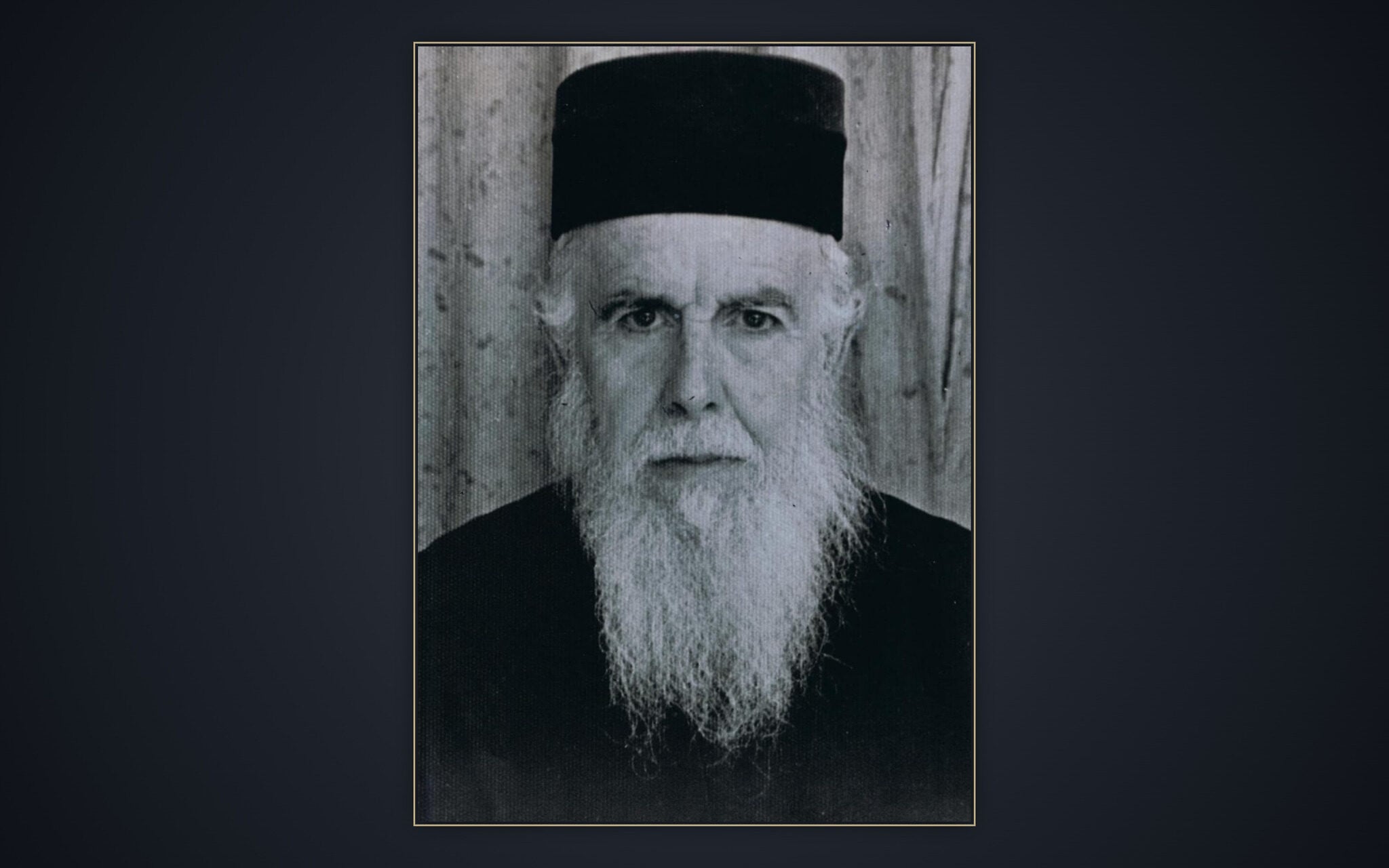
Rabbi Raphael Baruch Toledano, Zt"l. Public domain (CC0), via Wikimedia Commons.
There are names you are given, and names you spend your life trying to deserve. Mine is both.
I was named after my great-grandfather, Rabbi Raphael Baruch Toledano, Zt”l (“may the memory of the righteous be a blessing”). I never knew him. But I have felt the weight of his name for most of my life, and the older I get, the heavier and more precious it becomes.
He was Chief Rabbi of Meknes, Morocco, and head of the city’s Rabbinical court. He came from a line of Rabbis and judges that traces back to Toledo, Spain, and left with the expulsion of 1492. He was appointed a Dayan in Meknes at eighteen, and in 1917, after the passing of his father, Rabbi Yaakov Toledano, he succeeded him as the city’s Chief Rabbi.
When he once fell seriously ill, the name רְפָאֵל (Raphael, “Hashem heals”) was added to his own. He recovered, and he devoted his life to healing others.
I descend from him through his son, my grandfather, Rabbi Yosef Toledano, Zt”l, and through my father, Rabbi Eliezer Toledano, Shlit”a (“may he live a long and good life”), a prominent Rabbi and Scholar in Lakewood, New Jersey. My father is a prolific author and the founder of Orot, which publishes Siddurim, Machzorim and Chumashim according to Sephardic custom, with English translation and commentary, so that Sephardic families can pray and learn in their own tradition. Most recently, he published a beautiful edition of Tehillim (Psalms). In his own way, he has carried our family’s legacy into a new generation. And I have the privilege of carrying my great-grandfather’s name. I do not take that lightly. Some days it feels like a blessing. Other days it feels like a question I am still trying to answer.
Kindness that had an address
My great-grandfather was a towering Scholar. He wrote a complete Kitzur Shulchan Aruch according to Moroccan custom and composed Piyyutim that are still sung today. But what defines his legacy for me is how practical his kindness was.
He founded בִּקּוּר חוֹלִים (Bikur Cholim, “visiting the sick”), which provided free medical care to the poor of Meknes. He founded מַלְבִּישׁ עֲרֻמִּים (Malbish Arumim, “clothing the needy”) to clothe those who had nothing to wear, and מֹהַר הַבְּתוּלוֹת (Mohar HaBetulot, “a dowry for brides”) to help young couples who could not afford to marry. He built a Yeshiva for boys from the surrounding villages and personally provided for their food, clothing and medical care. Every Friday, he distributed the charity funds he had gathered during the week, so that families could greet Shabbat with dignity.
He later made Aliyah, settled in Bnei Brak and is buried there. The institutions he built in Meknes are long gone. The model he left behind is not.
I can barely fathom it
Now that I devote so much of my own life to Tzedakah, I read that list differently. I read it, and I have to stop. Building even one of those institutions takes years of effort, resources and people willing to carry it. He built them all, while serving as a Dayan from the age of eighteen and as Chief Rabbi of his city by twenty-seven. I can barely fathom how one man carried all of it. And I know, honestly, how far I still have to go.
The lesson I take from his life is simple: kindness is not a feeling. It is a structure. He did not wait for a need to find him. He saw it, named it and built something that would meet it every day, whether or not he was in the room.
That principle has shaped the two commitments closest to my heart.
A Minyan that never stops
The first is Hachaim Vehashalom. I was one of its ten founding congregants when it began as a basement Minyan in Far Rockaway. Today, in Cedarhurst, New York, it is known as a nonstop Minyan factory: whenever someone needs a Minyan, one is forming. On some days, more than 5,000 people come through its doors to pray.
I Daven with a Minyan three times a day, so I know what it means to need one. When Rabbi Daniel Obadia, Shlit”a, who has been my Rabbi my entire life, asked me to serve as Founding Trustee and Vice Chairman, I did not hesitate for a moment. A place where any Jew who needs a Minyan can walk in and find one is exactly what my great-grandfather would have wanted to see. When I watch a Minyan come together there, I think of him. It is his open door, rebuilt for a new generation.
Why I founded Rafi Toledano | Philanthropies
The second is Rafi Toledano | Philanthropies, the charitable foundation I established to carry that same spirit beyond the walls of the synagogue. It is guided by two words my great-grandfather lived by: חֶסֶד (Chesed, “kindness”) and צְדָקָה (Tzedakah, “charity”).
The name on the foundation is mine, but it was his first. I built it so that name would keep meaning what it meant in Meknes: a door that opens when someone knocks.
Its focus areas follow the path he set: food for those in need, education, health care and a strong Jewish community. Today that means providing food for the needy, funding educational scholarships, and supporting the American Cancer Society and Hachaim Vehashalom. The causes will grow. The principle will not change.
I believe success carries a responsibility to give back. My great-grandfather would have put it more simply. He would have asked what we did with what we were given.
Why I am writing
Dovid HaMelech (King David) writes in Tehillim (Psalms) 89:3: עוֹלָם חֶסֶד יִבָּנֶה — “The world is built on kindness.” My great-grandfather took those words literally. He built.
This column will be about that work: Chesed, Tzedakah and the people, past and present, who show us what doing good actually looks like. Along the way, I will also share Divrei Torah (words of Torah) that have moved me, ones I believe everyone can relate to. I carry his name. With Hashem’s help, I hope to carry his work forward too.
Related Topics
Related Posts