A Government of Change: The Ultimate Zionist Act
The elections for the 26th Knesset ended with a clear parliamentary victory for the opposition (67) over the coalition (53). Politicians from most Jewish parties emphasize the need for a “Zionist majority” as a necessary condition for establishing a new government in Israel. But what do they mean by “Zionism”?
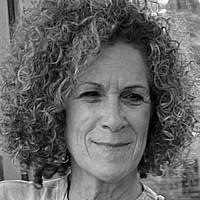
From my personal perspective, the answer is quite clear. In June 1979, I immigrated from Argentina as a 19-year-old Jewish youth for ideological reasons of Zionism, in order to live in a Jewish and democratic state. Here I met my wife, who is Israeli-born, and whose parents came from Iraq. We have three children and two grandchildren, and I am a Jerusalemite who has been teaching at the Hebrew University for the last 34 years. The first time I voted for the Knesset was in 1981. Argentina was then under a military regime between 1976 and 1983; I know what it means to live under a non-democratic regime. I am very much concerned by the fragility of Israeli democracy, which has been under serious attack for several years, and even more intensely since the outcome of the elections for the 26th Knesset.
I believe that the elections on October 27, 2026, were the most important of my life. The results reflect the complex human and ideological mosaic of all Israeli citizens—both the Jews, who constitute a majority, and the 22% of the Arab-Palestinian population, who are nowadays extending a hand to build a shared future in our country. The election results also reflect the prolonged, nefarious impact of Benjamin Netanyahu’s long rule upon Israeli society, which includes elements of fear and hatred toward Arab Israelis—sentiments that have intensified following the massacre committed by Hamas on October 7, 2023, the trauma we have been living in since, and the wars that have continued over the past three years. The fact that the Arab members of parliament doubled their number from 10 to 19 in the 26th Knesset is directly related to the outgoing government’s policy of abandonment and discrimination toward the Arab sector, which suffered from neglect, racism, and high rates of violence and crime without the needed help from the State.
The meaning of Zionism is clearly written in the founding document of the State, the Proclamation of Independence, also with regard to Israeli Arabs: “In the midst of wanton aggression we call upon the Arab inhabitants of the State of Israel to return to the ways of peace and play their part in the development of the state, with full and equal citizenship and due representation in all its bodies and institutions, provisional or permanent.” The intention was not for Israeli Arabs to be second-class citizens, filling roles only as doctors, pharmacists, male and female nurses in hospitals, cleaners, and drivers, but rather that they also should take an active and full part in the political decision-making processes, with all the complexity and difficulty involved, against the backdrop of the Israeli-Palestinian conflict.
I recall my first 19 years in Argentina, the manifestation of hatred and antisemitism toward Jews simply for being Jewish. I wonder what the Israeli government would say about disqualifying whole political parties in the Jewish Diaspora just because their members are Jewish. In any normal country, the opposition members of parliament would be counted as a single block. Here, the members of the outgoing coalition present a separate accounting for a Jewish opposition and an Arab opposition, and they are already rushing to disqualify the results of the Knesset elections. Against their malicious intentions, there is an option today to establish a government with a Jewish majority in cooperation with the Arab parties under certain conditions. Does a Jewish-Arab government constitute a betrayal of Zionist values?
On the contrary. Following the elections for the 26th Knesset, the State of Israel stands today at a crossroads that will determine its path and its future. The path to fulfilling Zionism lies in Israel being a Jewish and democratic state—the nation-state of the Jewish people, but also a state genuinely prepared to include the 22% of its non-Jewish citizens in significant and genuine decision-making processes. Hence, the State of Israel must be a real democracy rather than an “ethnocracy” (a democracy for Jews only), following the the liberal values of the Declaration of Independence.
I call here upon the leaders of the Change Bloc, first and foremost to Gadi Eisenkot, who set four clear principles for joining any party (Jewish or Arab) to his coalition: recognition of Israel as a Jewish and democratic state; recognition of the values of the Proclamation of Independence; support for compulsory and/or national service; and condemnation of Hamas as a terrorist organization. These principles stand in complete contrast to the essence of parties such as Otzma Yehudit, Religious Zionism, and extensive elements within Likud, who have abandoned humanistic and liberal Zionist and Jewish values, adopted racist principles, knowingly collaborated with the terrorist organization Hamas between 2016 and 2023 in order to avoid negotiating with the Palestinian Authority, and dragged Israel toward an illiberal democracy, Jewish supremacy, and an authoritarian regime. I also address Avigdor Lieberman, an experienced politician and former Foreign Minister, Defense Minister, and Finance Minister, as well as Naftali Bennett, a former Prime Minister, who both know very well the extent to which past cooperation with Ra’am benefitted the government of change in the State of Israel during 2021–2022. I call on all three of them to join Yair Golan’s call to establish a new government in Israel based on a Jewish-Arab partnership.
Establishing a new government of change with the active participation of Ra’am—assuming it accepts the four principles mentioned above—and with the external support of some members of the Joint List and/or additional political (Jewish) parties, is the order of the hour to save the Zionist enterprise and the Israeli democracy. These elections have not been between “Right” and “Palestine” or between “Right” and “Left,” but a fundamental and moral struggle over the possibility that Israel will remain a Jewish and democratic state—a normal country with the rule of law and strong institutions, rather than a state being transformed into a racist dictatorship under a government that cares only for itself and not for all of its citizens, Jews and Arabs alike.
Ironically and paradoxically, it was the hundreds of thousands of Arab citizens who went out in droves to protest—by exercising their democratic right at the ballot box against the government that abandoned them as well—who can now help us, the Jewish majority in our shared country, to jointly save the State of Israel and outline a better future of hope and coexistence. Including the Arab parties in the future coalition will also contribute significantly to improving Israel’s international standing and legitimacy worldwide, remove the economic sanctions threatening the security and welfare of us all, and open a new page in the relations among Israelis (Jews and Arabs), which can begin to heal all of us from within against racism and xenophobia. This is before we move further down the road on the inevitable path toward resolving peacefully the conflict between the State of Israel and the Palestinians, ultimately reaching both peace and security.
True Jewish-Arab cooperation in the State of Israel will be the realization of the Zionist vision of the founding fathers of the state, from Ze’ev Jabotinsky to David Ben-Gurion and Chaim Weizmann. I urge Benjamin Netanyahu and other politicians from the outgoing coalition to no longer invoke in vain the term “Zionism” in their actions to turn the State of Israel into the absolute opposite of the liberal vision of Theodor Herzl, the father of political Zionism and visionary of the state. There will be no second chance, because I also fear that the Likud will not allow free elections in our country for all Israeli citizens in the future, based on its despicable behavior in recent days. The opposition parties won the Knesset elections; now their leaders must translate the will of the majority of Israelis (Jews and Arabs alike) into a new reality of hope and repair. This is the ultimate Zionist act.