A Hasidic Thread across Generations: From the Rebbe of Ruzhin to Rabbi Zalman Liberov in Parashat Vayera
Vayera: The Wealth of Light
This week, as we read the Torah portion Vayera, something happened to me that I can only describe as hashgacha pratit — Divine Providence.
I came to the evening minyan at the synagogue on Avenue M and East 24th Street, invited by my rabbi, Rabbi Zalman Liberov. I thought it was a Chabad shul — but it wasn’t. It was a small Hasidic court with its own Rebbe, modest yet filled with warmth.
And it made me think: To which Hasidic lineage did my ancestors belong?
I always knew they were religious, that they spoke Yiddish at home and prayed in Hebrew, but I had never asked what spiritual path they followed. After looking through family archives and reading about the Jewish life of Kamenets-Podilskyi, I discovered that, in their time, only one Hasidic tradition existed there — the Ruzhin–Husiatyn dynasty.
Then everything became clear.
My great-grandfather and great-grandmother, on my father’s side, belonged to that sacred lineage. They were people of faith, labor, and quiet dignity — Hasidim who united spirituality with worldly responsibility, material success with humility, wisdom with kindness.
The Torah portion Vayera tells of Avraham Avinu, blessed by God with both immense material wealth and spiritual greatness. He owned flocks, pastures, homes, and servants — yet none of this was an end in itself. His wealth was only a vessel for holiness, and therefore God blessed him even more.
Avraham placed his tent at the crossroads, greeting travelers, offering them food and wine, and teaching them about the One Creator.
He never separated the material from the spiritual — he merged them.
That is why the Ten Commandments are divided evenly: five between a person and God, and five between people themselves. When the physical serves the spiritual, life shines with light. When the spiritual is forgotten, the physical becomes the way of Cain.
So taught the Rebbe of Ruzhin, the “King without a Crown.” He wore golden shoes without soles — to feel the holiness of the earth beneath him — and said: “To serve the King of Kings, one must live like a king.”
He embodied majesty and humility, wealth and sanctity. Everything external was only a vessel for the inner light.
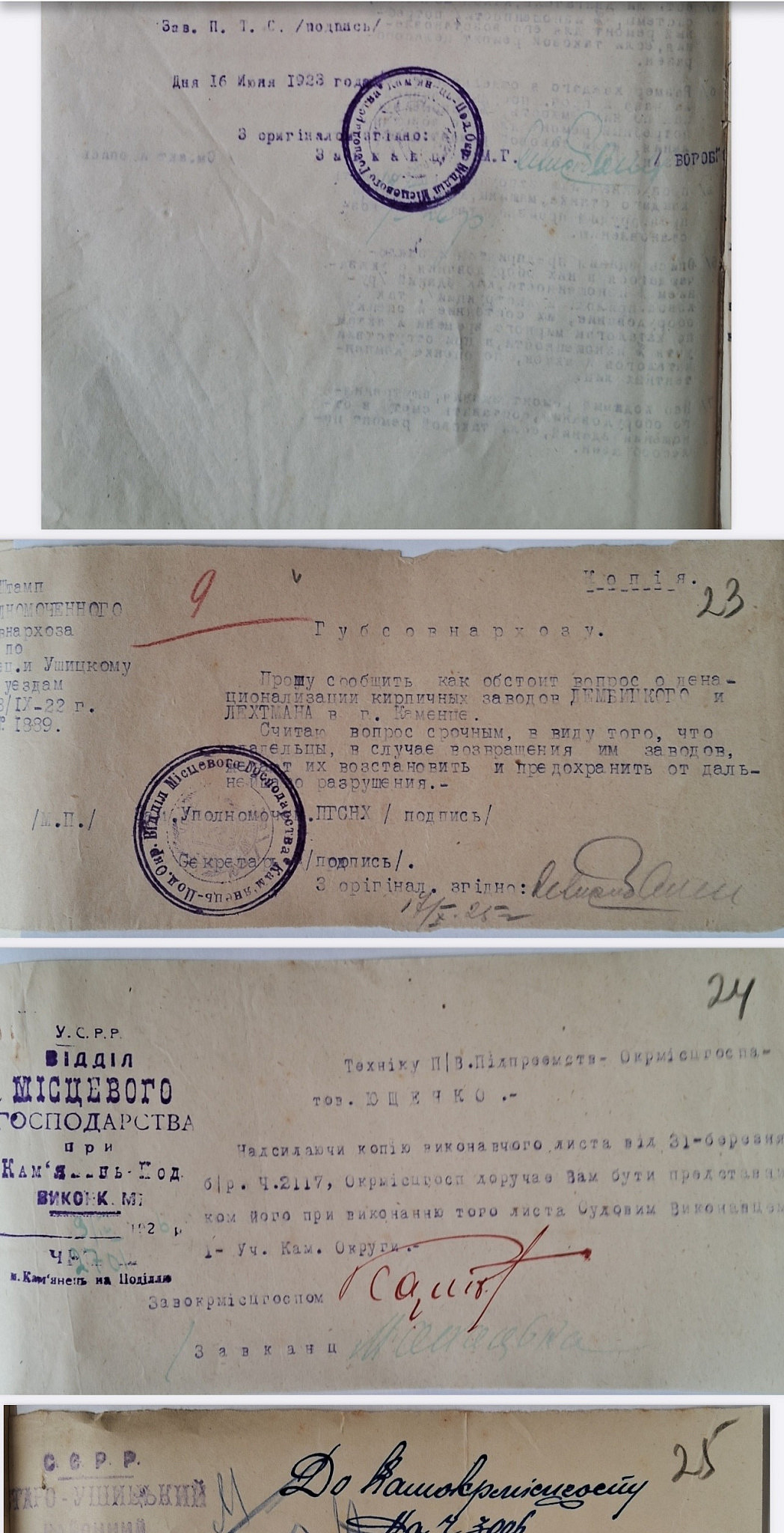
My great-grandfather, Srul ben Aharon Lekhtman, lived in that same spirit. He was a wealthy, educated, and deeply religious man — one of the most respected Jewish figures of Kamenets-Podilskyi. He first served as the manager and business partner of Pan Dembytsky, one of the city’s leading citizens. Together, they owned a brick factory that covered about four and a half hectares. Later, my great-grandfather purchased the enterprise entirely and became its sole owner.
He did much good for his city. People respected him not only for his success in business but for his honesty, generosity, and faith.
My great-grandmother, Dvora (Esther-Dina), came from a respected merchant family. Her father, Yankel Luzerovich, was a native of Kamenets-Podilskyi and traded in iron — a trade requiring precision and integrity. Her mother, Liba Gersh-Gorinovna, was born in Husiatyn, a major center of Ruzhin Hasidism. There were nine children in their family, raised in a home filled with Torah, music, and modest joy.
In my great-grandmother’s home lived a young woman named Reyza bat Zalman, who helped with the household, prepared kosher food, and participated in the children’s education. She spoke fluent Yiddish — the living language of the Jewish people — while Hebrew remained the sacred language of prayer.
She knew the laws of kashrut, prayed with devotion, and passed on the traditions of faith.
This was true Hasidic togetherness: families supporting each other like organs of one living soul.
And perhaps it is not a coincidence that her name was bat Zalman — and my rabbi’s name today is Zalman as well. I feel that this is hashgacha pratit, a subtle sign from Above that the thread of souls continues.
My great-grandfather died tragically — struck by a tram while transporting books for the library of Odesa University, where he served as director. Before he died, he told his wife: “Give our children an education.”
These words became our family’s sacred inheritance, and I continue to live by them.
Today I am pursuing two doctoral degrees — one in International Law, focused on restitution, to help return to Jewish communities (including those of Ruzhin and Husiatyn) what was unjustly taken during the communist era; and another in Jewish Spirituality, at the Graduate Theological Foundation. Because material things must serve the spiritual — and the spiritual must illuminate the material.
As the Prophet Yechezkel said:
“If a sinner returns what he has stolen and walks in the way of life — he shall live” (Ezekiel 33:15).
This applies not only to individuals, but to nations.
If Ukraine, striving toward light, restores what was once unjustly taken, it will receive blessing. This is tikkun olam — the repair of the world through justice and remembrance.
And now, every Shabbat, when I come to Rabbi Zalman’s kiddush, I feel that same living chain.
Just as Avraham opened his tent to travelers, Rabbi Zalman opens his home and his heart to everyone seeking light. His table is always full, his shul filled with warmth and peace.
He does not speak about goodness — he lives it.
And I try to learn from him the same: to unite heaven and earth, so that light not only shines upon the world but also rises back to its Source.
And as our Prophets taught, when Moshiach comes, the dead will rise again.
Since the Lubavitcher Rebbe said that we already live in the era of Moshiach’s arrival, I feel that my ancestors are beginning to awaken — in my memory, my thoughts, and my work.
We remember Avraham, our prophets, the Rebbe of Ruzhin, and all the righteous. By remembering them, we bring them to life spiritually — and when Moshiach comes, they will rise physically.
Then the light they kindled will shine over all creation.