A High Holiday Guide for Rabbinic Sex Abuse Survivors: 5780-5781
Last year in this blog, I shared a 22-page high holiday guide written by clergy abuse survivors for clergy abuse survivors. This year, the guide has been expanded to 29 pages, touching on the realities of life as a trauma survivor in the midst of a pandemic, and also includes sections on Sukkot, Shemini Atzeret, and Simchat Torah. A section on cognitive distortions has also been added. There are additional written exercises accompanying these new sections.
At this time two years ago, I had reported my abuser to the CCAR. He was suspended just prior to Rosh Hashanah and his appeal deadline was Yom Kippur. I reflected on that time in last year’s post:
Now that I am through the first year, which is always the hardest, I look back and I ask myself, “What things did I wish I had at this time last year to help me through?” The number one thing that comes to mind is some kind of resource that I can keep with me during the High Holidays, so that I don’t feel alone in my pain and trauma. Something that is written by other women like me, who went through what I went through, and who are dealing with (or have dealt with) the same struggles. Real women, whose realness leaps up from the pages. It would need to be visually beautiful too, because art is healing and we are in need of healing. And it must contain guidance for dealing with PTSD symptoms in synagogue, and ideas for making the Holidays one’s own once more. And it must have something to say to combat the Christian-like forgiveness doctrine that is making its way into our synagogues — a sign that assimilation is beginning to not only alter the appearance of things, but to alter the religion itself at its very core (in my personal opinion).
A lot of progress has been made in the last two years to put words where there were none before — to create resources where none previously existed. As I stated last year, it was survivors who did this work, not the institutions that were supposed to uphold the tenants of Judaism. As a reminder, the burden of forgiveness is on those institutions and our abusers, not on us. Until forgiveness is genuinely sought, we focus on our own healing and some of us take whatever steps are necessary to ensure that future victimization of ourselves or others is minimized or prevented.
Two excerpts from this year’s guide:
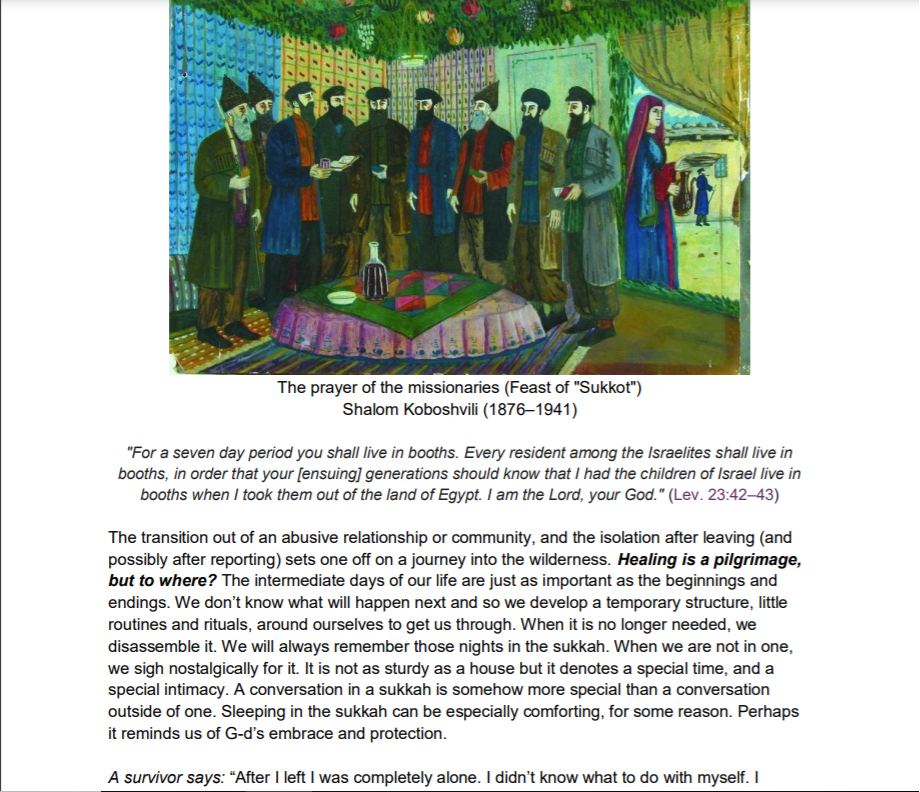
I am dancing because that chapter of my life is over and I am free and moving forward, bravely taking the risk to open up in a new community knowing that I have the resources to survive if something should go wrong. G-d gave the Torah to me as an individual as well as to us as a community. I own my Judaism and my relationship with G-d — nobody can take that away from me and I know that now. I am dancing because G-d was with me, is still with me, and will always be with me. B’H.
Contents:
Greetings from Shema Koleinu
Printable List of High Holy Days And Dates
List Of Synagogues Offering Live-Streams of Services
Tips For Dealing With Grief And Triggers
Crisis Hotlines
The Pandemic’s Unique Effects on Trauma Survivors (NEW!)
Cognitive Distortions (NEW!)
Common Triggers
Written Exercises (Preparing for the High Holy Days)
Erev Rosh Hashanah
Rosh Hashanah
Interim Days of Awe
Erev Yom Kippur
Yom Kippur
Sukkot (NEW!)
Shemini Atzeret & Simchat Torah (NEW!)
Prayer for Victims of Clergy Sexual Abuse and their Advocates
Subheadings and additional topics include:
A Note on Forgiveness
An Immersion Into The Mikvah
Post-traumatic Growth
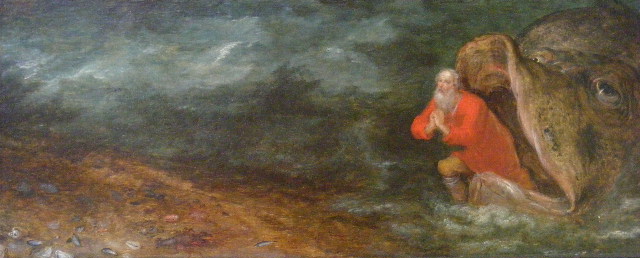
Whale as a vehicle for transformation
Considerations for fasting with PTSD
What if I have nowhere to go?
What if my abuser is still active in my community?
Friends and Family
Tashlich
—
Quick Link/The 29-page PDF booklet can be downloaded here: https://www.shemakoleinu.net/the-healing-process/shema-koleinu-high-holy-days-guide-5780-5781/
Direct Link: https://www.shemakoleinu.net/wp-content/uploads/2020/09/Shema-Koleinu-5781-High-Holidays-Resource-Packet.pdf