Exploring Jewish heritage through global travel and culture
A Jewish Journey Through Scandinavia Reveals Three Wartime Responses
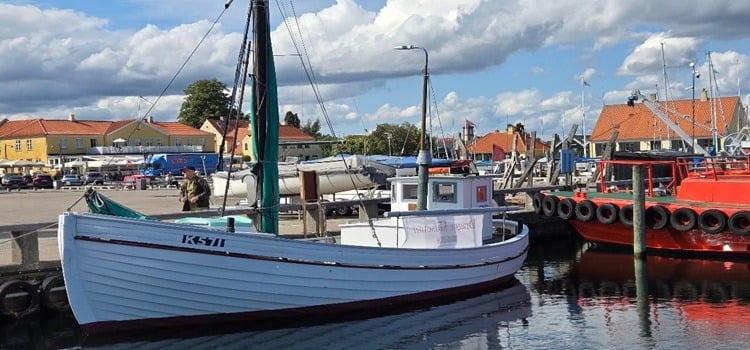
The Elisabeth K571, the historic fishing cutter whose wartime story is intertwined with the rescue of Danish Jews. Under skipper Einar Larsen, the vessel helped refugees cross the Øresund to safety – New York Jewish Travel Guide.
Three Countries, Three Wartime Stories: What Scandinavia Reveals About the Holocaust
There are journeys that take you from one destination to another—and there are journeys that change the way you understand history.
My recent Jewish heritage press trip with Jewish Copenhagen took me across Denmark, Sweden, and Norway, three neighboring countries whose landscapes can appear remarkably similar: picturesque harbors, quiet coastal villages, historic city centers, and centuries-old cultural traditions.
But beneath those peaceful landscapes lies a very different story.
During the Second World War, the Jewish communities of these three Scandinavian countries experienced dramatically different wartime realities.
In Denmark, an extraordinary rescue effort helped save almost the entire Jewish population from Nazi deportation.
Across the water in neutral Sweden, the country offered refuge to thousands of Jewish refugees, including Danish Jews fleeing across the Øresund.
In Norway, however, the story was much darker. The collaborationist government of Vidkun Quisling participated in the persecution, arrest, and deportation of Norwegian Jews.
Yet even Norway’s story cannot be reduced simply to collaboration. Norwegian resistance members, police officers, clergy, and ordinary citizens also risked their lives to warn Jews, hide them, and help them escape to Sweden.
Traveling through these countries, I found myself asking a question that goes beyond geography:
What happens when ordinary people are confronted with extraordinary evil—and what determines whether they resist, remain silent, collaborate, or rescue?
Denmark: Where a Nation Chose to Rescue Its Jewish Neighbors
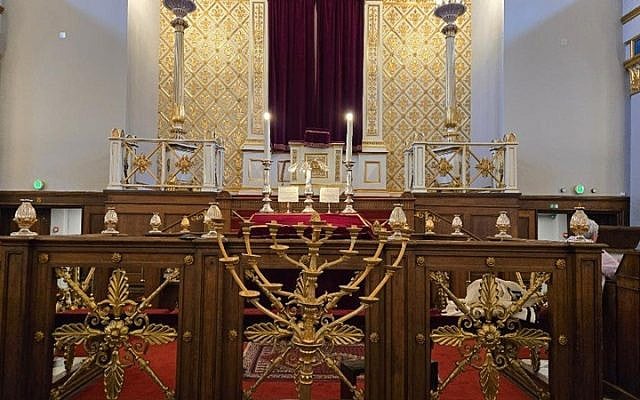
Of all the Jewish heritage stories I encountered in Scandinavia, Denmark’s rescue of its Jews is perhaps the most powerful.
Walking through Copenhagen and coastal communities such as Dragør, it is remarkable to imagine these quiet waters becoming an escape route for thousands of Jewish men, women, and children.
Before the war, Denmark had approximately 7,500–7,800 Jews. After Germany occupied Denmark on April 9, 1940, the Jewish community initially remained relatively protected. Jews were not required to wear the yellow star, and systematic confiscation of Jewish property did not take place.
Then, in August 1943, everything changed.
The Danish government resigned after refusing German demands, and the Germans imposed martial law. Plans were made to deport Denmark’s Jews.
But the Nazi plan did not unfold as expected.
The Warning That Changed Everything
Georg Ferdinand Duckwitz, a German diplomat in Denmark, secretly warned Danish contacts of the planned deportation, giving Jewish leaders and the resistance time to act.
The warning spread quickly. Thousands of Danish Jews went into hiding with help from families, churches, hospitals, and resistance members.
And then came the fishermen.
From communities along Denmark’s eastern coast, Jewish refugees were carried across the narrow waters to neutral Sweden.
In little more than three weeks, approximately 7,200 Danish Jews and about 700 of their non-Jewish relatives reached Sweden.
For those families, the Øresund was not simply a body of water.
It was a route to survival.
The Fishermen Who Became Rescuers
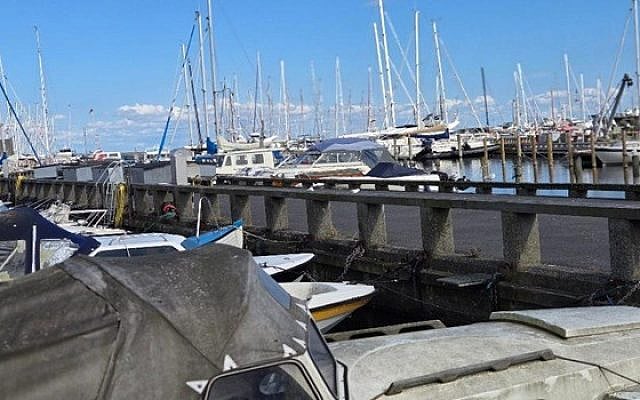
One of the most important aspects of the Danish rescue is that it was not carried out by one famous person.
It was a network.
Resistance members found hiding places. Clergy opened churches. Doctors and hospitals sheltered people. Police, government officials, families, and fishermen all played their part.
Among them was Preben Munch-Nielsen, a young Danish resistance courier from Snekkersten. According to his testimony preserved by the United States Holocaust Memorial Museum, he helped transport approximately 1,400 refugees to Sweden before fleeing there himself.
Stories like his bring the rescue beyond statistics.
Imagine being a six-year-old child hidden beneath a tarpaulin in a fishing boat, leaving everything behind and hoping the people carrying you across the sea would get you to safety.
That is the human story behind 7,200.
The Jewish Community’s Own Rescue
Another important figure was Rabbi Marcus Melchior, Denmark’s chief rabbi during the war. As the danger grew, he helped spread the warning and urged members of the Jewish community to seek safety.
The rescue was not simply a story of Danes saving Jews. Jewish leaders and Danish citizens worked together to save a community.
King Christian X is often linked to the story that he wore the yellow star in solidarity with Denmark’s Jews. The story is a myth.
What is true is that the king opposed the persecution of Danish Jews. But the rescue was not the work of one man. It was a collective effort by Jewish leaders, clergy, resistance members, fishermen, and thousands of ordinary Danes who chose to help their neighbors.
The Jews Who Were Captured
The rescue was extraordinary—but not complete.
Approximately 470 Danish Jews were captured and deported to Theresienstadt. Continued pressure from Danish authorities and the Red Cross helped prevent many from being deported to the killing centers, and the vast majority survived.
Approximately 120 Danish Jews died during the Holocaust.
The Holocaust did not bypass Denmark. But when the deportation order came, thousands of Danes chose to help their Jewish neighbors.
Sweden: The Safe Harbor Across the Water
If Denmark’s story is one of rescue, Sweden’s is one of refuge.
Neutral throughout the war, Sweden became a place of safety for Jews escaping Nazi persecution. For Danish Jews fleeing in October 1943, the waters of the Øresund led to freedom.
Approximately 7,200 Danish Jews and hundreds of their non-Jewish relatives found refuge in Sweden.
For those who crossed the water, Sweden was more than a neutral country.
It was sanctuary.
Sweden’s humanitarian role became increasingly significant as the Holocaust progressed.
Raoul Wallenberg, the Swedish diplomat in Budapest, issued protective certificates, established safe houses, and helped protect tens of thousands of Hungarian Jews. Per Anger also played an important role in the rescue effort.
In the final months of the war, Count Folke Bernadotte negotiated the release of prisoners from Nazi camps. The White Buses brought thousands of Scandinavian prisoners, including Jewish survivors, to safety in Sweden.
Yet Sweden’s wartime history was complex. Its neutrality involved economic and political compromises with Nazi Germany, and its refugee policies were not always welcoming to Jews.
Still, for the Danish Jews crossing the Øresund in 1943, Sweden became a place of refuge when refuge meant survival.
Norway: A Different and Much Darker Story
Traveling north to Norway changes the emotional landscape of the Scandinavian Jewish story.
Germany invaded Norway in April 1940, followed by a collaborationist government under Vidkun Quisling, whose name became synonymous with treason.
Before the war, Norway had approximately 2,100 Jews, including German and Austrian refugees who had arrived during the 1930s.
The community was small—but its destruction was devastating.
Quisling and the Machinery of Persecution
In 1942, persecution of Norway’s Jews intensified. Norwegian authorities helped register, arrest, and deport Jews.
On November 26, 1942, the Donau departed Oslo carrying hundreds of Jews toward Auschwitz-Birkenau. A second deportation followed in February 1943.
In total, 772 Norwegian Jews were deported, and only about 34 survived.
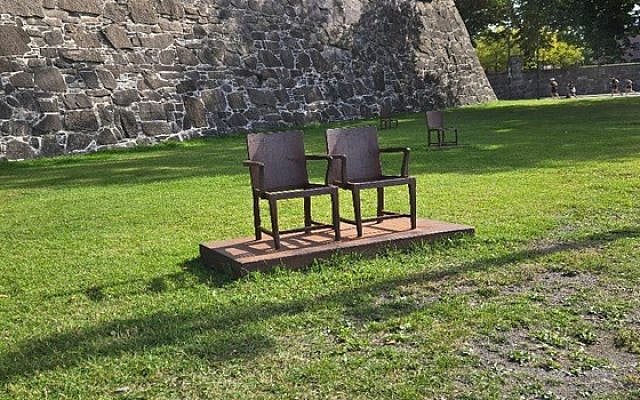
Unlike Denmark, Norwegian authorities participated in the persecution and deportation of Jews.
But Norway’s Story Does Not End with Quisling
Norwegian resistance members warned Jews, hid families, and helped them escape to Sweden. Approximately 1,000 Norwegian Jews reached safety through underground networks.
One of the most remarkable rescue efforts was Carl Fredriksens Transport, which helped about 1,000 refugees—roughly half of them Jews—escape to Sweden during the winter of 1942–43.
Led by Alf and Gerd Pettersen, Rolf Alexander Syversen, and Reidar Larsen, the network used trucks and hidden routes to transport refugees toward the Swedish border.
A greenhouse, trucks, a dark Norwegian winter, and families hidden beneath tarpaulins on the road to freedom.
The operation was eventually exposed. Several leaders escaped to Sweden, but Rolf Syversen remained in Norway and was arrested and executed by the Germans at Trandum in October 1944.
His story illustrates the terrible risks faced by those who chose to rescue Jews.
Three Countries. One Region. Three Different Choices.
Denmark, Sweden, and Norway were close neighbors, yet their Jewish communities experienced very different wartime fates.
Denmark rescued its Jews. Sweden offered refuge. Norway’s collaborationist government participated in persecution and deportation, while resistance networks helped Jews escape.
The contrast is difficult to ignore.
The Jewish Story Did Not End in 1945
The Jewish story of Scandinavia did not begin with the Holocaust—and it did not end in 1945.
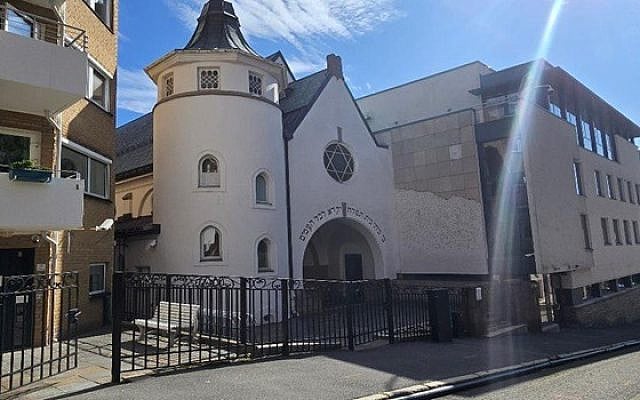
For generations, Jewish communities in Denmark, Sweden, and Norway built synagogues, schools, families, and traditions, becoming part of the societies around them. The Holocaust shattered that history, but it did not erase it.
Today, Jewish communities continue to preserve their heritage and sustain Jewish life across Scandinavia.
That is why Jewish heritage travel should be about more than Holocaust remembrance. It should also recognize Jewish continuity, resilience, and survival.
What Scandinavia Taught Me
Before this journey, I knew the basic outline: Denmark saved most of its Jews, Sweden offered refuge, and Norway suffered under Quisling and the deportation of its Jewish population.
But traveling through these countries transformed those facts into something tangible.
Denmark showed me the power of ordinary people choosing to rescue. Sweden showed me what refuge can mean when lives depend on reaching safety. Norway offered a more difficult lesson about collaboration, persecution—and the individuals who chose to resist.
Throughout the journey, one connection became clear: the same Scandinavian landscape that offered escape and refuge also witnessed deportation and persecution.
Its history lives not only in museums and monuments, but in harbors, synagogues, streets, borders, and coastal villages.
Today, the distance between Denmark and Sweden across the Øresund seems deceptively small. In 1943, it represented a journey between danger and safety.
Danes hid them. Fishermen carried them. Sweden welcomed them.
The same Swedish border later offered refuge to Norwegian Jews escaping overland.
In the history of Scandinavian Jewry, geography became both a barrier and a bridge to freedom.
Ultimately, the Holocaust reminds us that governments matter—but so do individuals.
A fisherman can save a family. A neighbor can hide someone. A police officer can give a warning. A diplomat can provide protection.
Traveling through Denmark, Sweden, and Norway brought that history out of the pages of books and placed it directly in the landscape.
And perhaps that is the most important reason to remember these stories: not simply to understand what happened in the past, but to understand the human choices that shaped it.
By Meyer Harroch | New York Jewish Travel Guide
This press trip was hosted by Jewish Copenhagen, with special thanks to Charlotte Thalmay, Ronen Thalmay, and their team for curating the Jewish heritage journey across Scandinavia.
For information about Jewish Copenhagen and its Jewish heritage tours:
info@jewish-copenhagen.dk
Related Topics