
A Liberal Zionist’s Journey Toward Understanding Religious Zionism
This time of year marks another anniversary of a historical event that Israelis and Palestinians remember in dramatically different ways. For Israelis—and many Jews around the world—the 1967 Six-Day War represents another miraculous victory that ensured the survival of the Jewish state. For Palestinians, it marks the beginning of nearly six decades of military occupation in the West Bank and Gaza Strip.
Yet this anniversary carries a different significance for another segment of Israeli society. For many Israeli Jews, particularly those who identify as religious Zionists, the 1967 war marks the reunification of Judea and Samaria—the biblical term used by many within their community for what is more commonly known internationally as the West Bank.
As a liberal Zionist, I have spent years trying to better understand the Palestinian narrative. I have read Palestinian testimonies and engaged in face-to-face dialogue with ordinary Palestinians. Understanding the perspective of the other side is a value I hold deeply, and I have often encouraged my fellow Zionists—liberal and religious alike—to do the same. I believe that genuine efforts to understand one another are essential to any future peace and reconciliation between our peoples.
Over time, however, I began to realize that if I believed it was important to understand the Palestinian narrative, then I should also make an effort to understand the perspective of religious Zionists and Jewish settlers who dream of Greater Israel.
In that spirit, I decided to examine my own journey toward better understanding religious Zionists, including how I learned to empathize with them and how I seek to include them in my vision for peace.
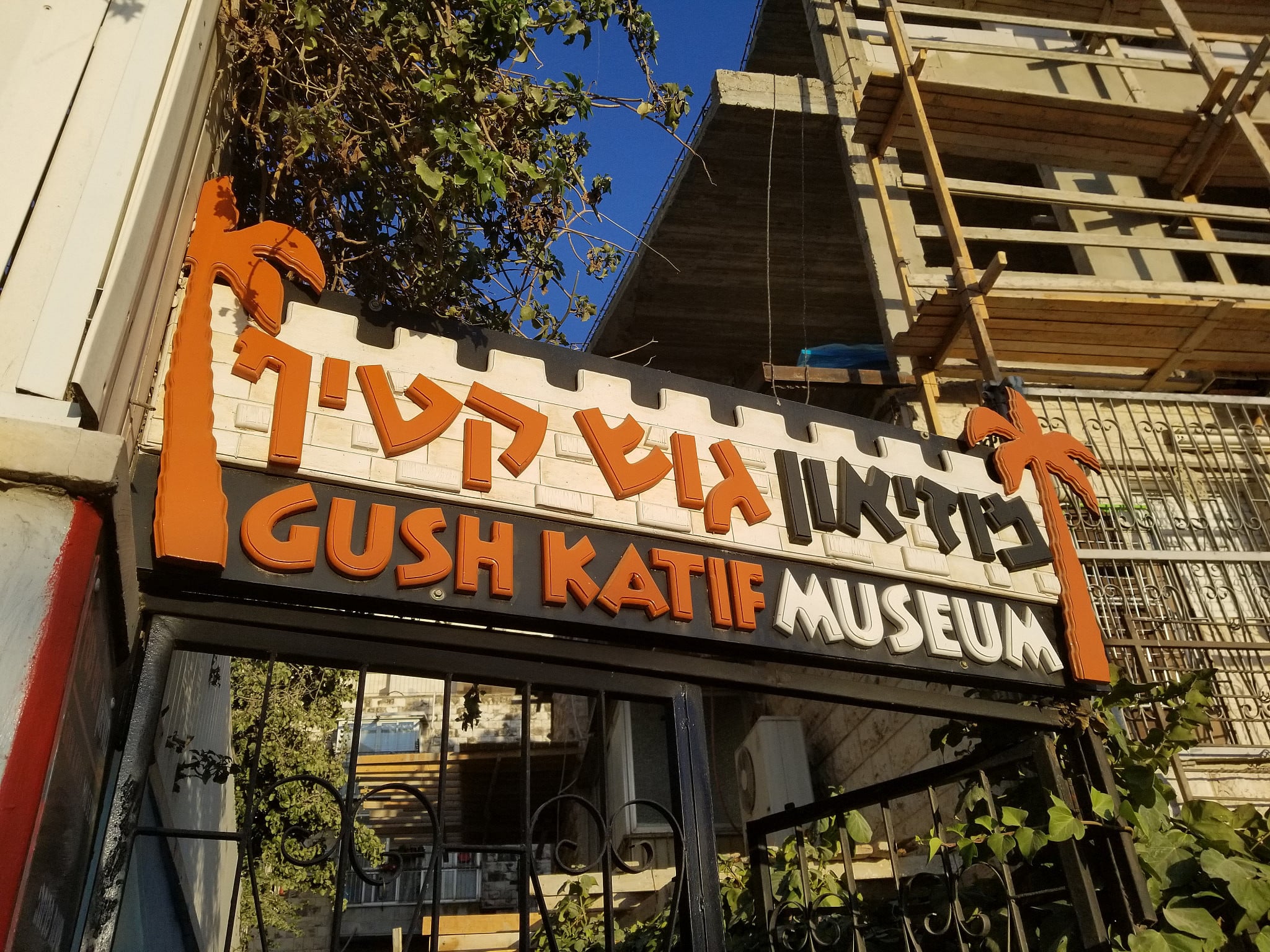
The first stage of that journey began at the Gush Katif Museum in Jerusalem, a memorial museum dedicated to preserving the memory of the Jewish settler communities that were evacuated from the Sinai Peninsula and the Gaza Strip in 1982 and 2005, respectively.
As I walked through the museum, I encountered artifacts from the former settlements and photographs of Israeli settlers weeping as they were forced to leave their homes in the Sinai and Gush Katif.
Looking at those images stirred complicated emotions. I was confronted not only with the anguish many experienced when Israel relinquished territory, but also with a glimpse of what a future two-state solution might entail. Such an agreement would likely require the evacuation of far more Jewish settlers from Judea and Samaria, making it an even more wrenching process.
As I looked into the eyes of families grieving the loss of their homes in the Sinai Peninsula and Gush Katif, I began to grasp the depth of loss that many religious Zionists and Jewish settlers in Judea and Samaria would experience if my hope for a two-state solution were ever realized.
Yet at that point, what I felt was sympathy rather than empathy. I recognized the humanity and suffering of Jewish settlers, but I still did not see myself in their story. As a liberal Zionist, I viewed their experience as something adjacent to my own rather than part of a shared narrative.
That changed during the next stage of my journey, when I read the book Friendly Fire by former Shin Bet director Ami Ayalon.
When I picked up Ayalon’s book, I expected the story of a former high-ranking Israeli general who came to embrace a two-state solution. But the memoir also contained another shift in perspective. Ayalon, shaped by his background in the kibbutz movement, reflects on how he came to see that his community’s founding narrative of settlement and pioneering in pre-1948 Israel was not entirely dissimilar from the motivations that later animated the Jewish settlement movement in Judea and Samaria.
He describes conversations with leaders of the settlement movement about how they began their project in the years following 1967. According to Ayalon, some of them even sought guidance from figures associated with the early kibbutz movement on how to build new communities.
Ayalon also noted that the similarities between the two settler movements extended beyond practical matters and into the stories they told about themselves. Both movements were driven by a sense of collective mission, a deep historical connection to the land, and the belief that building was an act of national renewal. The language of passion and sacrifice—of putting their “sweat, blood, and tears” into their communities—was something both movements used as well.
While I believe there are important historical and political differences between the pre-1948 kibbutz movement and the post-1967 settlement movement—differences that, in my view, give the former greater legitimacy—I nevertheless began to see the broader parallels Ayalon was describing. I have long admired the kibbutz movement for helping lay the foundations of the Jewish state, and places like Tel Aviv and Haifa have often felt like a second home to me. Yet I also began to understand that, for religious Zionists, settlements such as Ariel or Kiryat Arba carry a similar emotional weight.
While I support peace with the Palestinians through a two-state solution, I have never considered giving up one inch of Tel Aviv or Haifa—not out of hatred or mistrust toward Palestinians, but because those are places my people fought for, places into which my people poured their sweat, blood, and tears. The mere thought of relinquishing those places, with all their history and sacrifice, feels deeply traumatic.
For religious Zionists and Jewish settlers in Judea and Samaria, leaving their homes and seeing the communities into which they poured their own sweat, blood, and tears dismantled would be just as traumatic. It was when I drew these parallels that I began to genuinely empathize with the settlers and to see their story as part of my own.
Nevertheless, despite my recognition of the religious Zionist narrative, I still support a two-state solution. At the end of the day, there is another people who live in the land between the Jordan River and Mediterranean Sea, and some form of political separation remains necessary if Israel is to remain Jewish, democratic, and secure. In my view, territorial compromise remains the most viable path toward that goal.
What has changed about my position, however, is the narrative behind the two-state solution.
For a long time, I saw the two-state solution as something that would be celebrated because it would allow both peoples to practice their right to self-determination and would be the next step toward reconciliation.
That can still be part of the story. But we also need to create space for mourning. We need to acknowledge the trauma that would accompany a two-state solution, especially for the religious Zionist community and the Jewish settlers who would be required to leave homes they have often spent years, and sometimes generations, building.
For too long, parts of the Zionist left have referred to settlers as “weeds” that need to be plucked from their garden. That language must change. If and when a two-state solution comes, we should not ostracize religious Zionists and Jewish settlers as the people we “defeated” in order to make peace possible. Rather, we should recognize the sacrifice they made for the sake of peace and ensure that their loss is honored rather than forgotten.