
A Life Cut Short: Remembering Charlie Kirk
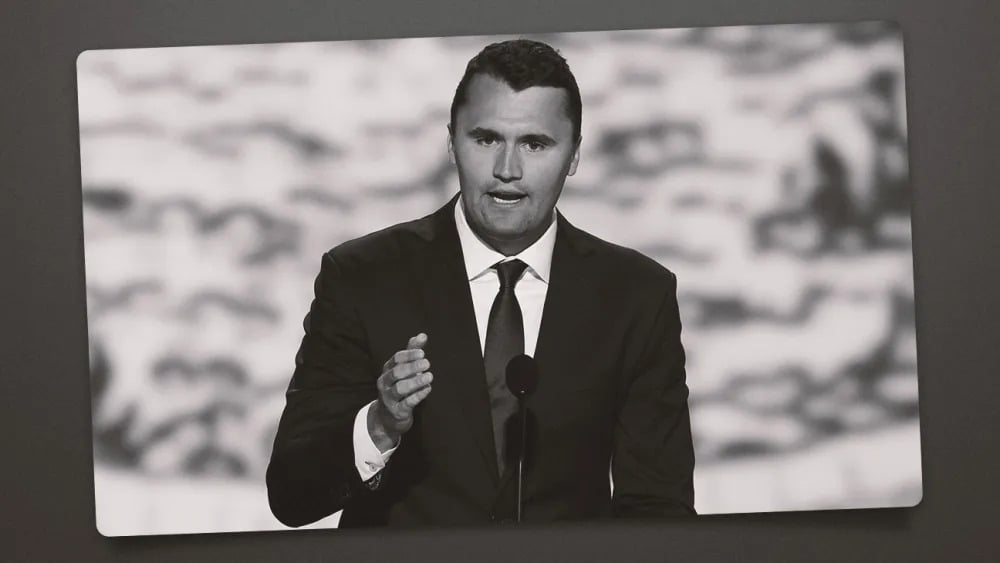
The news of Charlie Kirk’s assassination has shaken the nation to its core. At only thirty-one years old, Kirk was a man in motion—an activist, a provocateur, and an organizer whose influence far exceeded his years. His untimely death on a university campus in Utah is not only a profound tragedy for his family, friends, and supporters but also a sobering reflection on the fragile state of American democracy.
Kirk’s life story was in many ways the quintessential American tale. Raised in suburban Chicago, he did not come from the corridors of wealth or power. He did not graduate from an Ivy League school or follow the well-worn path of traditional political operatives. Instead, he carved his own way, founding Turning Point USA as a teenager and building it into one of the most powerful conservative youth organizations in the country. Through sheer energy, relentless drive, and a knack for communication, he inspired thousands of young Americans to care about politics, culture, and the future of their country.
To his supporters, Charlie Kirk was more than a political figure. He was a mentor and motivator. On college campuses across America, he encouraged young people not only to embrace their beliefs but also to defend them with courage and clarity. He brought a sense of urgency to political dialogue, insisting that the next generation mattered and that their voices should not be ignored. For many young conservatives, he gave shape to a movement that too often felt invisible or dismissed.
But to others, Kirk was a lightning rod. His rhetoric was sharp, his tactics aggressive, and his positions frequently controversial. He relished the role of challenger, never shying away from conflict or criticism. That, too, was part of his impact: he forced the nation to wrestle with ideas, disagreements, and uncomfortable truths. Whether one agreed with him or not, one had to acknowledge his presence. He was impossible to ignore.
And that is precisely what makes his death so chilling. Kirk was silenced not by a counterargument, not by a tough debate, but by an act of political violence. He was struck down on a stage where words should have prevailed, on a campus where young minds gather to question, to learn, and to grow. A single bullet ended a life devoted to speech, advocacy, and persuasion.
The lesson here is not a partisan one. Political violence is not the tool of the left or the right alone—it is a cancer that eats away at the very foundation of free society. The assassination of Charlie Kirk must be seen as an attack on all Americans, regardless of ideology. It is an assault on the notion that our differences can be resolved with ideas rather than weapons. If we allow violence to replace debate, then we all lose.
In the hours since his killing, leaders from across the political spectrum have united to denounce the act. That rare moment of bipartisan solidarity speaks to the gravity of what has happened. Charlie Kirk may have been divisive in life, but in death, his story underscores something deeper—that we must preserve the space for passionate disagreement without fear of annihilation.
The danger, of course, is that his assassination becomes one more data point in our polarized culture wars, one more reason for Americans to point fingers and assign blame. That would dishonor his legacy and diminish his life. Kirk thrived on confrontation, yes, but he believed in the power of persuasion. To reduce his death to another partisan talking point would be to miss the broader message.
What we need now is a recommitment—to civility, to safety, and to the sanctity of speech. College campuses should be places of dialogue, not danger. Public squares must remain open to voices of all kinds, not marred by fear. If Charlie Kirk’s death teaches us anything, it is that democracy depends on our ability to coexist with difference, to argue without hatred, and to walk away from a debate knowing that the contest was of words, not of lives.
Charlie Kirk’s life ended far too soon, but the echoes of his work will endure. They will be heard in the students he inspired, in the conversations he provoked, and in the movements he helped to shape. The best way to honor him is not through silence, nor through vengeance, but through a renewed commitment to the hard, sometimes uncomfortable work of living together in freedom.
Let us remember him, then, not only as a man of controversy but as a reminder of what is at stake when violence enters the public square. Let us say clearly, for his sake and for ours: no American voice, left or right, should ever again be silenced by the violence of a gun.