Spotlight on Civil Society
Featured Post
A lighthouse in the fog of extremism
Props to Tag Meir, an umbrella organization working to counter hate and racism on either side of the Green Line
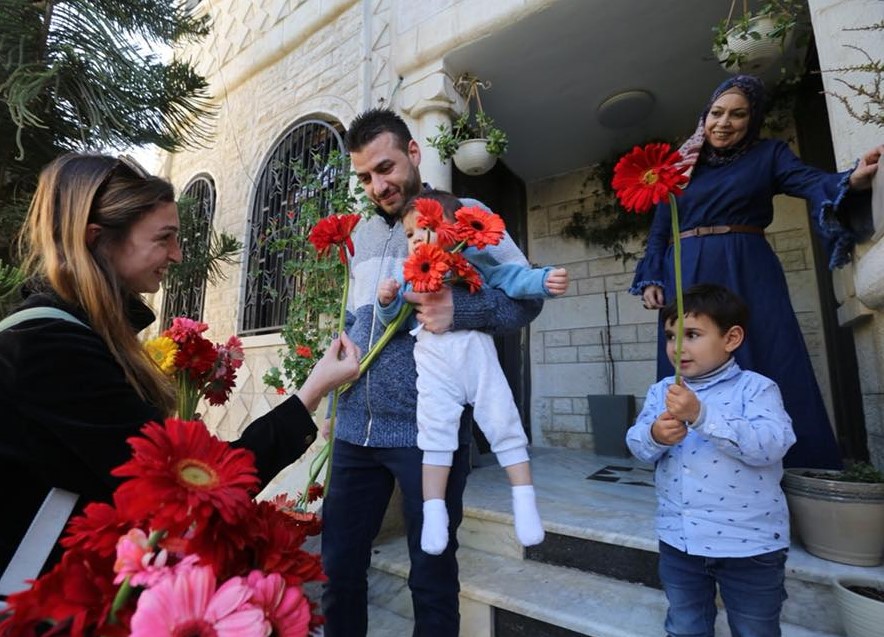
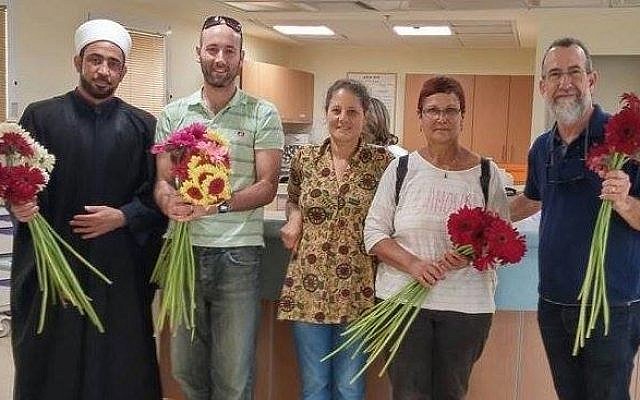
After Arab residents of the French Hill neighborhood in Jerusalem had their cars vandalized, the Tag Meir Hebrew University chapter showed up in the neighborhood to hand out flowers to the Arab residents and then joined them in a solidarity protest. April, 2015 (Photo Credit: Yossi Zamir)
Remember the game “Freeze Tag”? The one where you run around and once you are tagged, you are frozen, stuck in time and place. Until, of course, a teammate “untags” you, freeing you so you can run off again.
In Israel these days, we have a very different and destructive version of this game being played. The adversaries in this high-stakes competition are those bearing a message of hate versus those opposing acts of violence and intolerance against innocent people. In such a volatile atmosphere, being frozen in the moment can be devastating — which is why Tag Meir (“Tag of Light” in Hebrew) is so critical. Made up of the “silent majority” — individuals from all over the country, of various ethnic backgrounds and religious persuasions — the Tag Meir Forum offers an inclusive platform for those who are showing up to confront racism and hate.
We can take just this past month of June to get a sense of how Tag Meir’s activities help “unfreeze” a tense situation, trying to build tolerance and good will in the process. Through their actions — protests, vigils or home visits — Tag Meir supporters look to reframe the situation. Dr. Gadi Gvaryahu, the founder of the Tag Meir explains that there will always be a response. “You bring destruction, and we will bring light.”
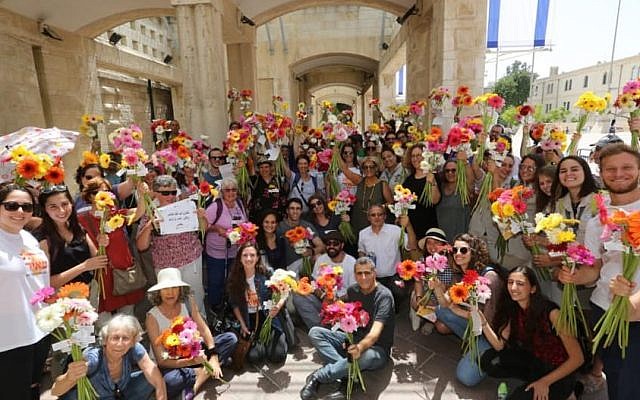
The month of June started off with Jerusalem Day, held annually to mark Israel’s victory in the 1967 Six Day War. The celebrations included a flag march, which in recent years has come to be seen as almost jingoist in its tone. And despite recent court challenges, the march organizers insisted on passing through the Old City’s Muslim Quarter, thus provoking its inhabitants. To counter this, Tag Meir organized its annual flower march to the Damascus Gate, with its supporters handing out flowers to the residents.
The following week, at the Jerusalem Pride Parade, Tag Meir supporters joined Ori and Mika Banki, parents of Shira, a 16-year old who was stabbed to death in 2015 by an ultra-Orthodox extremist, and held an annual vigil and prayer session for peace in her honor.
And toward the end of the month, Tag Meir supporters and friends visited the farmers at the West Bank village of Wadi Fukin. They brought with them new trees to plant and a much-needed message of goodwill because the night before, a group of extremist settlers had come to their farm and destroyed water pipes, a generator, greenhouses and their agricultural crops.
In June alone, there were at least six reported instances of arson and vandalism, including the incident at Wadi Fukin. It is a reality here that has become all too commonplace in recent years. And each time, Tag Meir shows up, trying to “unfreeze” and recast the experience on how it will be remembered. Their supporters pay condolence calls to the victims of terror and violence, paint over racist graffiti, and help rehabilitate what can be salvaged from the attacks.

The name Tag Meir, “Tag of Light,” actually does not come from the game of Tag. Rather, it was coined in response, and as a rebuke to “tag mechir” — “price tag attacks,” which are acts of violence carried out by a small number of radical right-wing settlers.
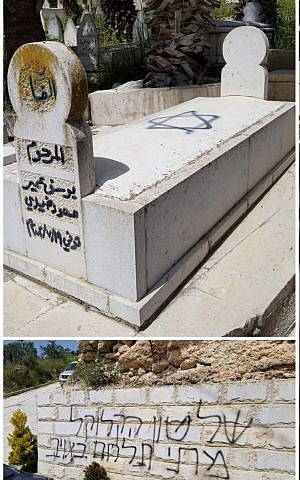
These settlers carry out raids in “revenge” for Palestinian attacks of terror or in response to government attempts to uproot West Bank outposts — the raids purportedly are the “cost” that these militants feel should be paid for not heeding their demands.
The Tag Meir Forum, established in 2011, is a coalition of over 50 organizations and institutions in Israel that includes secular, Reform, Conservative, Orthodox, and ultra-Orthodox Jews. The scope of their work involves legal petitions, outreach, public education, media campaigns and more. Soon after its establishment, Tag Meir extended its activities well beyond a response to the “price-taggers” to a condemnation of any hateful incitement in or outside of the Green Line.
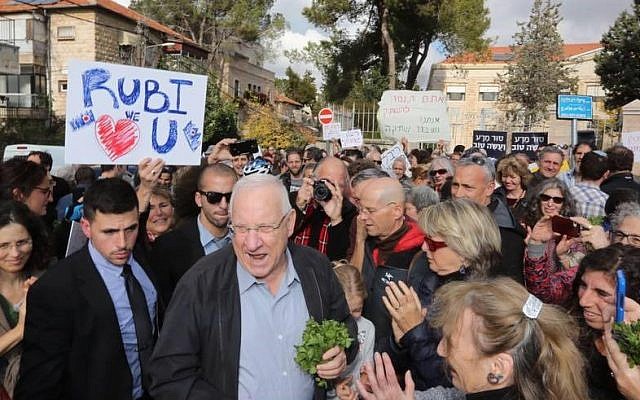
While it is well known for its organized public visits to Arab victims of hate crimes, Tag Meir supporters also visit Jewish victims of Arab terror, often in the company of Arab friends. In fact, any victim from any community that is targeted can expect a visit from Tag Meir. We saw Tag Meir this past week in support of the Ethiopian community, following the police killing of 19-year-old Ethiopian-Israeli Solomon Tekah.
You may be surprised when you first meet the founder of the Tag Meir Forum, Dr. Gadi Gvaryahu. His demeanor is as unassuming as his message is powerful. I first met Gadi back in 2007, right after he had established the nonprofit, Yud Bet Cheshvan — named after the Hebrew date of the assassination of Prime Minister Yitzhak Rabin. The provocative title of the organization is by design, serving as a warning call and constant reminder of the dangers of incitement and religious extremism.
Yud Bet Cheshvan, which has established several schools and local youth chapters as part of its efforts to underscore values of tolerance and pluralism in the religious Zionist community, hosts the Tag Meir Forum. As part of its outreach, the Tag Meir Forum provides educational trainings. Teachers within the religious Zionist community come and participate in courses on tolerance and anti-bigotry taught through the prism of Jewish values.
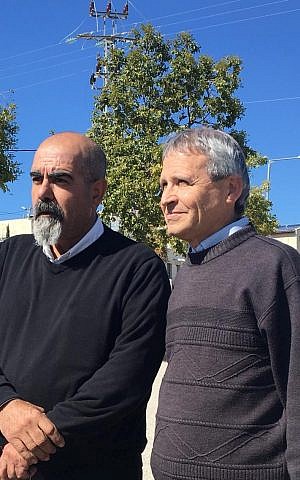
As an Orthodox Jew, Gadi felt drawn to activism as he watched growing extremism, feeling a sense of personal responsibility to fight any form of racism and violence, especially when it was carried out in the name of religion. Interestingly, Gadi is a scholar of animal behavior, exploring topics such as the role of the environment in reducing aggression and belligerency among creatures of the animal kingdom. His list of research accomplishments includes studies pointing to the positive effect on the early development of chicks, which listen to soothing classical music like Vivaldi’s Four Seasons. And yes, it is worth considering the link between his research and his activism.
Suffice it to say that Gadi is indeed somehow able to sift through the fog of discord, noise and hyperbole. And he is, somehow, also able to stay an optimist. He helps others see through the murkiness, to focus on what is in harmony and shared in our society. It is not an easy task.
Through Tag Meir, friends and supporters of any background, community or political leaning are offered an opportunity to rally against hate and racism. It is a lesson for all of us — that we can pause, take a moment, “unfreeze,” remedy and restart. In its own way, Tag Meir, true to its name, is like a lighthouse, shining the spotlight on the best in us.
Tag! You’re it. What’s your next move?
Related Topics