
A Mezuzah on Wings
Right at the heart of Parashat Beha’alotcha, suspended between movement and wilderness uncertainty, lies one of the Torah’s smallest yet most astonishing mysteries.
Just two verses. Nineteen Hebrew words. Eighty-five letters — the minimum number Chazal identify as constituting a sacred textual unit.
Bracketed by two inverted Hebrew letters—nuns that face backward, mirroring both where we have come from and where we are going—this is the only place in the entire Torah where such markings appear. These are neither decorative flourishes nor scribal anomalies. According to the Talmud (Shabbat 116a), these reversed symbols signal something extraordinary: this brief passage is considered a book unto itself—a sacred scroll concealed within the wider text.
In this understanding, Sefer Bamidbar divides into three distinct sections, transforming the traditional Five Books of Moses into seven. Hidden within the wilderness narrative lies what Chazal describe as a mysterious Seventh Book—small in size, yet immense in spiritual significance.
The verses read:
וַיְהִי בִּנְסֹעַ הָאָרֹן, וַיֹּאמֶר מֹשֶׁה: קוּמָה ה׳, וְיָפֻצוּ אֹיְבֶיךָ, וְיָנֻסוּ מְשַׂנְאֶיךָ מִפָּנֶיךָ.
“And when the Ark would journey, Moshe said: Arise, Hashem, and let Your enemies be scattered; let those who hate You flee before You.”
וּבְנֻחֹה יֹאמַר: שׁוּבָה ה׳, רִבְבוֹת אַלְפֵי יִשְׂרָאֵל.
“And when it came to rest, he would say: Return, Hashem, to the myriads of thousands of Israel.”
(Bamidbar 10:35–36)
On the surface, these verses describe the physical carrying of the Ark through the desert. But beneath that movement lies a spiritual map of Jewish destiny.
When the Ark traveled, it carried not only the Tablets of the Covenant, but the enduring testimony that Hashem’s Presence moved with His people. Its journey was never merely geographical; it reflected the enduring pattern of Jewish history itself: exile and return, distance and reunion, concealment and revelation.
“Arise, Hashem”—a cry against darkness, a declaration that truth will ultimately scatter falsehood, and a reminder that even in uncertainty, the covenant remains alive and unfolding.
And then: “Return, Hashem.” Not merely a plea for rest, but for reunion—for the Shechinah to dwell once more among Israel, and for what has been scattered to be gathered home again.
These verses do not simply recount a desert procession. They express the enduring spiritual pulse of our people: we journey, we scatter, we endure—and ultimately, we return.
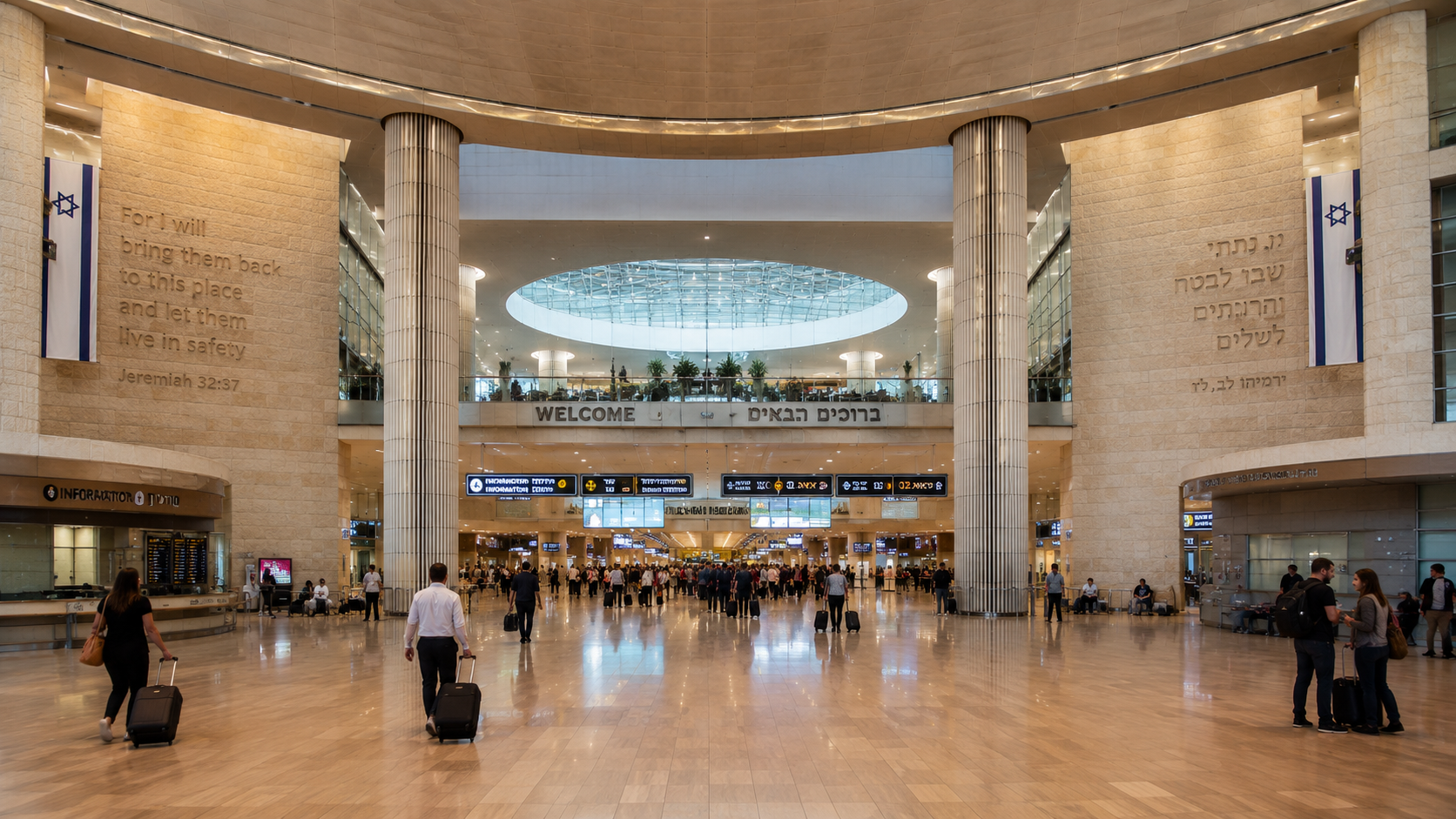
It is no coincidence that these very words are engraved at Ben Gurion Airport—Israel’s modern gateway of departure and return.
There, at the living threshold between homeland and diaspora, these ancient verses stand like a mezuzah on wings—a sacred inscription upon the doorway of exile and return.
It serves as a reminder that wherever a Jew may travel, the journey is never detached from covenant.
Every departure carries memory.
Every return carries redemption.
This hidden book is small because its message is uniquely distilled: Jewish history is not random motion, but sacred direction. Even dispersion contains purpose, and even exile carries within it the certainty of return.
Today, as Israel once again stands amid struggle, return, and rebirth, these verses read less like ancient liturgy and more like a living national summons:
Arise.
Return.
Scatter darkness.
Gather what has been lost.
This mezuzah on wings still journeys with us—not fixed solely upon the doorway of one home, but carried across every exile until the scattered are gathered and covenant is restored.
And that is why this hidden book appears so small.
Because some truths do not require many words.
Only eternity.
שבת שלום
שמואל