
A Nation Held Hostage
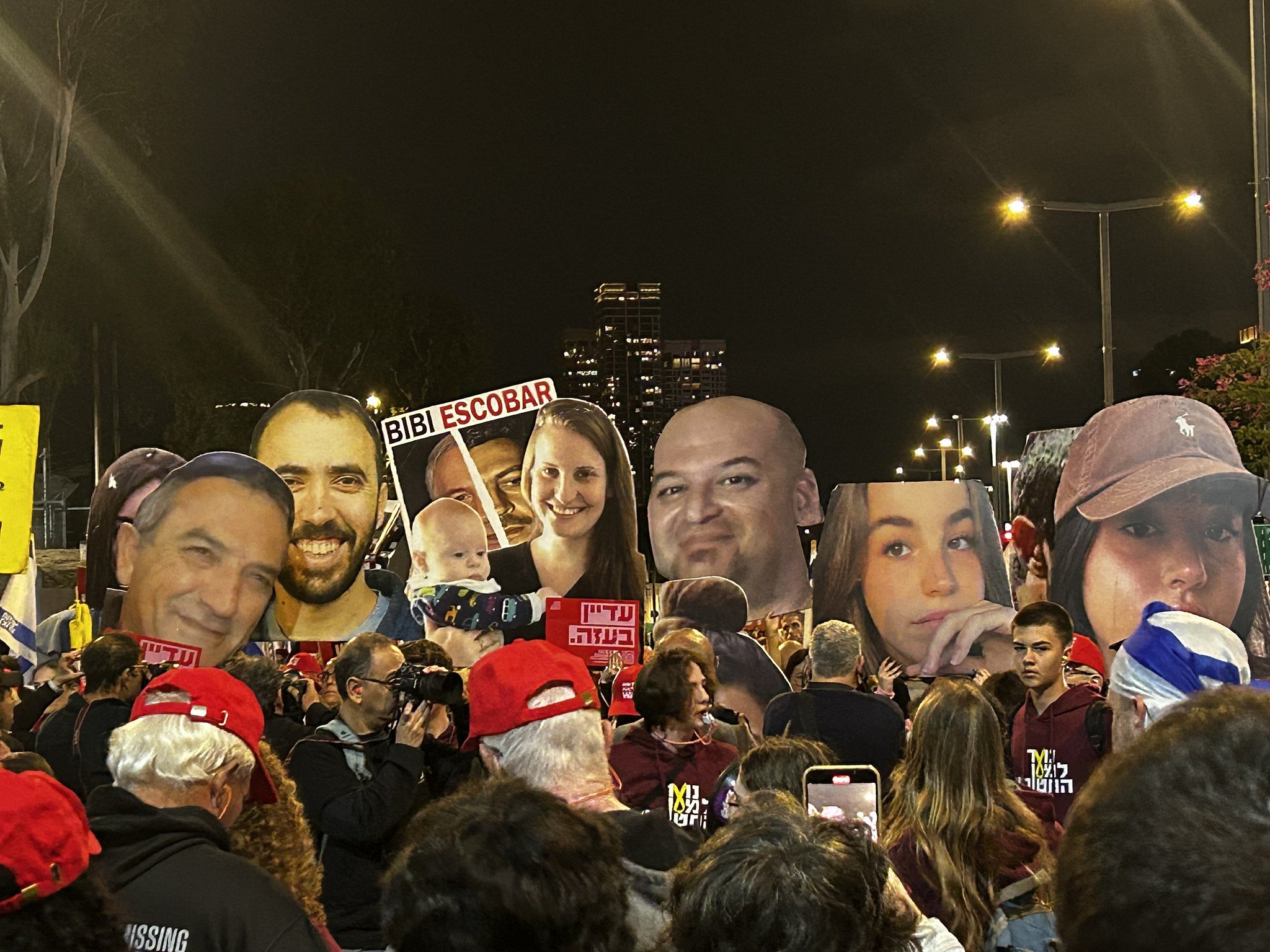
When the New York Times published a lengthy and detailed exposé (complete with receipts) on July 11 about how PM Benjamin Netanyahu deliberately prolonged the war in Gaza to preserve his own political survival, it confirmed what I and many Israelis had long believed but couldn’t necessarily prove. In a country still coming to terms with the October 7th attack and its trauma, and the ongoing toll of the resulting war, this revelation was not just an indictment, but also a damning reflection of a political system that allows survival politics to trump pragmatism, civilian (and soldier) safety, and Israel’s international standing.
The Times article detailed, in painfully stark terms, how Netanyahu continuously ignored multiple pre-Oct 7 warnings from the military’s top brass about the high likelihood of an attack from a Hamas eager to capitalize on the very visible divisions within Israeli society due to the governing coalition’s plan to weaken the judiciary. It detailed how, even as the attack was unfolding, Netanyahu was already formulating how to deflect blame. It documented how he chose to remain in political alliance with extremists, (including a Kahanist convicted of supporting a terrorist organization, and another who was once suspected of plotting car bombings on the Ayalon) rather than form a unity government with moderates, all to keep his fragile coalition intact. It detailed Netanyahu’s attempts to fire those he perceived as standing in the way of his personal political safety, such as Shin Bet chief Ronen Bar and former Defense Minister Yoav Gallant. It detailed how Netanyahu avoided having his coalition collapse just last month by confiding in UTJ leader Moshe Gafni on June 9 of the plan to attack Iran later that week, signaling that a vote to bring down the government would delay or cancel the attack, long considered strategically necessary.
Most damningly, it painfully detailed how, in April 2024, Netanyahu chose to continue the war against IDF advice, because Finance Minister Bezalel Smotrich plainly stated, “you will have no government” if the war ended. It reported how Netanyahu broke the most recent ceasefire earlier this year (that had seen 33 hostages released) to re-secure the support of Itamar Ben Gvir, further solidifying his survival, but condemning the remaining hostages to further torment in the tunnels of Gaza (and costing dozens of soldiers their lives).
How many hostages owe their deaths to Netanyahu’s decision to indulge the “Gaza resettlement” fantasies of his extremist ministers? According to the Times, the answer is (at least) eight. How many Israeli parents had to bury their sons who fell in battle for the vague mission of “total victory”, even as the IDF leadership stated there was no necessity to remain in Gaza? Since April 2024, at least 280 soldiers have lost their lives. And beyond the cost to Israelis, the continued war has devastated Gaza, further isolating Israel on the world stage and eroding what little goodwill and post-Oct 7 sympathy the international community had offered.
The tragedy here is not just the sheer number of lives either lost or shattered, but what it says about the state of Israeli democracy. What does it say when the executive leadership knowingly sacrifices national interests to protect personal power? When strategic decisions are shaped not by the IDF’s professional judgment but by the survival tactics of a coalitions held hostage by extremist zealots (who represent factions of Israeli society that demand the continuation of this war for their own ideological fantasies, while largely exempting themselves from serving in the IDF to help achieve those fantasies)? The long-term damage may be even greater than the immediate measurable losses: public trust in this country’s political system is crumbling, Israel’s diplomatic relationships, even with our historic allies, are strained to the point of fracture.
Democracy requires accountability. If the revelations by the New York Times confirm what I and many others had long feared—that the lives of our hostages and our soldiers came secondary to political survival—then Netanyahu should step down and new elections be called. However, what comes after is just as important: the power dynamics that allow the executive levels of the government to make wartime decisions based on self-serving motives need an overhaul. This war, which began with an unbearable trauma, has been prolonged by a culture of political survival above all else, with ordinary lives (both civilian and soldier) treated as expendable. Israel needs more than new elections; it needs a reckoning. Israelis deserve leadership that is honest, pragmatic, and committed to the values of freedom, justice, and peace, on which this state was founded.