
Geo-political and Sports Analyst
A Presidency for Netanyahu? The Extraordinary Deal To Break The Deadlock
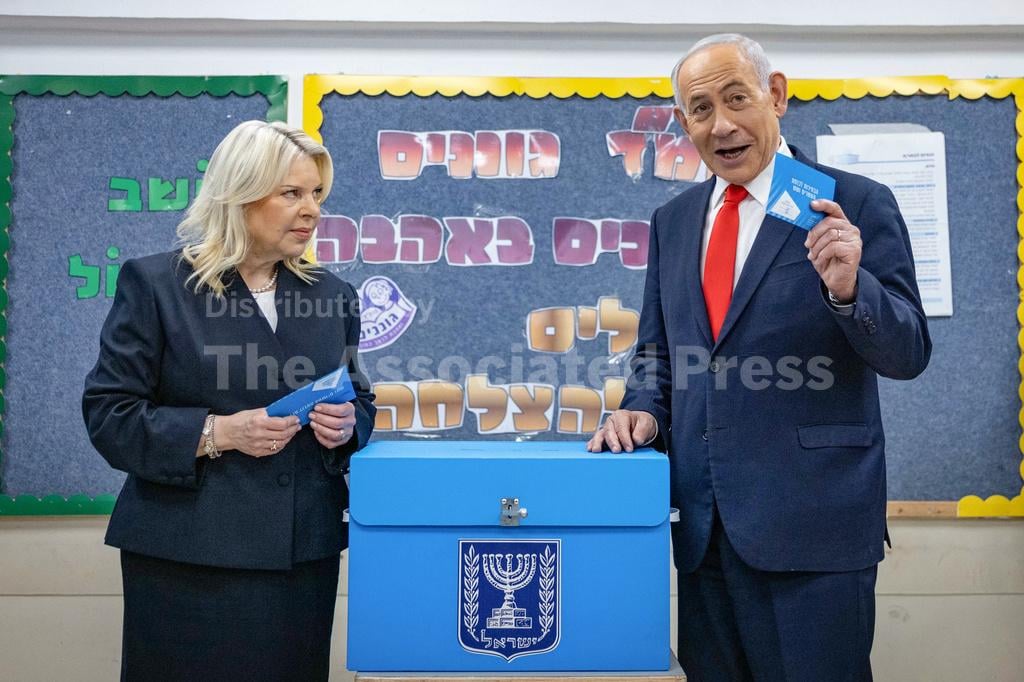
Israel's Prime Minister Benjamin Netanyahu prepares to cast his ballot, alongside his wife Sara, at a polling station in Jerusalem, Tuesday, Oct. 27, 2026. (Yonatan Sindel/Pool Photo via AP)
With neither camp commanding a majority, could an unlikely bargain, offer Netanyahu a dignified exit from the premiership – and give his opponents the government they seek?
Israel has voted, but Israel has not decided. Record turnout of 77.7 percent has produced a Knesset in which the real contest – who can assemble 61 seats – is only beginning. Within that uncertainty has come an extraordinary possibility: what if Benjamin Netanyahu were offered the presidency as the price of allowing someone else to govern?
It remains hypothetical. But the idea has a history, and its significance extends beyond whether Netanyahu would accept it. It asks how far Israel’s political leaders might be prepared to compromise to break the deadlock.
Where the numbers stand
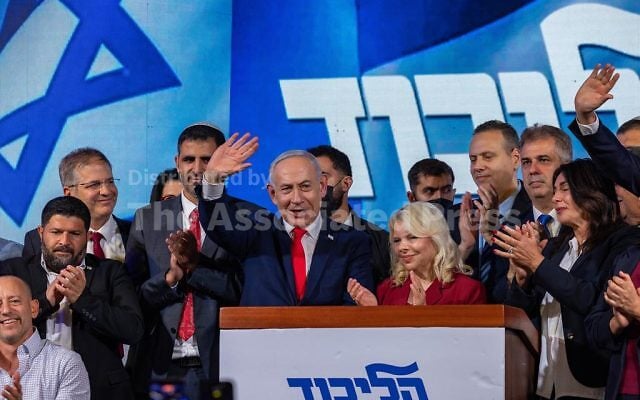
Exit polls initially projected a narrow contest between Netanyahu’s bloc and the opposition led by Gadi Eisenkot. Partial official results subsequently shifted in Netanyahu’s favour. With approximately 37 per cent of votes counted, one reported distribution put the governing bloc at 57 seats, the opposition at 47 and Arab parties at 16. These figures remain provisional, with the final outcome dependent on the continuing count and parties’ positions relative to the electoral threshold. Therefore, neither camp has secured a majority.
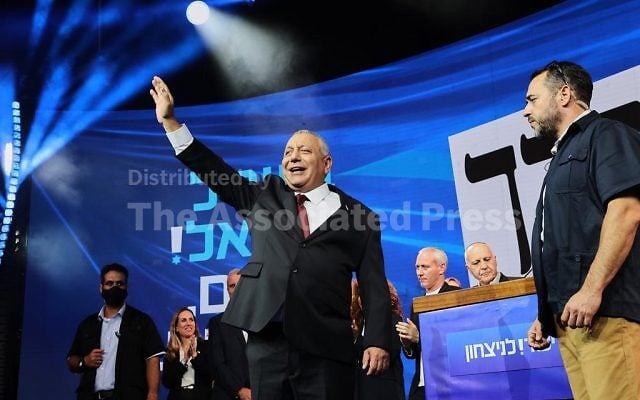
The Arab parties’ projected representation could prove decisive, but their support does not automatically translate into a viable government. Opposition leaders face political difficulties in relying on Arab parties, while Netanyahu’s partners must decide whether another right-wing coalition is even achievable. Eisenkot has presented the result as a rejection of another Netanyahu premiership. However, Netanyahu has insisted that the right deserves to govern. Both claims must now confront the same parliamentary reality: neither side can govern on rhetoric alone.
The question is no longer simply who won the election. It is who can persuade enough parties to cooperate and form a viable government.
An idea with a paper trail
The presidency proposal is not entirely new. On 26 August, The Jerusalem Post reported that Likud officials had discussed a possible rotation government between Netanyahu and Eisenkot, with Netanyahu serving first before eventually moving to the President’s Residence after Isaac Herzog’s term ends in 2028. The newspaper described the scenario as remote, not a settled plan. The version now being contemplated could be different: rather than serving first in a rotation, Netanyahu could relinquish the premiership directly in exchange for political support for a presidential bid.
Israeli Political Commentator Jonny Daniels has also outlined possible unity arrangements involving opposition figures and Netanyahu’s existing partners, potentially excluding Itamar Ben Gvir. Whereby, the Presidency could serve as an incentive within such negotiations.
There is no established evidence that Netanyahu has been offered this arrangement or that Eisenkot supports it. But the distinction between the two proposals matters. One would make the presidency the destination after a period in government; the other would make it the price of changing the government now.
The appeal is obvious. Netanyahu could retain a prestigious national role and represent Israel internationally, while executive authority passed to another leader. His opponents could achieve their principal objective without insisting that he leave public life entirely.
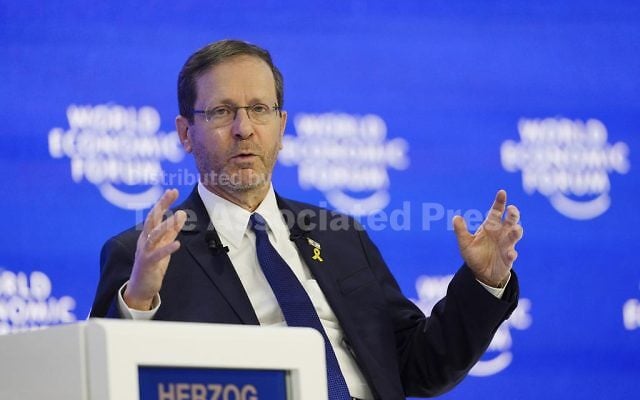
Yet the presidency is not a second premiership. Israel’s president is head of state, with largely ceremonial and constitutional responsibilities, while the prime minister leads the government. The Knesset elects the president by secret ballot, meaning that any political promise would still need to survive a separate parliamentary vote.
The price of trust
The greatest obstacle may not be the arithmetic, but trust.
In 2020, Benny Gantz agreed to a rotating premiership with Netanyahu. However, the government collapsed before Gantz received his promised turn. That experience would weigh heavily on any arrangement requiring Eisenkot to trust Netanyahu with the first term.
The Jerusalem Post reported that Likud discussions had considered safeguards, including commitments involving the budget and no-confidence votes, legal mechanisms to enforce the agreement, and even a resignation letter held by a trustee. These proposals illustrate the difficulty of converting political promises into enforceable guarantees. A future presidential election cannot simply be promised to Netanyahu, while Netanyahu cannot assume that relinquishing the premiership will secure his eventual election.
The real question is, if brought up, would he accept a largely ceremonial role after decades at the centre of executive power? Would Eisenkot risk repeating Gantz’s experience? And would opposition voters accept the leader they sought to replace becoming the country’s head of state?
Each question creates another obstacle. An early presidential vacancy would add further complications. Herzog’s term is due to end in 2028, and there is no evidence he intends to leave early. Such a scenario would require separate legal and political consideration, not merely a coalition agreement. However, given we are talking about Israeli politics, weirder things have happened.
The trial question
Netanyahu’s criminal proceedings would inevitably complicate any deal. He denies the charges against him, and a move to the presidency would not automatically end his trial. He formally requested a pardon in November 2025. In April 2026, Herzog said efforts to reach a plea agreement should be exhausted before he considered the request. There is no precedent for a pardon ending a trial while it is ongoing.
The Jerusalem Post reported that people discussing the presidential scenario believed Netanyahu’s trial would need to be resolved if the proposal became relevant. That was an assessment attributed to participants in the discussions, not an established legal requirement. There also needs to be consideration as to wether no matter what your stance on the trial is – Is it really possible that Bibi will face serious criminal charges. Or if he does, is it still worth it to ensure a new government.
Whether a presidential role could form part of a broader political settlement is therefore separate from whether it would offer Netanyahu any legal relief. Neither outcome can be assumed.
A question of desperation
The presidency gambit could be viewed as a possible exit route from deadlock, or as an arrangement that creates more problems than it solves. Its viability depends on competing calculations: how strongly the opposition wants Netanyahu out of the premiership, how much it would concede to achieve that, and whether Netanyahu would exchange executive power for prestige.
Other routes remain available, from a conventional opposition coalition to a minority government or another election. Each would bring its own political costs. The coming negotiations will test the limits of campaign promises, ideological alliances and personal ambition. The presidency proposal may never progress beyond private speculation. But the fact that Likud officials reportedly considered a version of it before the election gives the idea more substance than a purely imaginative exercise.
In a parliamentary deadlock, the most consequential bargains are not always those announced on election night. They are the ones that emerge when leaders discover what they must surrender to govern.
Whether Netanyahu at Beit HaNassi is a genuine political possibility or an elegant non-starter remains an open question. The answer will depend not only on the final numbers, but on how far Israel’s political leaders are prepared to go to break the impasse.
This is all to say that over the coming days and weeks ahead many rumours, hypothetical scenarios and thoughts will undoubtedly emerge. However, what is abundantly clear at the moment is that both sides will need to make and break promises in order to form a viable government. Offers will be made, new alliances may form that voters may feel betray their votes – but importantly they will be crucial unless Israeli’s head to the polls yet again in approximately 90 days.

Related Topics
Related Posts