A reckoning for the Reform movement
The defining challenge of the 21st century for the North American Reform movement will increasingly be shaped by ideological commitment and communal loyalty to the centrality of Jewish peoplehood. In the words of our movement’s own resolution at the Re-CHARGING Reform Judaism Conference: “Judaism finds its fullest and most authentic expression through a vibrant and lived commitment to Jewish peoplehood.”
What we often forget, but ignore at our peril: while our movement is a religious body, much of the Jewish world expresses Jewish identity in secular form — through a fierce commitment to the Jewish people and Israel, the most eloquent expression of Jewish peoplehood in our times. The religious teachings of Judaism do not exhaust the full content of Jewish civilization. It is the Jewish people that keeps Jewish civilization alive. If there are no Jews, there is no Torah. The Jews do not derive their authority from rabbis. It is the opposite: rabbis derive our authority from the Jews.
We cannot give in to those who would take us back to the days when our movement stripped all vestiges of Jewish peoplehood from Reform Judaism. We cannot succumb to those who preach a false philosophy of Jewish universalism that camouflages disdain for Jewish particularism under the guise of a sometimes sweeping, self-righteous, sanctimonious and suffocating misunderstanding of tikkun olam — social repair.
Judaism is a blend of universalism and particularism. Its distinctive genius is in the balance, a kind of particular universalism unique in religious thought. A universalism unmoored from particularism is not Jewish universalism. It is just universalism, of the non-Jewish kind.
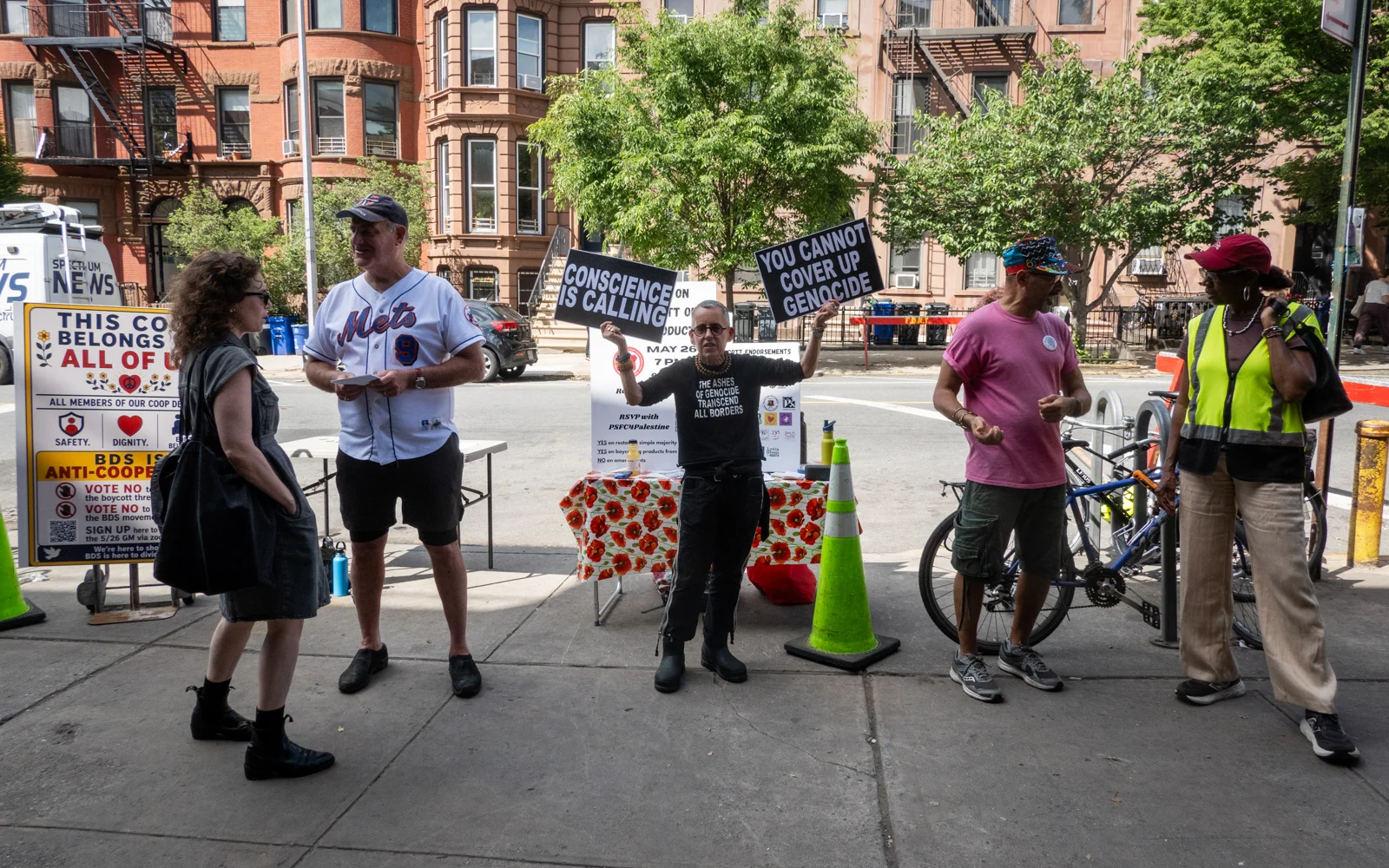
This tension has become especially acute in progressive spaces where many Reform Jews live, work and organize. The campaign to boycott Israeli products at Brooklyn’s Park Slope Food Cooperative is only one example of a broader trend. Looking back at recent years, can we say that we did everything we could in our interactions with progressive partners to thwart the Boycott, Divestment and Sanctions movement? And isn’t defending Israel and the Jewish people also tikkun olam?
It is true that we are seeing worrying signs of narrowing particularism in some quarters of the Jewish world. Elements of the Israeli government that represent a closed-minded chauvinistic particularism are an embarrassment to Israel and world Jewry. The hooligans who violently assault Palestinians in the West Bank are a disgrace. It is Israel’s responsibility to thwart them, on pain of imprisonment, and it is our responsibility to say so.
At the same time, while we may convince ourselves that the main problem is narrowing particularism, the opposite may constitute an even greater challenge in the Diaspora: an expanding universalism threatening to eclipse Judaism’s fundamental command of love for the Jewish people.
The reaction to October 7, and every day since, revealed the rot inside our most cherished Western institutions, moldering and spreading for years. It is more than the disappointment we feel at the hypocrisy or moral failure of this or that university president, media personality, religious or social justice leader, or squad of politicians. It is the entire philosophy of Western liberalism that is under assault. Increasingly we are living a surreal reality. More Jews are massacred in one day than on any day since the Holocaust, and immediately protests erupt against Jews. Israel is accused of genocide, an ancient blood libel dressed up for modern consumption, while the genocidal forces that launched this war are forgiven or forgotten.
Israel has been ruled for most of the past 25 years by right-wing governments. For young American Jews, these governments are the only ones they know. According to a recent NBC poll, two-thirds of Democratic voters sympathize more with Palestinians than with Israel. According to a Harvard/Harris poll, nearly half of young Americans between the ages of 18 and 24 favor Hamas over Israel.
But precisely because it is harder now, we must respond with clarity, courage and moral leadership.
We cannot give credence to gaslighting efforts that seek to sever Zionism from Judaism. This commitment must extend to the institutions of Reform Judaism themselves. It is not enough to say: “We are a Zionist seminary, but liberal education requires us to ordain antizionists.” Under what theory of liberal education are we required to accept outcomes we did not intend and do not want? Under what theory of liberal education is there a requirement to accept, let alone ordain, candidates for the rabbinate and cantorate who do not believe what our movement believes?
Ours is a seminary, which bestows a sacred ordination, not a university graduate degree. It is not that antizionist candidates do not have the right to such beliefs. This is America. They can do what they want and God bless them.
But why our movement? It is not what we believe.
History has already established that an antizionist philosophy is not only catastrophic for the Jewish people — an abysmal misreading of history — but will be emphatically rejected by the vast majority of the world’s Jews. A Diaspora community that disengages from Israel, where half of the remnants of our people live, has no future. Any seminary in word or deed, in principle or impression, acquires the reputation of being hostile to Zionism, a seminary that ordains antizionist clergy, has no future in America.
If we still believe in the enduring commitments of Reform Zionism, we must say so with clarity, courage and moral leadership, and enforce our beliefs across the board.
If not us, then who?