A Sacred Place
A few hours before I went into labor with my first child, I told my husband that I was going to go take the last uninterrupted nap of my life. It was said in jest but I could not have understood how true that would be; how parenthood rattles and reshapes every fiber of your being.
Motherhood took me a few good years to grow into. I felt in some part a sense of loss at identity and possibility. My body, my time, my sense of purpose in the world, the objects of my affection all shifted in an instant. I needed to shed all preconceived notions of self and grow a new skin. I was 27 when I took on the title of “Ema” but feeling it in my bones and in the depths of my soul has been a gradual and exponential process.
Ten years in, there are moments that I wish I could relive and moments I wish I could edit out of the memory reel. There are moments in which I wish that I had been more present and others where I know I was locked in. I just want my kids to know and to feel that they are cared for and are deeply loved; not as a grade on my parenting but because life with love is full and grounding.
Between the logistics of family life, which include blood, sweat, tears and giggles, I sometimes catch myself looking at these kids of mine and my heart flutters. I know that these moments — gossip sessions with my preteen before bedtime, talking theology with my middle child, or sliding down a waterslide with my deliriously happy toddler – are glimpses of perfection; are profoundly sacred. It’s an out of body experience; I want time to slow down and speed up all at one. The days are long and the years are short but their very existence has reshaped me.
On a carpool ride home, picking up my daughter and three of her friends from art class, there was a humming energy in the car. They were high off of two hours of unadulterated creativity and preadolescent sillies. We played a playlist of songs – K-pop Demon Hunters, Disney Ballads, Israeli teeny-bop. I was able to suppress the stress of my day and get into the zone with them. It was glorious. It was a singular moment and it was breathtaking.
Winding through the foggy backroads of suburbia, dropping each child off at their house, I was eventually left alone with my daughter, squealing with euphoria. I didn’t know that this is the me that I could be; would be.
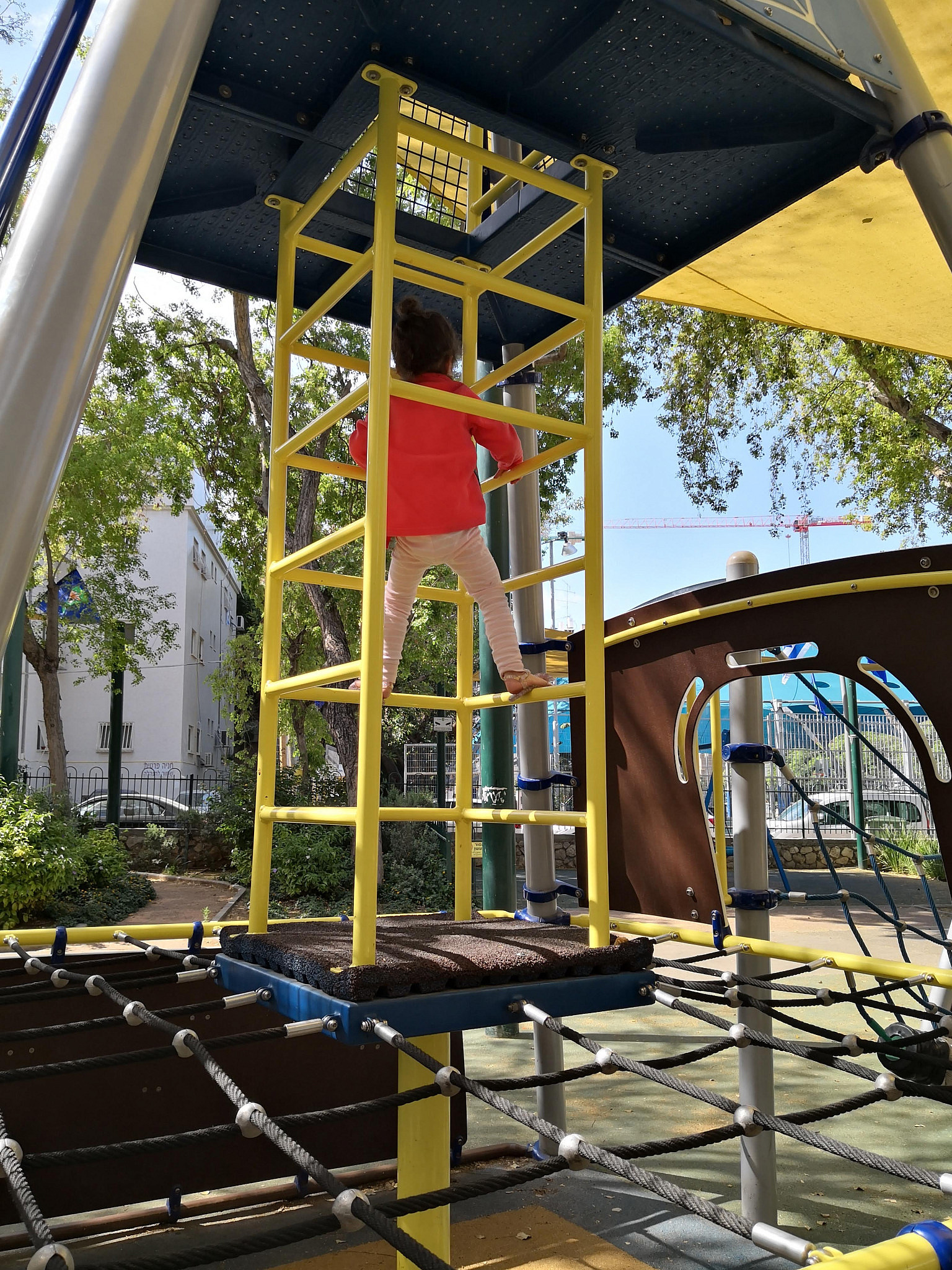
In this week’s parsha, Yaakov, running from his brother, Esau, falls asleep at Mt. Moriah, a site of theological transformation of generations yore. Having dreamt of a ladder reaching the heavens with celestial messengers going up and down, Jacob experiences an intimate and prophetic encounter with God. It’s transformative; an awakening where he reestablishes his place in relationship with a family and tribal covenant.
Jacob, the most spiritually oscillating of the patriarchs (in my opinion,) finds roots in his ancestry, in a place of sacred pain (where his father was to be sacrificed.) He finds his own relationship with himself, with covenant, with God. It moves him inside and out.
Bereshit 28:16
וייקץ יעקב משנתו ויאמר אכן יש יהוה במקום הזה ואנכי לא ידעתי.״
“Surely, there is God in this place, and I didn’t know.”
There are several commentaries on this verse; specifically on the word אכן or “surely.” The Rashbam, 12th century French Tosafist,, understands this to be that Jacob wakes up from his slumber and realizes that this place which he thought to be mundane was in fact not what he had thought it to be. It was holy; a revised opinion on previous understanding.
The Or Hachaim, 18th century Moroccan Kabbalist, understands this word “surely” as unveiling something that had been previously concealed or hidden. Once Jacob understands the power of this site and this moment in God’s presence, he is embarrassed at having not been prepared for this sanctity.
This scene pulls at the heart strings. Jacob, running away from his family, has little left in the world. He has tricked his father, betrayed his brother and is left bereft of all he knew himself to be. His masks stripped away, he cannot hide from himself – his fears, his vulnerabilities – all laid out at the foot of the ladder in his subconscious (or quite conscious) slumber.
The Kotzker Rebbe explains that we can only see truth or seek divinity when our egos are subdued enough to call ourselves liars; when we can make room for something profound and unknown to come into our hearts. You find yourself when you didn’t know you could; when you didn’t even look.
Sitting in the car that night after art, I looked back in the rearview mirror at my daughter who was looking back at me. She smirked with love as I belted out her favorite songs with embarrassing inaccuracy. And as our eyes met, thought of those early days of sleep deprivation, of nursing, of tantrums, of potty training, of lands of make believe, of early morning snuggles and late night gabs. In 10 years, I’ve awoken, been turned inside out and upside down. I didn’t know at first that God was in this place. But now, I can’t unknow that truth.