
A Sacred Religious Duty to Defend Israel
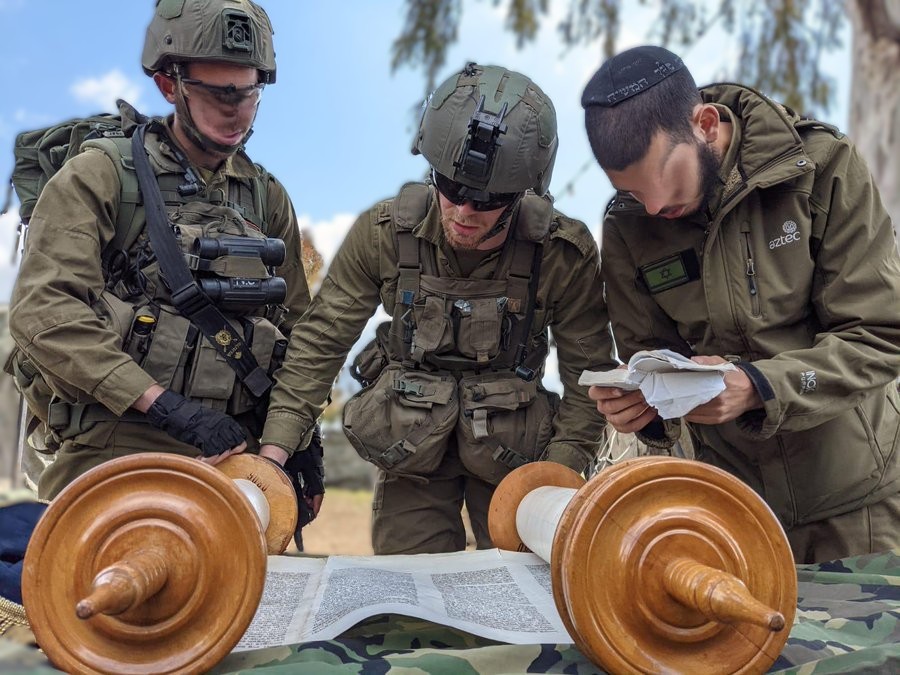
Despite waging wars and existential threats, we’ve seen a painful question once again pop up over recent months here in Israel. This issue is polarizing a nation that has all but been paralyzed by the past two years of security unrest. And yet, we cannot ignore it or turn a blind eye to its repercussions. The painful question is coming to a pinnacle: Who is obligated to serve in Israel’s defense and protect us from our mortal enemies?
For some, particularly within ultra-Orthodox or ideologically isolationist circles, the concept of military service in a “secular army” is fraught with theological tension. Yet, the Torah, our eternal guide, speaks with stunning clarity about the sanctity of defending Jewish life and the Land promised to our forefathers.
There is nothing wrong in upholding ancient traditions and high religious standards; in fact, those traditions have shaped who we are as a nation and must be cherished and revered. However, those very traditions should not be used as a way of ducking out on your national responsibility.
It boils down to one main point, defending our ancestral Homeland is a Mitzvah.
From the moment Avraham Aveinu was sent to discover the land of Canaan in this week’s Parsha, he was charged with its defense. Later, when Yehoshua crossed the Jordan River after forty years of wandering in the desert, he was commanded to conquer the Land of Israel for the People of Israel. Later, when King David battled Goliath and fought to establish the eternal capital of Israel in Jerusalem, it was not a secular battle but a deeply religious commitment to our heritage and our G-d. For the past two thousand years, our ancestors gazed eastward to Eretz Yisrael for the hope and dream of once again living in this holy land. Today, as that dream has miraculously turned into reality, even though it might be flawed in many ways, we cannot abandon it. We cannot forsake our claim to Zion.
Throughout the millennia, our sages have taught these lessons as well. The Ramban (Nachmanides), in his commentary on Sefer Bamidbar (33:53), writes explicitly that settling alone in the Land of Israel is not enough; there is a mitzvat aseh, a positive commandment, incumbent upon all generations and all Jews to come to its defense.
Whether you support the modern Zionist dream or not, our biblical covenant with the land is paramount. The Torah commands, “You shall possess the land and dwell in it, for to you have I given the land to possess” (Bamidbar 33:53), it doesn’t clarify that this obligation pertains only if you support the rulers. The Israel Defense Forces was not invented to protect the supporters of Herzl or Jabotinsky alone; it is a national directive and responsibility.
It befalls us all to live in the Land. To love the Land. And to protect all Jews in the land from harm’s way – regardless of religious observance or belief.
The Obligation is to Defend Life
Beyond political or national duty lies an even more sacred one — pikuach nefesh, the saving of life. The Gemara teaches that one who saves a single life is as if he has saved an entire world. The inverse is tragically also true: one who stands idly by when his brother’s blood is spilled transgresses the commandment, “Do not stand upon the blood of your neighbor” (Vayikra 19:16).
Satirical videos that I have seen circulating around social media depicting an ultra-Orthodox Jew calling for emergency assistance during a crisis, only to be asked, to which political segment of society he belongs to know what kind of assistance to dispatch, is a particularly sad state of affairs, especially in a society that heralds Areyvut, mutual responsibility, as a central ideological tenet and belief.
When Jewish soldiers, either religious or secular, stand in defense of Israel’s borders, they are there not just to protect one section of our society; they are performing the highest form of chesed and mesirut nefesh, self-sacrifice, for the preservation of all of Am Yisrael.
Beyond Politics
There are those who argue that since the State of Israel is secular, it therefore does not represent those who live by “Torah values.” Yet, the Rambam makes no such distinction. When Jews are attacked, regardless of the level of Torah observance, the nation is considered to be in danger, and each and every Jew is bound to defend the nation in an obligatory war.
Donning an IDF uniform does not diminish your commitment to G-d; in fact, it elevates the person to the status of Gevura, heroism. Rav Kook, the first Chief Rabbi of Israel, wrote that “the holiness of defending Israel stems from the holiness of life itself.” In his eyes, every soldier who risks his life for Israel is a partner in the divine unfolding plan of redemption.
The battlefield, he taught, is no less a Makom Kadosh, a place of sanctity, than that of the study halls of Bnei Barak and Meah Shearim.
A Call for Religious Courage
Today, as Israel’s enemies encircle her with international support, our society cannot afford to be divided. It is incumbent on our leaders, political and religious, to rise above Sinat Chinam, baseless hatred between brothers. Have we not learnt from our past mistakes? Is history doomed to repeat itself with the destruction of the Third Temple even before it has been rebuilt?
We cannot afford to let ideological walls divide those who study from those who fight. The Torah never separated the two. So, who are we to?
When Jerusalem’s walls were rebuilt after the Babylonian exile, the stonecutters held holy scriptures in one hand and swords in the other. Let that image of learners and defenders united be our national symbol today.
All Jews, ultra-Orthodox or secular, must raise their voices in prayer and defense for the safety of Israel and of each other; for neither can exist without the other. The Torah commands it, and history demonstrates this fact.