Somaliland
A Seat at the Table – What Israel’s First Ambassador to Somaliland Means for Somaliland.
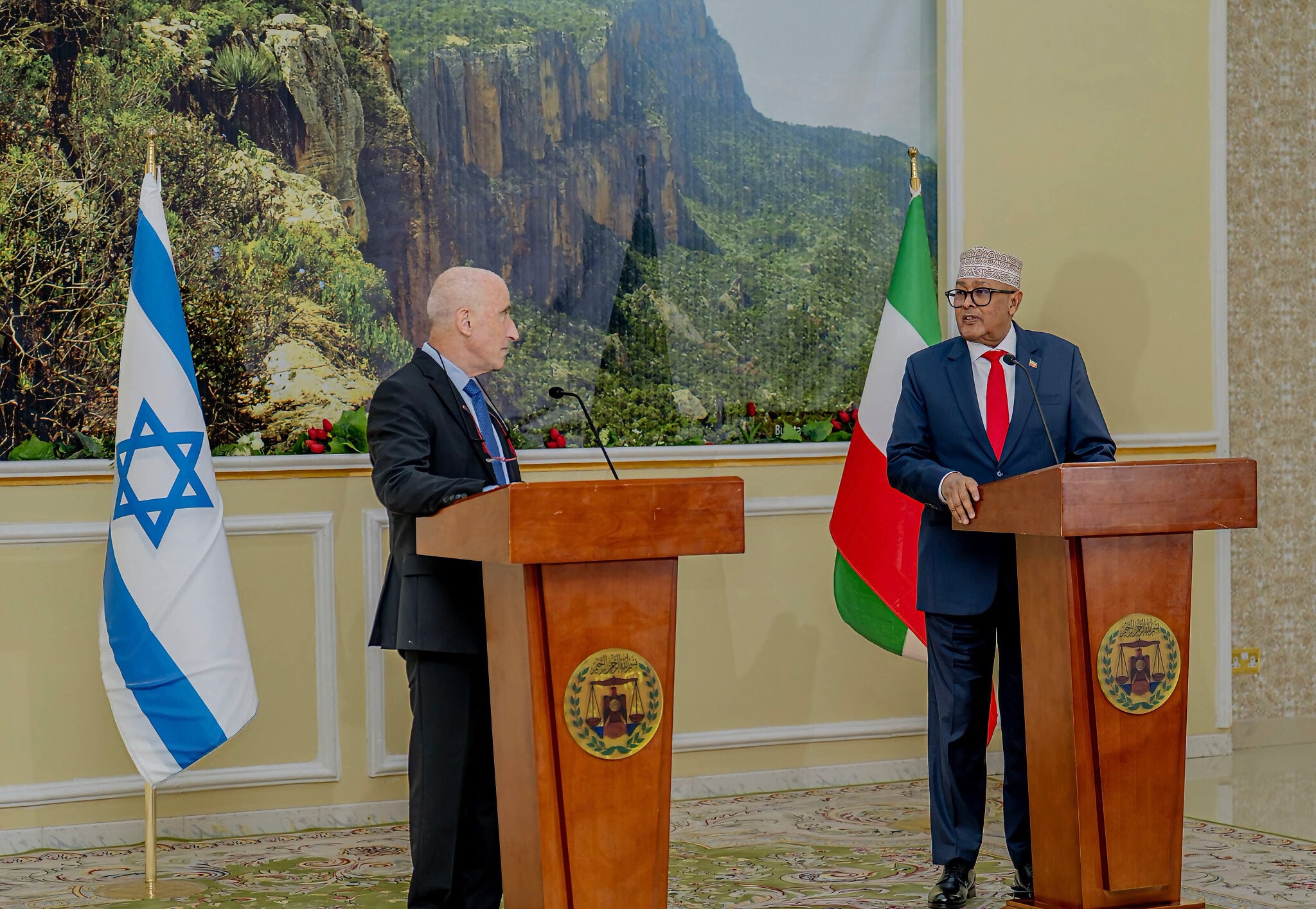
Mohamed Abdullahi (Irro) at the Presidential Palace in Hargeisa.Photo credit: Office of the
President of the Republic of Somaliland. Date: 1 November 2026.
There are moments when a nation’s diplomacy moves beyond statements and begins to reshape its place in the world. The arrival of Israel’s first ambassador to Somaliland, Michael Lotem, is one of them. It is not a ceremonial courtesy. It is evidence that a relationship Somalilanders spent decades hoping for is becoming institutional. When I wrote in The Times of Israel in February that Israel’s recognition had become Somalia’s greatest political challenge, my argument rested on contrast. For 35 years Somaliland has kept its own institutions, held competitive elections and sustained peace, while Mogadishu has struggled to govern. Recognition placed those two realities side by side before the world. An ambassador turns that contrast into a working relationship.
From declaration to diplomacy
The sequence has been rapid. Israel recognised Somaliland on 26 December 2025. Foreign Minister Gideon Sa’ar visited Hargeisa in January. On 18 May, Somaliland’s national day, Dr Mohamed Hagi presented his credentials to President Herzog in Jerusalem, becoming Somaliland’s first ambassador to any country. In June, President Abdirahman Mohamed Abdullahi (Irro) made the first state visit to Israel by a Somaliland leader and opened Somaliland’s embassy in Jerusalem. In between, Israel appointed Lotem, a veteran diplomat who has served in Kenya, Azerbaijan and Kazakhstan, initially as a non-resident ambassador. Recognition is the beginning of diplomacy, not its end. Ambassadors open channels, negotiate agreements and give a relationship continuity beyond any single leader or moment.
What it means for Somalilanders
First, history. In 1960, Israel was among the countries that recognised Somaliland’s independence. In 1988, Hargeisa and Burao were bombed, and thousands were killed or displaced by Siyad Barre Regime military. For families who carry that memory, the struggle for recognition has never been about protocol. It is about dignity and the right of a people to decide their own political future. This moment also carries particular diplomatic significance: it marks the first time a Somaliland president has formally received the credentials of a fully accredited ambassador representing a United Nations member state whose government has recognised Somaliland as an independent state.
Second opportunity. Water scarcity, food insecurity, limited healthcare and youth unemployment remain among Somaliland’s most pressing challenges. Its emerging partnership with Israel offers an opportunity to address these issues through practical cooperation and the transfer of expertise in water management, irrigation, modern agriculture, medical technology and renewable energy. By working closely with its new partner, Somaliland can explore innovative solutions, strengthen local capacity and create opportunities for its younger generation.
Third, visibility. A permanent diplomatic channel allows Somaliland to put its needs and plans in front of a partner every week, not only on rare occasions.
Fourth, a reliable strategic partner. At a time when Somaliland faces diplomatic resistance and political opposition from several regional and international actors—including Somalia, Djibouti, Eritrea, Egypt and Türkiye—building a strong and dependable partnership with Israel carries particular strategic significance for Somaliland.
Strategic maturity
As I have argued in my previous articles, strategic partnerships must be pursued with clarity, foresight and a firm commitment to the national interest. They should be built on transparent agreements, respect for sovereignty, mutual trust and measurable public benefits. Somaliland’s strategic location along the Gulf of Aden and near the Bab el-Mandeb Strait gives it considerable geopolitical and economic significance. This importance has become even more evident as Houthi attacks and threats against commercial shipping in the Red Sea and Gulf of Aden, including vessels linked to Israel, have created serious challenges for maritime security and international trade. This presents an opportunity for Somaliland and its new Israeli partner to strengthen cooperation in maritime security, intelligence-sharing and the protection of vital international shipping routes.
The responsibility of recognition
Recognition earned Somaliland an audience. Governance will decide whether it keeps one. Free and fair elections, an independent press, accountable institutions and protected civil liberties are the national assets behind the case for recognition, and they must hold when they are inconvenient, not only when they are convenient. One ambassador does not resolve every challenge, and one country’s recognition does not guarantee wider acceptance. But history is rarely made in a single dramatic event. It advances through deliberate decisions and relationships that gradually change what the world considers possible.
Welcome to Hargeisa, Ambassador Lotem. The door is open. The responsibility now rests with both countries to make the partnership worthy of the moment.
Related Topics
Related Posts