Oct. 7 Inquiry Bill: Keep It Facts, Not Factions
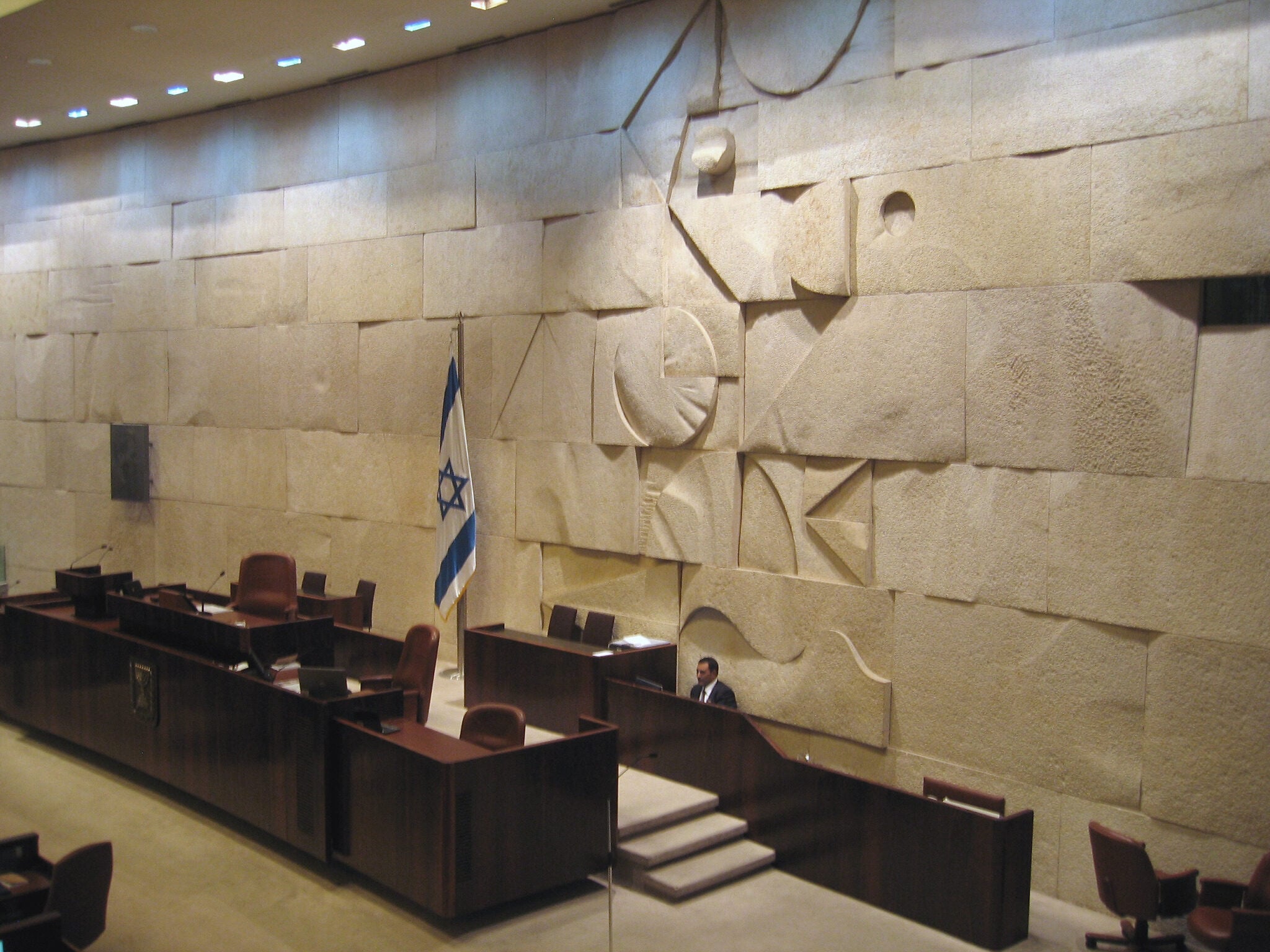
This week, the Knesset approved, in a preliminary reading and by 65 votes to 50, MK Orit Farkash-HaCohen’s bill to establish a state commission of inquiry into the October 7 massacre. This is an important first step, but as the bill moves through the legislative process, the change bloc must remember why the independent nature of the commission is too fundamental a principle to compromise on. What is at stake is not only accountability for October 7, but the very foundations of Israeli democracy.
A commission investigating October 7 and the road that led to it should not represent a side; it should establish what happened. Yet over the past year, another idea has taken root in public discourse, given form in the proposal for a “state-national” commission whose members would be appointed by agreement between the coalition and the opposition, or half by each side. Its logic is simple: the public is divided, so the commission should reflect that division.
But this logic assumes something troubling. It assumes there are two sides to the truth about October 7, and that each side needs a representative to defend its version. We seem to have reached a point where even the investigation of a national catastrophe is seen as a negotiation between narratives, where the question “what happened?” has given way to “whose story is it?” A commission of inquiry is not an arena for bargaining between political versions. It is supposed to test them against evidence and testimony, not to weigh them by the strength of the camps that hold them.
To be sure, there is no view from nowhere. Our knowledge is mediated by language, culture and power, and every investigator brings along a whole world of assumptions and loyalties. That is an important insight, and postmodernism did well to remind us of it. But even postmodernism has its limits. The fact that no investigator is free of perspective does not make all versions equal.
There is a difference between acknowledging that no one holds the absolute truth and giving up on the attempt to establish it. Methods of investigation, rules of evidence and independent institutions exist precisely because no individual judgment can be assumed to be impartial. The answer to the possibility of bias is not to institutionalize bias, but to develop mechanisms that can detect and overcome it. Democracy accepts that citizens hold different opinions, but it cannot survive when each camp has its own facts. There is a truth about what happened, even if no one holds all of it, and the job of an inquiry is to search for it, not to divide it among the camps so that each can keep its own.
What assumptions guided policy in the years leading up to the massacre? What information did the decision-makers have? Which warnings were received, and to whom were they passed on? Which decisions were made, when, and on what basis? These are not questions of right and left, and each of them has an answer, even if it is hard to find. One can disagree about how to interpret the facts, how much weight to give them and what conclusions to draw from them; that is the legitimate political dispute, and it will go on for years. But that disagreement should be grounded in the findings of an inquiry, not substituted for them.
This is exactly the problem with a commission made up of representatives of political camps. The problem is not only the risk of bias, but a structure that builds conflicts of interest into the inquiry itself, creating incentives that can work against uncovering certain facts, whatever the intentions of the individual members. Instead of reducing the investigators’ biases, we turn them into the organizing principle of the inquiry. There is a further problem of principle: the political leadership is itself one of the subjects of the inquiry. Like anyone under investigation, it has the right to present its version to the commission, but it has no right to decide who sits on it.
One might argue that a parity commission could also reach agreement on the facts. But agreement between representatives is not an inquiry. When every finding requires the approval of both camps, each camp holds a veto over the facts that harm it, and the result will be either a lowest-common-denominator compromise or two separate reports. What is needed is not for the camps to agree with each other, but findings that do not depend on their consent.
In fairness, the fear that a commission will go looking for a scapegoat is not imaginary. A significant part of the public does not trust the justice system, and that is a political fact no one can ignore. But it is a problem of trust, and it should be solved sensibly: a broad mandate that is not left in the hands of those under investigation, clear rules of evidence, as much transparency as possible, a right of reply for anyone who may be harmed, professional expertise, no conflicts of interest, and reasoned conclusions that anyone can examine and criticize. These are mechanisms designed to ensure a fair inquiry. Dividing seats among political camps is a mechanism of an entirely different kind. It does not reduce the risk of a scapegoat; it merely guarantees that each camp has someone on hand to make sure the scapegoat is found in the other camp.
Trust in the commission will be built, if at all, through the quality of the investigation, its transparency and the reasoning behind its conclusions, not through the political identity of those who sign them. A commission whose findings are divided in advance along camp lines will convince no one, because each camp will know beforehand what its own representatives will write. The goal is not to force everyone to agree on the facts in advance, nor to accept uncritically whatever the commission concludes. The goal is more modest, and more important: to agree that there is a way of establishing facts that does not depend on which camp we belong to.
That is the difference between a society with deep disagreements and a society that has lost the foundation that allows it to conduct them. Genuine disagreement needs common ground to stand on; without it, we are not arguing with one another, we are simply talking past one another. One of the most important tasks of a commission of inquiry is to restore that common ground to Israeli society: a shared factual account of the hardest day in its history and of the road that led to it, on the basis of which we can go on disagreeing with one another.