
A small Appalachian theatre stages a Jewish classic
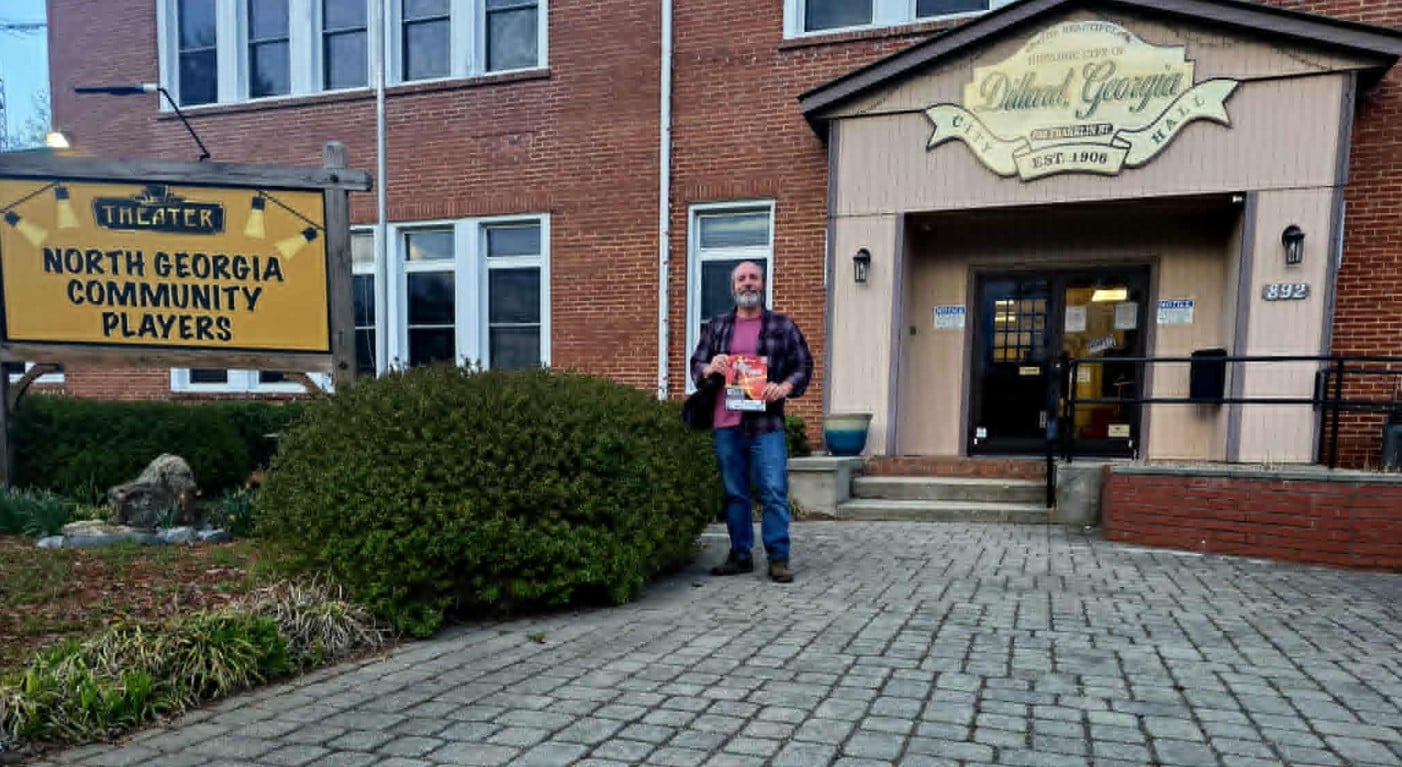
In the mountain town of Dillard, where the Blue Ridge folds into the North Carolina line and the air carries the scent of pine and freshly turned soil, a small theatre stages Fiddler on the Roof. The production comes from a largely non-Jewish cast working in a historic schoolhouse theatre built in 1927. The building’s low roofline and narrow backstage create limits that require careful staging, layered blocking, and close coordination among performers. The intimacy draws audiences into the story of Anatevka, a fictional Jewish village in Imperial Russia whose people confront poverty, persecution, marriage choices, illness, and the demands of tradition.
Anatevka in Appalachia
The timing of this production intersects with renewed attention to antisemitism in the United States and an ongoing war involving Israel. The convergence of these realities gives the work added weight for both local audiences and readers beyond the region.
The director, Rebecca Bilbrey, describes the recent sequence of Jewish-centered productions she has directed as unplanned yet meaningful. Within the past year, she has led productions of Joseph and the Amazing Technicolor Dreamcoat, The Sound of Music, and now Fiddler on the Roof. She postulates the alignment as potentially providential given present tensions, and, wearing a visible cross necklace, expresses clear support for Israel. She explains that her interest in Jewish narratives developed during years of work in New York and Los Angeles, where Jewish artistic traditions continue to influence American theatre and music.
Bilbrey approaches the material with an emphasis on dignity and accuracy. She works to ensure that audiences understand Jewish continuity as a long historical experience rather than a single event. She seeks to create an emotional connection between performers and viewers so that the characters’ struggles feel immediate. She explains that theatre allows audiences to learn and feel through narrative immersion.
Bilbrey believes in her heart that Dillard provides an ideal setting for that immersion. Rabun County lies at the northeastern edge of Georgia, marked by steep ridges, winding roads, and generational ties to land. Families here have long depended on kinship networks to weather economic uncertainty. Agricultural work once defined daily rhythms, and stories of grandparents who grew up with limited material resources remain common. Bilbrey recounts her father’s upbringing as a cotton farmer who received one pair of shoes per year, a memory that reflects the region’s experience of scarcity. She observes that many Appalachian families build their lives on loyalty and cooperation when financial security remains uncertain.
Tevye’s Conversations with God
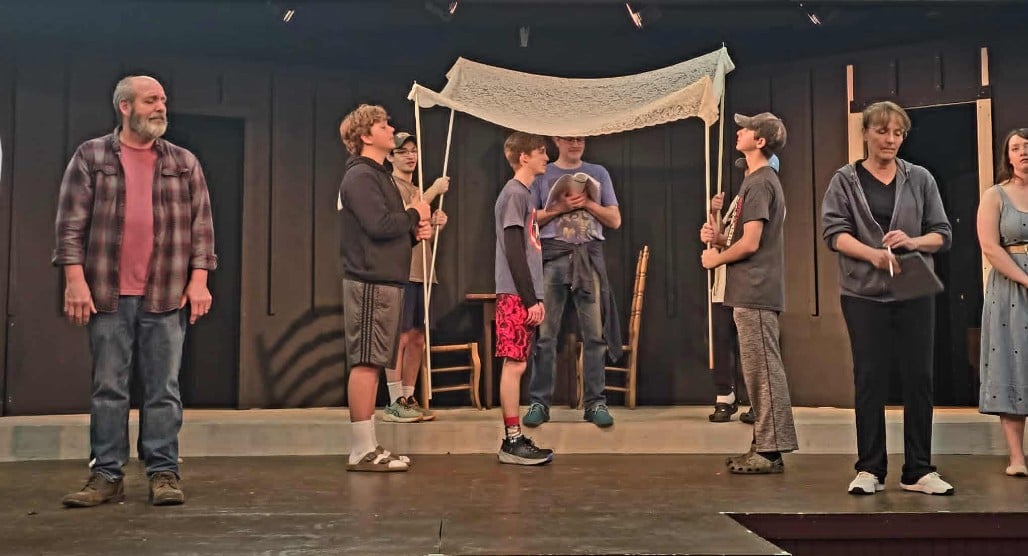
In Anatevka, Tevye the dairyman raises five daughters while negotiating the tension between inherited tradition and emerging autonomy. The actor portraying Tevye brings prior familiarity with the role, having performed it earlier in his career in the Atlanta area. He describes the musical as formative in his development as a performer and credits the story with sustaining his interest in theatre. His physical presence, marked by a tan and full beard, reinforces the image of a middle-aged patriarch shaped by labor and love. He works to deepen his vocal tone to convey the strain of poverty and responsibility rather than present the character as merely comic.
The actor’s approach to Tevye’s conversations with God reflects careful preparation. Rather than directing his gaze upward in a generalized gesture, he selects a fixed point within the theatre architecture, the top of a column, and returns to that location throughout the performance. The technique creates continuity in the character’s spiritual life and helps him treat each prayer as an exchange rather than a monologue. He explains that the consistent focal point allows him to speak as though addressing God directly.
He also uses the prayer shawl as a deliberate symbol of reverence. During moments when dialogue references expulsion or suffering, he reaches for the garment to signal gravity within the narrative. The gesture helps ground scenes in religious significance that might otherwise drift toward humor alone, reinforcing the historical seriousness embedded in the script. He emphasizes the importance of maintaining respect for orthodoxy and avoids exaggerated irony when delivering lines that express hardship. He describes Jewish humor as rooted in survival, delivered with restraint, and believes that humor sustains individuals facing prolonged adversity.
The production benefits from the presence of Joshua Peck, the only Jewish cast member, who portrays Lazar Wolf. Peck works professionally in legal communications and writing, and provides insight into Hebrew pronunciation and ritual gesture. His participation supports the cast’s effort to approach Jewish tradition with humility and accuracy.

Marriage, Duty, and a Stage That Demands Intimacy
Golda, Tevye’s wife, embodies continuity within the household. The actress portraying Golda, Joy Ruhe, returns to the theatre after a hiatus spent raising children and making a home for her family. She has performed in more than 30 productions across her career and draws from decades of marriage to interpret Golda’s sense of commitment. She presents the character as a pragmatic Mrs. Bennet whose primary concern lies in securing stability for her daughters through advantageous marriages, much like the matriarch created by Jane Austen in Pride and Prejudice. Golda expresses love through provision rather than verbal affirmation, and her perspective shifts as the story unfolds. Ruhe explains that Golda ultimately concludes that while a husband must provide for his wife and family, love and emotional compatibility must also exist.
The story’s sequence of marriages illustrates the tension between preservation and adaptation. Each daughter’s choice introduces greater distance from established norms. The progression culminates in a union outside the Jewish faith, a development that forces Tevye and Golda to confront the limits of their acceptance. Ruhe notes that Golda desires a continued connection with her cast-off daughter even when tradition restricts her response. She portrays the character as a mother whose instincts toward protection persist despite social pressure.
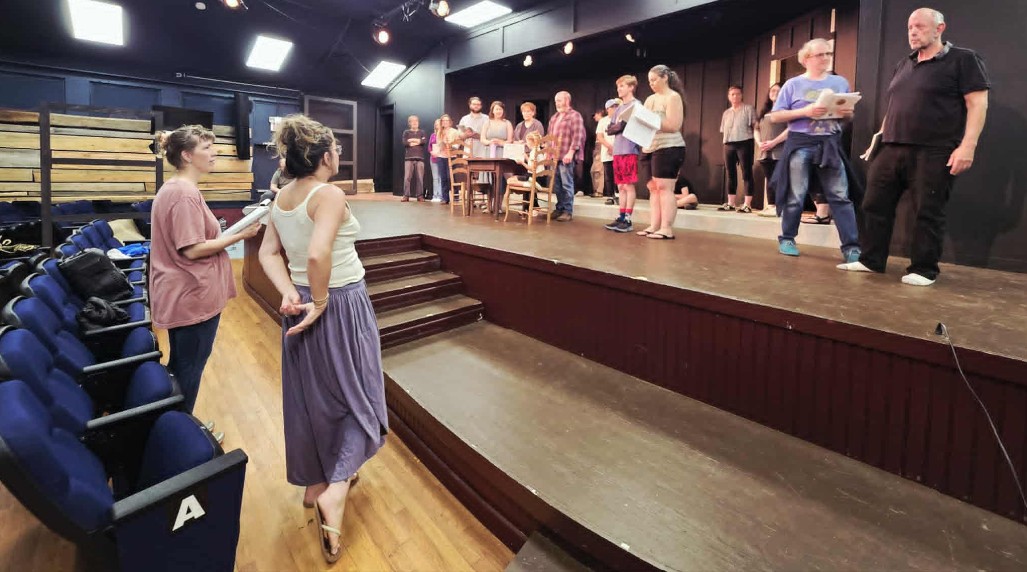
The small theatre in Dillard operates as a nonprofit community organization that encourages participation across generations, including children, meaning the stage gets crowded. Yet, the theatre’s intimacy allows audiences to observe subtle facial expressions and gestures that might be lost in larger venues. The production relies on layered staging that uses aisles and audience proximity to create depth within limited dimensions, especially in sequences like “Tradition.”
Rising Antisemitism & the Importance of Storytelling
Recent reports from organizations tracking antisemitic incidents show an increase in harassment, vandalism, and intimidation directed at Jewish institutions and individuals in the United States. Jewish communities have expanded security measures at synagogues and schools. The rise in antisemitic rhetoric appears on both the political right and left and often draws on longstanding conspiracy theories. The historical memory of expulsion depicted in Fiddler on the Roof echoes present concerns about belonging and safety.
The war in Gaza following the October 7, 2023 attacks by Hamas continues to shape international discourse. Israel’s military operations seek to dismantle Hamas infrastructure and secure the release of hostages taken during the assault. The conflict has produced political debate across global audiences. Tension involving Iran contributes to uncertainty regarding Middle Eastern and even global stability. These developments influence Jewish communities worldwide, many of whom express concern regarding rising hostility.
Bilbrey notes that theatre can encourage empathy when audiences encounter unfamiliar traditions and times of stress. She believes storytelling allows viewers to experience perspectives that might otherwise remain distant. She describes the purpose of community theatre as creating a shared emotional experience that fosters connection.
The Human Struggle Continues
The Appalachian setting deepens the story’s resonance because local audiences recognize patterns of economic vulnerability and reliance on communal bonds. Families in mountain regions have long navigated limited wages, illness without extensive medical access, and the demands of sustaining households comprised of infants and grandparents.
The theatre in Dillard stands far from the historical geography of the Pale of Settlement, yet the narrative of Anatevka finds recognition among audiences who understand the importance of family and moral responsibility. The story invites reflection on the choices individuals make when confronted with hardship and social change, themes as relevant today as in Tzarist Russia.
Across regions and centuries, families continue to negotiate the balance between loyalty to tradition and openness to transformation. The people of Anatevka and the residents of Appalachia share awareness that material wealth alone does not secure dignity. Relationships sustained through commitment, faith, and tradition serve as the foundation for the endurance of communities.
The story of Fiddler on the Roof endures because it addresses the conditions that define human life: the need to earn a living, the desire to raise children in safety, the search for meaning in suffering, and the obligation to treat others with fairness. Communities determine whether they become sources of blessing or harm through daily choices shaped by conscience.
In a small Appalachian theatre, performers gather to tell a Jewish story with attention to detail and respect for its origins. The narrative speaks to audiences who recognize that the preservation of dignity depends upon the willingness to see one another as neighbors rather than strangers.
So, welcome, my friends, to the little village of Dillard, which, in its own way, looks a little like Anatevka.