Why I Write – l’dor v’dor
The tagline of The Jew News Review is l’dor v’dor.
From generation to generation.
When I launched this publication nearly five years ago, I chose those words because they captured something essential about Jewish life: the responsibility each generation bears to pass something meaningful to the next.
For nearly two years, much of my writing has focused on threats to Jewish life. October 7. The hostages. Antisemitism. Iran. Campus protests. Israel’s wars.
Those conversations mattered then, and they still matter now.
The Jewish people are living through one of the most consequential periods in modern Jewish history, and I have felt an obligation to write about it. But that was never the only reason I started The Jew News Review.
One of my goals was much simpler. I wanted my children, nieces, nephews, and now my grandchildren to feel connected to something larger than themselves. And recently, that raised a more foundational question.
What exactly am I trying to preserve?
The answer, I realized, has less to do with the threats we face than with what generations of Jews believed was worth preserving. That realization came into sharper focus recently after learning more about Dara Horn, author of the acclaimed book People Love Dead Jews, and her new Tell Institute.
One of the themes running through Horn’s work is that people often know what happened to Jews while knowing far less about what Jews actually believed, taught, or contributed. We know the tragedies. We know the persecutions. We know the Holocaust. Increasingly, we know October 7. What we often know far less about is what Jews were trying to preserve all along.
That struck me because, in my own way, I had fallen into the same trap. I had spent a great deal of time explaining why Jewish life deserves defending and much less time explaining why Jewish life has been worth preserving.
In archaeology, a tel is a hill formed from centuries of accumulated civilizations built upon the same site. Each generation leaves something behind. Each layer helps explain the ones above it. It struck me as a fitting metaphor for the question I was trying to answer.
What was so valuable that generation after generation refused to let it disappear?
People do not carry a tradition across three thousand years merely because others hate them.
They carry it because they love something about it.
The answers are many, but three stand out to me: the dignity of every human being, the gift of rest, and the obligation to learn.
Together they help explain why generation after generation chose to carry this tradition forward.
The Most Radical Idea in Human History
If you are reading this in America, chances are you already believe many of the values that emerged from Jewish thought.
You likely believe that every human life possesses inherent worth. You likely believe that rulers should be accountable to moral law. You likely believe that society has obligations to the vulnerable and that justice should apply equally to rich and poor.
Today these assumptions feel self-evident. For most of human history, they were not.
The ancient world was built on hierarchy. Kings stood above ordinary people. Nobles stood above commoners. Masters stood above servants. Power itself was often viewed as evidence of virtue.
Into that world came one of Judaism’s most radical ideas: that every human being is created b’tzelem Elohim, in the image of God.
In a world organized around status and rank, divine worth was not reserved for kings, priests, rabbis or nobles. It belonged to everyone.
The Hebrew Bible returned repeatedly to this theme. The widow mattered. The orphan mattered. The stranger mattered. The prophets challenged rulers and reminded them that power itself did not confer moral legitimacy. A king could be judged by a law higher than himself.
Today these principles are embraced by billions of people around the world. Many reached the broader world through Christianity and later through Western civilization. Most Americans who embrace them do not think of them as Jewish ideas, nor should they. The success of an idea is not measured by ownership but by adoption.
The greatest ideas eventually become part of humanity’s shared inheritance.
Shabbat – Welcome to the Weekend
Judaism’s contribution to human dignity may have been its most profound gift. But it was not its only one.
Judaism also gave the world something so familiar that we rarely stop to think about it: the radical idea that human beings deserve rest.
Every week, Jews pause. For a few hours, the endless pursuit of productivity, wealth, status, and ambition gives way to family, community, reflection, and gratitude.
For most of human history, this was a remarkable concept. The ancient world knew plenty about labor. It knew very little about rest. Yet Shabbat insisted that human worth could not be measured solely by what a person produced. It created a recurring interruption in the pursuit of power and wealth and reminded people that they were more than workers, consumers, or economic units.
Today weekends are so deeply woven into modern life that we scarcely notice them. Yet the idea that every person deserves time for rest, family, and renewal owes more than most people realize to a tradition that has been practicing it for thousands of years.
Two Jews, Three Opinions – The Obligation to Learn
If Judaism has a superpower, it may be this: the belief that learning is both a privilege and an obligation.
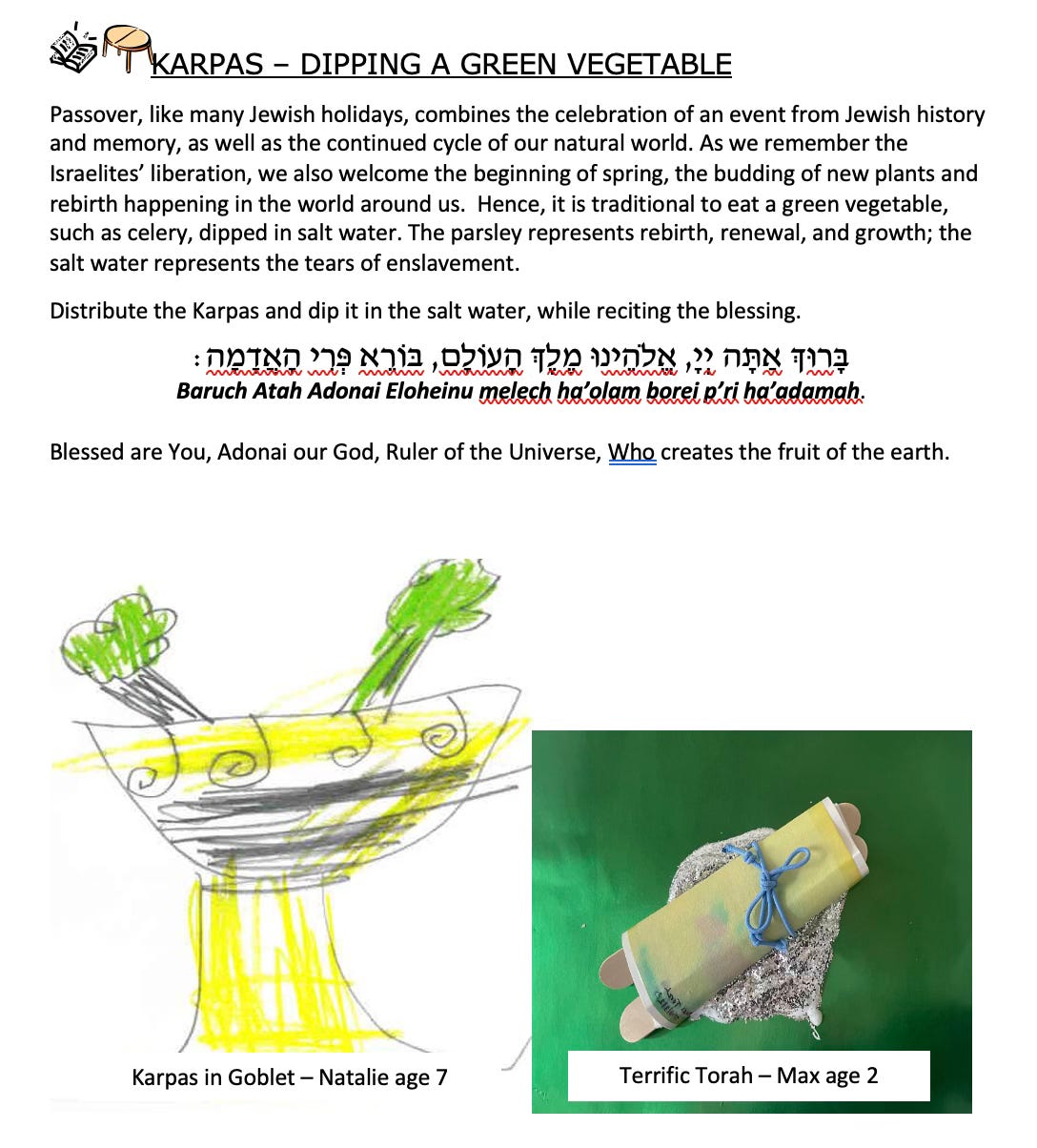
Every year, my family gathers around the seder table and retells the story of the Exodus. Like many Jewish families, we use a Haggadah. Unlike most families, ours includes personal reflections, family stories, and Judaica artwork created over the years by our children, grandchildren, nieces and nephews.
Every Passover, another layer gets added.
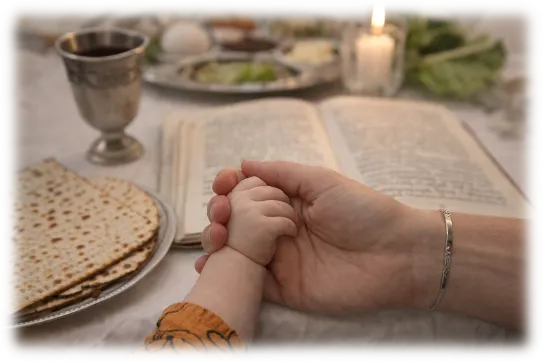
A drawing. A reflection. A small hand reaching into an ancient story. A new voice joining an ancient conversation.
In one sense, it is simply a family project. In another, it is Judaism doing what it has always done. Taking an ancient story and making it personal enough that the next generation wants to claim it as their own.
The seder is, at its heart, an educational experience. Questions are encouraged. Children are placed at the center. The story is retold, debated, interpreted, and connected to the present.
The goal is not merely to remember. The goal is to teach. Generation after generation.
L’dor v’dor.
The obligation to learn, to question, and to teach helped create a culture that prizes literacy, inquiry, and education. Like so many Jewish ideas, those values eventually spread far beyond the Jewish community.
These are hardly the only gifts Judaism has given the world.
We could spend equal time discussing tzedakah and the obligation to care for the vulnerable. We could explore the Jewish emphasis on communal responsibility, justice, and repairing a broken world. We could examine the ways those ideas eventually found expression in hospitals, charities, universities, civil rights movements, Nobel prizes, and even the modern State of Israel.
Those are stories for another day.
The older I get, the more I find myself thinking about what we pass on. In recent years, I have spent a great deal of time explaining why Jewish life deserves defending. That work remains necessary.
But perhaps it is equally important to remember what generations of Jews worked so hard to preserve.
When I think about my grandchildren sitting around our seder table, adding their artwork to our family Haggadah and asking the same questions that Jews have asked for centuries, I am reminded that preserving the past is only part of the story.
The larger challenge is deciding what deserves to be carried into the future. That, ultimately, is what l’dor v’dor means to me. Not simply remembering what came before us, but understanding why it mattered and deciding it is worth carrying forward.
So that another generation can add its own layer to the story.
One of the pages from our family Haggadah. Another layer added to the story.