A story larger than ourselves
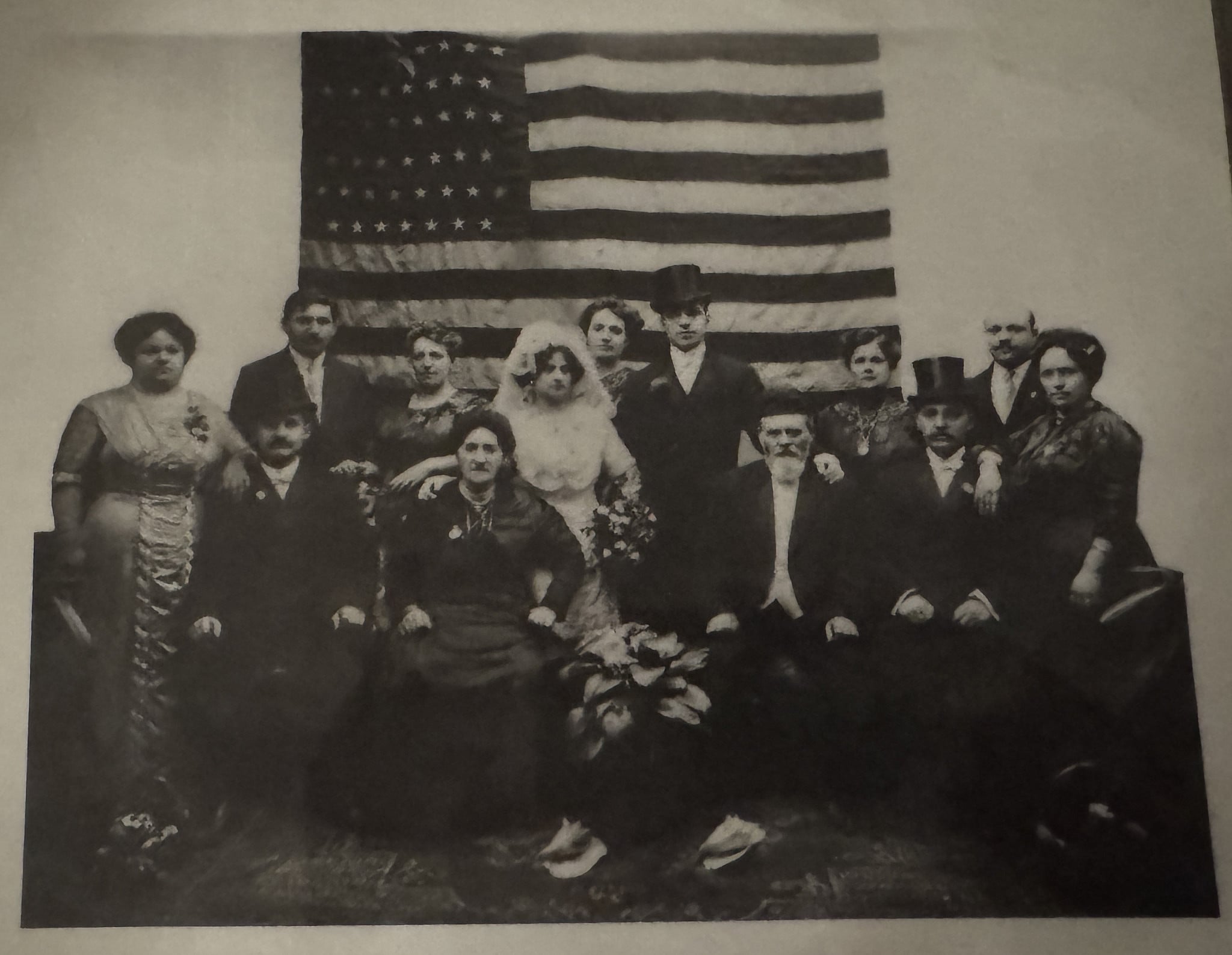
Among my family’s treasured possessions is a wedding photograph from the early 20th century. What makes the image so compelling is not simply the faces of my ancestors, but the story it tells about a family in transition. The photo captures an intergenerational bridal party of Jewish immigrants standing proudly before a large American flag.
This flag was more backdrop than background. For many immigrants at that time, patriotic symbols expressed gratitude for the opportunities and freedoms of their adopted homeland.
As America prepares to celebrate its 250th anniversary one month from this Shabbat, I find myself returning to that photograph. We have other pictures of Max and Libby Mirkin, but why did this one become a family heirloom?
In the Torah portion, BeHa’alotkha, we encounter a fascinating episode that offers an answer.
As the Israelites prepared the Paschal offering in the wilderness, a group approached Moses and Aaron with an urgent request. Having become ritually impure while caring for a corpse, they were unable to participate in the Korban Pesach. Yet rather than accepting their exclusion, they asked: “Lamah nigara? – Why should we be diminished by not offering God’s sacrifice at its appointed time among the Children of Israel?” (Numbers 9:7).
Sforno explains that these men struggled to understand how fulfilling one mitzvah, caring for the dead, could prevent them from participating in another. Their request was not born of entitlement but of a sincere desire to remain part of this defining communal moment.
The men who approached Moses understood that Passover was more than a ritual. For them, to miss the centerpiece of Passover was to risk standing outside the story that unites the Jewish people.
Their plea for inclusion led to one of the Torah’s most remarkable innovations, namely Pesach Sheni. The Second Passover represents the quintessential “second chance,” offering those unable to participate in the original sacrifice another opportunity to take part in a shared communal ritual.
What appears to be a technical, legal accommodation teaches a deeper truth about Jewish life: belonging matters.
This concern resonates throughout Jewish tradition. Every year at the Seder, we welcome all who are hungry and are troubled when the “wicked child” appears to distance himself from the community. Our sages go even further, teaching that every Jewish soul stood together at Sinai. Whether separated by time, geography, or circumstance, every generation is invited into the Covenant and the unfolding story of the Jewish people.
Perhaps that is why this passage feels especially relevant as I look at our family photo, in advance of America’s Semiquincentennial.
Most Americans today are not descended from those who signed the Declaration of Independence. My own great-grandparents certainly were not. These Russian immigrants arrived generations later seeking safety, freedom, and the opportunity to build a better future. Yet almost from the moment they arrived at Ellis Island, America became their home.
In that wedding photograph, with the American flag prominently displayed, they were doing something similar to the Jews in our parashah. They were claiming a place in a story larger than themselves.
The upcoming Semiquincentennial gives us the chance to do the same. One month from this Shabbat, Americans will mark the 250th anniversary of the Declaration of Independence. This milestone calls not only for celebration, but for ritual: gathering around tables, asking questions, telling stories, and reading The Declaration of Independence aloud. Further, The America@250 Seder can help families and communities consider what freedom requires of us today.
The words of President Ronald Reagan remind us of the vital responsibility of transmitting civic and sacred values to the next generation: “Freedom is never more than one generation away from extinction. It has to be fought for and defended by each generation.”
Like the Israelites whose question inspired Pesach Sheni, we too have the chance to claim our place in a story larger than ourselves. At this milestone moment, may we take our place in the American story, not as spectators, but as authors and stewards of its next chapter.