A Strange Yom Kippur on the Gaza Border
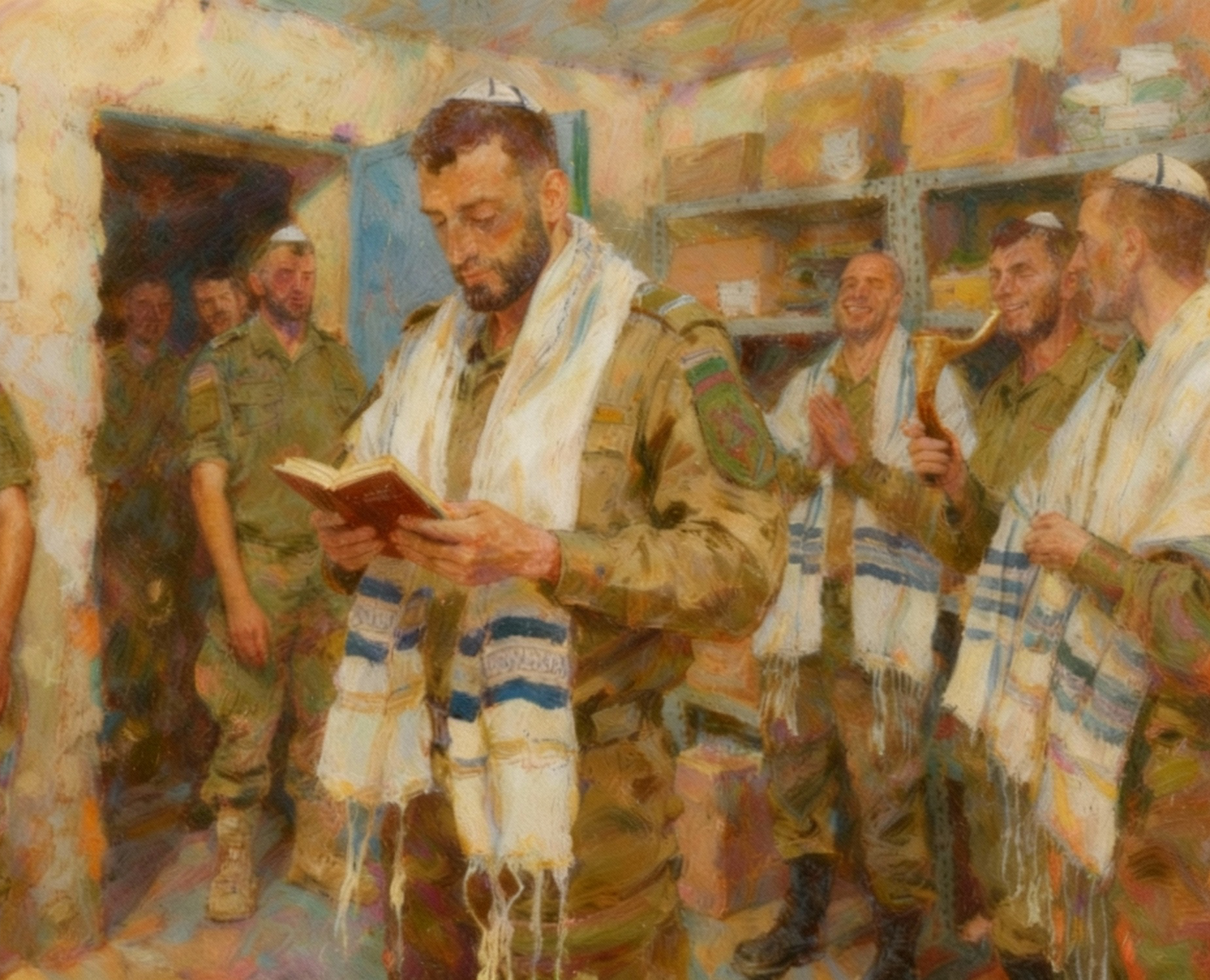
This is the story of one soldier — my son Arky — whose experiences on his base near the Gaza border this past Yom Kippur were too vivid and unusual to go unrecorded.
I write them down here, so that the details — the moments that were so Yom Kippur and so not Yom Kippur at the same time — will not fade away. There are no heroic war stories ahead, no tense drama, and no profound lessons. Rather, there is a window into one man’s experience — how the topsy-turvy world of war can take the familiar and turn it strangely new and different.
One more thing: there’s a fair bit of Hebrew prayer jargon ahead. If you’re familiar with davening (the prayer services), enjoy the ride. If not, you might want to turn back now, before this train leaves the station.
Let’s get to it.
—
The underlying description would have to be “surreal.”
So many things happened before, during — and even after — Yom Kippur this year that felt utterly… un-Yom-Kippurish!
A few days prior to Yom Kippur, Arky was asked to be the Chazzan for Yom Kippur Musaf on his base. He had done Mincha a number of times before, but Musaf was a whole different ball game. He felt very unprepared, yet excited by the challenge.
Musaf is filled with twists and detours in the prayers, including soaring religious crescendos (“who shall live and who shall die” is pretty heady stuff!). Some of the different sections feature their own special nusach (such as the Selichot, the Avoda, etc.). The service runs more like 2.5 hours, with no breaks, meaning that more vocal stamina is needed, not to mention a greater variety of tunes.
Leading a group as diverse as theirs — Ashkenazim and Sephardim, Yemenites, Moroccans, etc. — can be daunting. The upside was that, having gone to Yeshiva with boys from a variety of countries, Arky was already familiar with many of their tunes and piyuttim. But there was still a lot to figure out.
One thing working in his favor was that everyone there was in the same boat — they were used to working with one another, their camaraderie bridging their cultural divides. They laughed together. They confronted the ugliest faces of war together. They had each others’ backs. They were like family — possibly tighter than family.
In the big picture, Yom Kippur Musaf — even if it turned out to be different than what they knew from their homes and childhood — was not going to make or break the unit. But it was still his first Yom Kippur Musaf, and he wanted it to be as memorable as possible for as many of his fellow soldiers as possible.
—
To whatever degree attainable, they tried to keep life regular on base. There is a long-standing custom of men going to the Mikvah on Erev Yom Kippur, which they didn’t want to miss. Their commander was sympathetic and allowed a group of them to commandeer a Hummer to drive to the nearest Jewish city and find a Mikvah.
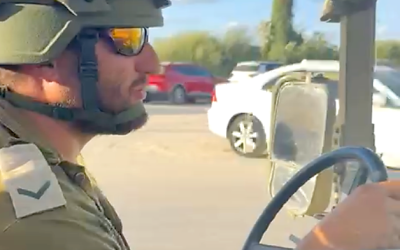
Imagine the face of the man in charge of the ritual bathhouse as a military vehicle pulled up, soldiers piling out in uniform, rifles in tow, marching straight into his sacred space.
Surreal.
The olive-skinned older gentleman couldn’t have been more gracious.
“None of you is paying — it’s on the house!
“Here are fresh towels for all of you!
“Hashem should watch over you always!”
—
Their unit, which deals with search and rescue for fallen soldiers, has, thankfully, not been too busy lately. But that doesn’t mean they’ve been sitting around all day playing cards. The IDF has kept them busy with various drills, both in their specialty and in general army techniques. So while Arky had expected more downtime to prepare himself for the davening, it just didn’t happen. He arrived hot at Yom Kippur’s doorstep without everything firmly worked out — either in his head or in notes scribbled in his Machzor.
Evening approached, and as the solemn day commenced, a 30–40-strong group assembled in the repurposed dining hall for Kol Nidrei. Awaiting them were decorative cards with a custom Hineni Muchan prayer to be recited by soldiers who are required to fulfill their Mitzvah by eating on Judaism’s most famous day of fasting.
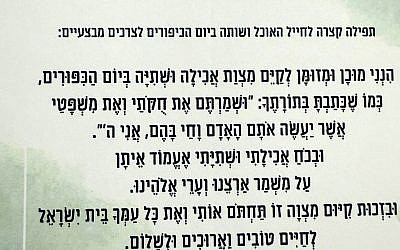
Surreal.
As per the instructions of the IDF Rabbinate, they were ordered to spend Yom Kippur eating and drinking Shiurim — small amounts not halachically considered eating — so that if they needed to suddenly leave for a mission, rather than being depleted, their bodies would be in a state of readiness for the grueling and gruesome intensity required of their work. They would grab a quick bite on their way out the door, and that, combined with the Shiurim, would leave them in good stead.
The nighttime Tefillah began. It was strong and meaningful.
—
The dawn of Yom Kippur day saw many soldiers heading off to Shacharit.
Not Arky. He had responsibilities prior to his stint as Chazzan for Musaf.
He headed to the gate for a shift of Shmira — guard duty — opening and closing the gate for vehicles entering and exiting the base. On a day when he was used to taking extra care not to violate any of the Shabbat-like restrictions, pushing the buttons to open and shut the gate was an uncomfortable experience. It took him back to his service in the Paratroops 14 years ago, when he was guarding in Hebron, when many a Shabbat was spent doing traffic control.
Surreal.
His shift ended. He headed to the makeshift Shul, and donned his Kittel on top of his uniform.
This wasn’t always his Kittel. It was his Saba’s Kittel, which was given to Arky when his grandfather passed away 13 years ago. Saba was a veteran of the World War II U.S. Army Air Force. Seeing his grandsons, Avi and Arky, in the uniform of the IDF gave him nachas beyond words. For his 90th birthday, the brothers gave him a paratrooper’s beret adorned with Air Force wings, representing the forces they served in at the time. Saba affixed it on the wall next to his favorite recliner, and it accompanied him every day until his death.
Now Arky was slipping Saba’s Kittel over a very real, very active Israel-Army uniform.
Surreal. SO surreal.
—
Considerably more cozy than their crowd the previous eve, Arky was number 12 to the Minyan, which had reached Kriyat HaTorah by the time he finished his shift and arrived. It would not be long before it would be time for his Musaf debut.
Taking a breath, he stepped up to the Bima and did his thing. His voice was strong. He tried to be conscious of the varying customs, and incorporate multi-cultural tunes. He tried to be wary of the time, though by now the guys knew him well enough to expect a lot of singing, dancing, and jumping around. In fact, he probably sweats as much while leading a typical Shabbat Musaf as he does in his post-Shabbat CrossFit routine.
Cognizant of the need to keep consuming the Shiurim, he refilled his small cup from time to time and took a swig.
On Yom Kippur.
On the Bima.
During Tefillah.
Surreal.
—
As they reached the storied Unetaneh Tokef prayer, the congregation became the unexpected beneficiaries of audio effects emanating from the Gaza side of the border.
Mi yichyeh — who shall live.
BOOM!!!
Mi yamut — who shall die.
BOOM!!! BOOM!!!!
Did we mention surreal?
—
When he prostrated for Aleinu, he had a sense of déjà vu. How many years had he stood by his father’s side, serving as his right-hand man (and sometimes left-hand man), assisting him as he rose from his bowing in Shul? And now it was Arky who was flanked by two able-bodied soldiers, who lifted him back to his feet.
—
Things were moving along more smoothly than he had expected. Even the Sephardim were getting into the lively, very-Ashkenazi tunes.
They were in the Avoda section when he felt a tap on the shoulder.
“We need to grab six men for an unexpected, urgent mission. You’re losing your Minyan. Finish up now.”
He skipped the rest of the Avoda, and rushed through the end of the Amida. His already-unconventional Tefillah had just leapt to a new plane of strangeness.
They finished up the rest of the davening as best they could. Despite the truncated finish, their brotherhood and the spirit of the prayers were elevating and unforgettable.
—
In the afternoon there was another call. This time Arky was among the group summoned. The nutritional reserve from the Shiurim alone would not be enough. The five of them quickly began to eat.
Minutes later, as they prepared to head out the door, the order came down: “The mission was canceled.” There was not much more they could do than roll their eyes.
—
The time for Neila rolled around, and it was led in true Sephardi tradition. The atmosphere of their Selichot is just as reverent as their Ashkenazi brethren (if not more), but less encumbered with dread, and more upbeat, both in content and musical composition. Though Ashkenazim often poke fun at the fact that Sephardim begin reciting Selichot at the beginning of Elul, the joke is on them. Sephardim actually enjoy the Selichot process, reciting the same comforting paragraphs daily. Neila is a culmination of 40 days of uniting in uplifting prayer, and the fervor of this final recitation is awe-inspiring.
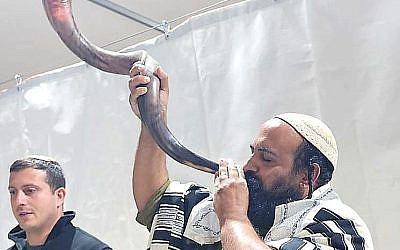
Neila in Ashkenazi communities ends with a Tekia Gedolah. Depending on the lungs and stamina of the blower, that usually goes for 15–30 seconds, sometimes longer. Yemenites have a similar tradition, but end instead with the sound of the Teruah.
The staccato blasts echoed off the walls, going on and on, electrifying the air in the makeshift Shul for a good half minute.
—
Yom Kippur was done. A very strange day, indeed. It was time to eat.
Or not.
Food for the break-fast meal had not yet arrived at the base.
—
Four hours later, their dinner arrived.
What can one say? Strange things happen in the army, but if you’re ready for anything, it’s all good. And that’s exactly the story of this Yom Kippur.
It was surreal.
It was unpredictable.
And it was utterly unforgettable.