
A strong shekel doesn’t strengthen Israeli hi-tech
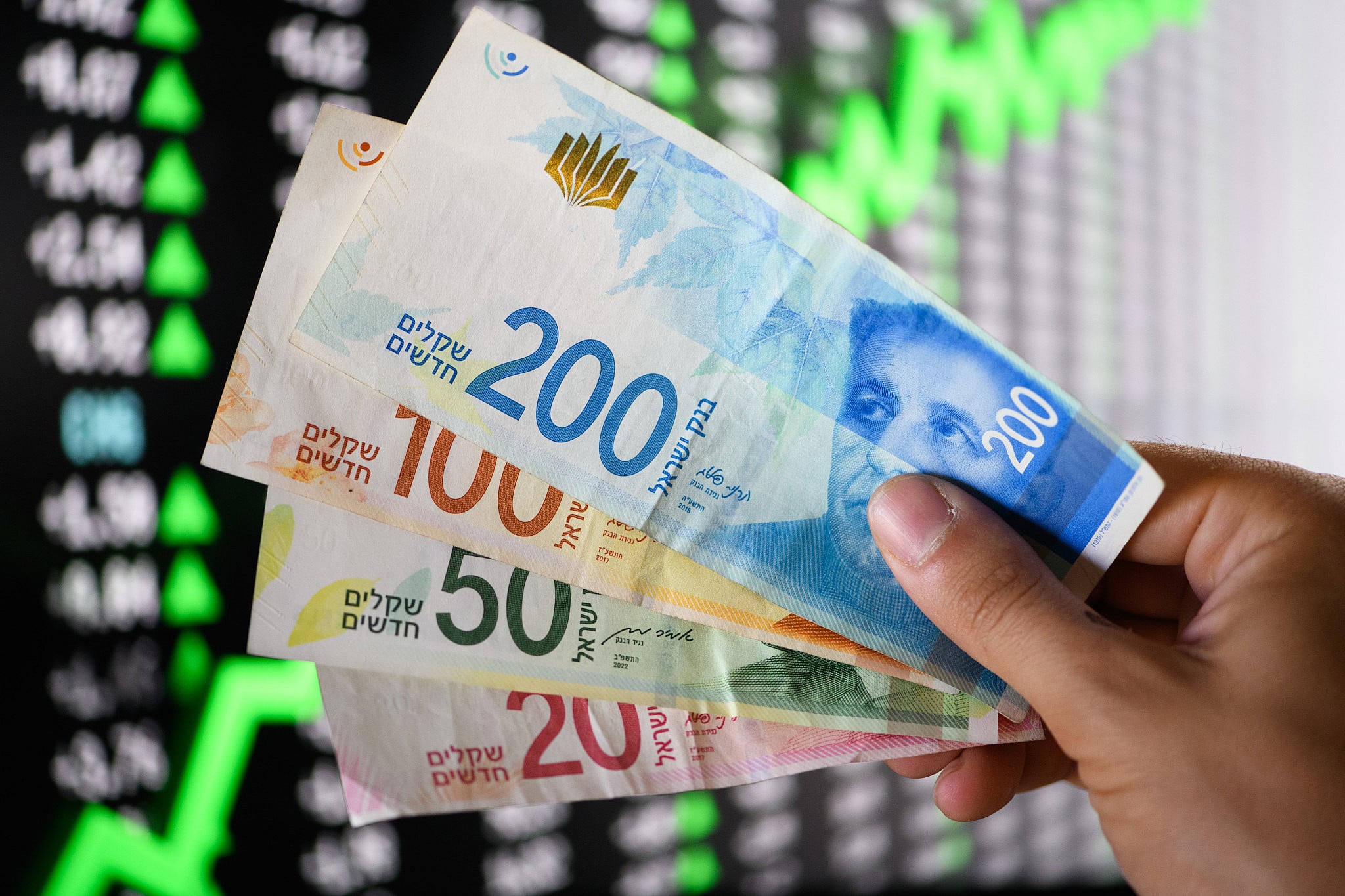
Looking back at 2025, in our end of year retrospective, it was astonishing to see the strength of the Israeli economy, placed among the 30 largest in the world. Israel’s per capita GDP that year was ahead of Britain’s, Germany’s, and Canada’s. The Economist, in its annual ranking of which countries’ economies did best in 2025, placed Israel third out of all the OECD countries. And the shekel was among the world’s strongest currencies, near an all-time high against the dollar and the euro.
All this is a tribute to Israeli creativity, determination and resourcefulness. However, a strength can also be a weakness, and that’s what we’re seeing play out in real time for startups and the strong shekel.
Celebrating a Strong Shekel
I think of a strong currency as being a bit like a vote of confidence in a country’s future. A sign that the economy has strong foundations, and that there is international confidence in whichever industries are influential in the country’s economic picture.
When you think about Israel’s size and the many challenges it has faced, particularly in the last few years, it’s hard not to be deeply impressed by the strength of the shekel now, and by all that this represents and reflects. Israel’s 10-year bond yields were tightly correlated with US Treasuries in 2025, despite any logic that might have suggested a high risk premium for Israel due to the ongoing conflict.
In practical terms, on a day to day basis a strong shekel should also have benefits for Israelis, making imports and travel cheaper. Given how long Israelis have worried about the cost of living, that’s particularly good news.
Out of the Strong Comes Forth Weakness
Startups aren’t celebrating. That’s because in the overwhelming majority of cases, startups aren’t funded in shekels. They’re funded in dollars.
In 2025, the dollar fell by 7% on a trade-weighted basis. Last week found it at the softest it had been in nearly four years against a basket of other currencies, having declined by around 12% since its peak last year.
The dollar is certainly not a terrible place – if you take into account differences in inflation between countries, the real exchange rate is 13% above its average of the past 30 years. According to The Economist’s Big Mac index, the dollar is overvalued against 49 of 70 currencies. Moreover, a slightly weaker dollar may be good for American exports. But none of this helps Israeli founders.
Startups are grappling with the fact that in real terms, they have less money than they thought they did. For companies that are funded in dollars, but are based in Israel, the money they use to pay their employees and cover the costs of rent and utilities and so on, is converted from dollars to shekels.
The same pattern plays out with sales. Israeli startups are very open to working with one another, and a supportive and open-minded domestic ecosystem helps propel new products and companies forward by providing what is effectively a sandbox to test and in which to prove concepts and success. Nonetheless, the reality is that the main market for almost all Israeli startups lies outside Israel. For most startups, the first and primary focus is the US market.
US clients are, naturally, charged in dollars. Revenue is largely in dollars. In order to fund the Israeli headquarters and the core of the business, it has to be changed to shekels. Once again, in real terms companies have less money coming in than they expected.
Hedging, which is good business practice to handle exactly this sort of volatility, is of course available and many businesses have been hedging responsibly to the extent that they can. However, it’s never a perfect exercise, and for startups especially, there are limitations on what is possible.
Revenue is rarely predictable, particularly for young startups, which impacts their options. The guarantees that are sometimes a part of hedging exercises are sometimes unavailable to startups, or are not the right choice for a young, fast-evolving company. Moreover companies that had FX hedges in place in 2025 to lock in the dollar at a better rate, are seeing those hedges expire into what has become a very different market.
Israel in the Global Picture
In 2025, around 70% of total hi-tech capital raised came from US and European investors. On the one hand, that’s great news, showing how integrated Israeli innovation has become in the global infrastructure and how international our domestic talent has become. On the other hand, it does present a challenge now that the shekel is so strong.
While a strong shekel is good news for the cost of imports, it presents tech companies with a staffing dilemma. Israeli talent is now more or less as costly as that in comparative markets. In many cases, Israeli companies have good reasons to hire locally. The quality of domestic talent is high, and has a range of skills and expertise. Also, there’s value in having a strong core team working together in close physical and cultural proximity.
At the same time, the last few years have also made more companies aware of the balancing value of diversification for resilience, in order to be able to adapt to changing circumstances. This, together with the strong shekel, may mean that while there is always a good case for hiring Israeli talent, it is not the obvious default that it once was.
Tricky Timing
The market has moved away from a “growth at all costs” mentality, shifting towards emphasis on sustainable growth. This is in many ways positive for companies’ long-term prospects. It’s better for operational scaling, long-term customer value and loyalty, internal morale and therefore stamina, and aims to balance expansion with profitability.
There is an extent to which industries swing and self-correct with trends like these. At the current point in the startup ecosystem, there is a strong market emphasis on profitability rather than on growth. That’s not a bad thing, but it adds pressure when companies have less money than they thought they had.
The pressure is especially notable for younger, smaller companies who have less money to start with, and are likely to find fundraising more difficult in any event. It’s crucial that these companies manage the additional difficulty, because they are the fuel of the future of the ecosystem. Today’s young startups are the source of the next decade’s tech successes.
A Bit of Perspective
A strong shekel is by no means the most significant challenge that companies have faced over the last few years. Israeli startups are adept at handling far greater headwinds than an unfavorable dollar exchange rate. It’s a factor that companies need to keep in mind when budgeting and planning, and it’s equally important to remember the knock-on effects for hiring, manufacturing, and so on.
The key takeaway for 2026, for startups, is how essential it is to focus on capital efficiency, especially when spending in shekels. Advances in GenAI technology can certainly help there.
At the end of the day, though, the strong shekel and its complexities remain a sign of the success and resilience of the Israeli hi-tech environment, and of international confidence that Israel delivers no matter what. It’s a challenge that hides a compliment. There are worse problems to have.